

Lost Forest Buried Deep Under Antarctica Traced
A lush dense forest lies beneath the massive sheet of ice in Antarctica. Located at the southernmost tip of Planet Earth, this continent has no human settlements as about 98% of it is covered by an ice sheet that averages 1.9km (1.2 miles) in thickness. However, Antarctica was not like this from the very beginning. Researchers have claimed that Antarctica was a temperate, lush rainforest with dinosaurs, palm trees and abundant plant life around 90 million years ago (during the Cretaceous Period), thriving in a warmer world with high CO₂ levels before shifting towards the icy continent.
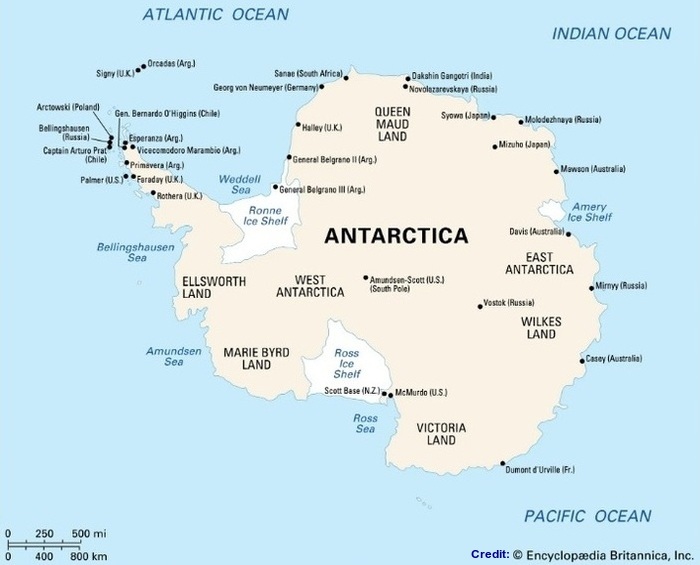
Some shrub-like hardy, ground-hugging plants, like Antarctic Hair Grass and Antarctic Pearlwort, can still be found there. According to researchers, large plants used to exist in Antarctica once upon a time. The region where penguins roam today was covered in lush green forests many years ago.
No permanent human settlement has ever been established in Antarctica. Scientists reside there only temporarily for research purposes. A few years ago, a research project, led by Professor Stewart S R Jamieson of Durham University in Britain, was underway. Professor Jamieson and his team were conducting research on how small changes occurred in the ice sheet of Antarctica. They reportedly began digging holes in the thick ice of the continent. After drilling nearly 2km (over a mile) deep into the ice, they made several groundbreaking discoveries, including ancient hidden landscapes, a massive subglacial river system and life forms in extreme environments, all of which changed the perception of the frozen continent. After examining those samples, researchers have claimed that they are approximately 34-million-year-old.
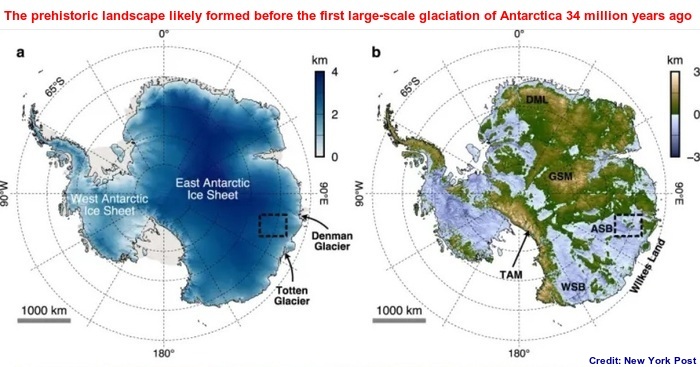
Professor Jamieson and his colleagues conducted this research in Wilkes Land, a vast and mostly ice-covered region named after explorer Charles Wilkes, in East Antarctica. They have further claimed that the type of plant specimens found there suggests that the entire area once had a dense forest ecosystem. “This finding is like opening a time capsule. The land underneath the East Antarctic ice sheet is less well-known than the surface of Mars. It’s difficult to say exactly what this ancient landscape looked like, but depending on how far back you go, the climate might have resembled modern-day Patagonia, or even something tropical,” stressed Professor Jamieson. The lead researcher added: “We’re investigating a small part of that landscape in more detail to see what it can tell us about the evolution of the landscape and the evolution of the ice sheet.”
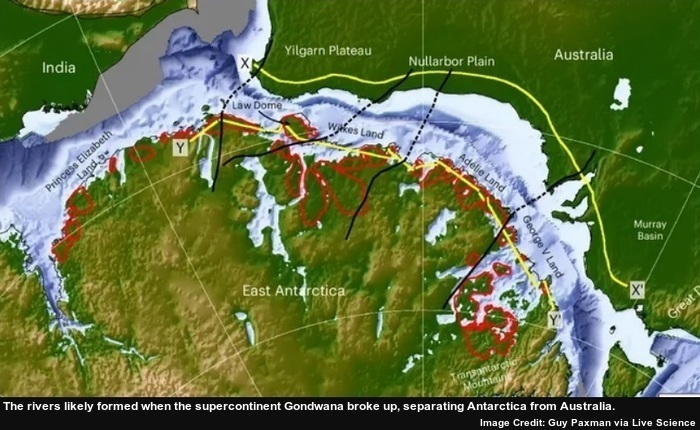
Scientists expanded their research further after discovering the forest lost beneath the ice as they used the RADARSAT satellite system of the Canadian Space Agency (CSA). They discovered an ancient, river-carved landscape preserved beneath the East Antarctic ice sheet, using data from the RADARSAT constellation. They claimed that there were also rivers in Antarctica millions of years ago.
The landmass we now call Antarctica was once a warm, forested part of the supercontinent Gondwana millions of years ago, and not a frozen, isolated polar continent. At that period of time, Antarctica was joined with Africa, South America and Australia as part of Gondwana, a massive landmass that also included India, Madagascar and Saudi Arabia. Gondwana was formed about 600 million years ago and began breaking apart around 180 million years ago, eventually leading to the continents drifting to their current locations, with Antarctica becoming isolated at the South Pole. According to researchers, Antarctica had rivers and dense temperate rainforests for millions of years even after the ancient supercontinent began to break apart. Subsequently, an ice sheet covered the forest.
Professor Jamieson believes that the discovery of this lost forest in Antarctica could prove extremely important for Environmental Science. He is of the opinion that their research would help environmentalists to understand how the formation of Antarctica, particularly its ice sheet, has changed over millions of years. The Antarctic ice sheet could be a critical research subject for Climate Change, vital for understanding global sea-level rise, ocean circulation and ecosystem impacts, with studies showing accelerating melt, potential tipping points from warm ocean waters and complex feedback loops affecting global climate systems, stated the geologist.
Meanwhile,





Boundless Ocean of Politics on Facebook
Boundless Ocean of Politics on Twitter
Boundless Ocean of Politics on Linkedin
Contact us: kousdas@gmail.com

 ISMC
ISMC Boundless Ocean Of Politics