

Returning To The Roots
The work had been underway for more than a decade and a ray of hope emerged in 2026. In a recently published research paper, Dr Norberto Gonzalez-Huerta, a scientist involved in the Leonardo da Vinci DNA Project as a Principal Investigator at the J Craig Venter Institute, has mentioned that they have possibly recovered traces of DNA linked to the Renaissance artist from a historical drawing and family documents.
According to Dr Gonzalez-Huerta, they have obtained a DNA trace from a drawing by da Vinci and a letter written by one of his relatives after a lengthy effort. Researchers used these two items as samples. A famous chalk drawing from the 1470s, called Holy Child (or Infant Jesus), is strongly believed to be by da Vinci, serving as a model for his paintings. The recent DNA analysis of this drawing has found genetic material possibly belonging to the Italian painter, inventor, scientist, engineer, anatomist, architect, polymath and the ultimate Renaissance Man.
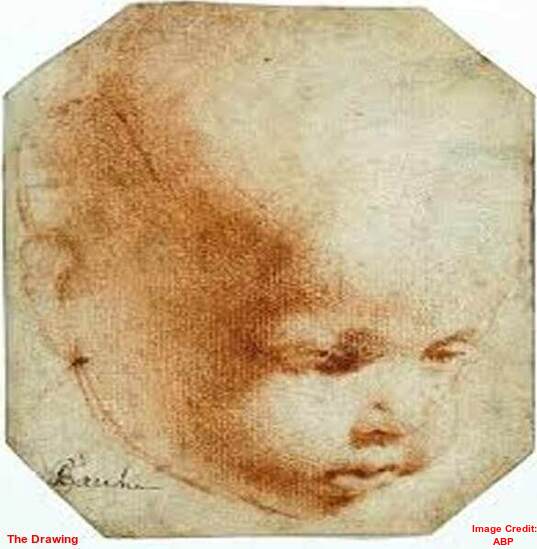
Another DNA sample has also been obtained from a letter written by a relative of the artist. The Y-chromosome sequencing of these two DNA samples revealed that both samples matched a group of people whose ancestors originated in the Tuscan hill town of Vinci (20 miles from Florence), the birthplace of da Vinci. Although these findings are promising, they are the preliminary one and do not yet definitively confirm the DNA is da Vinci’s.
Researchers could confirm the DNA in the drawing is da Vinci’s with cent percent certainty, if they could compare it directly with the DNA of his family members. However, it is not possible as the painter has no direct descendants. Furthermore, various interventions were made to his burial site in the 19th Century. Confirming the identity of the DNA has become even more challenging as the artwork could have been handled by various individuals with similar ancestry.
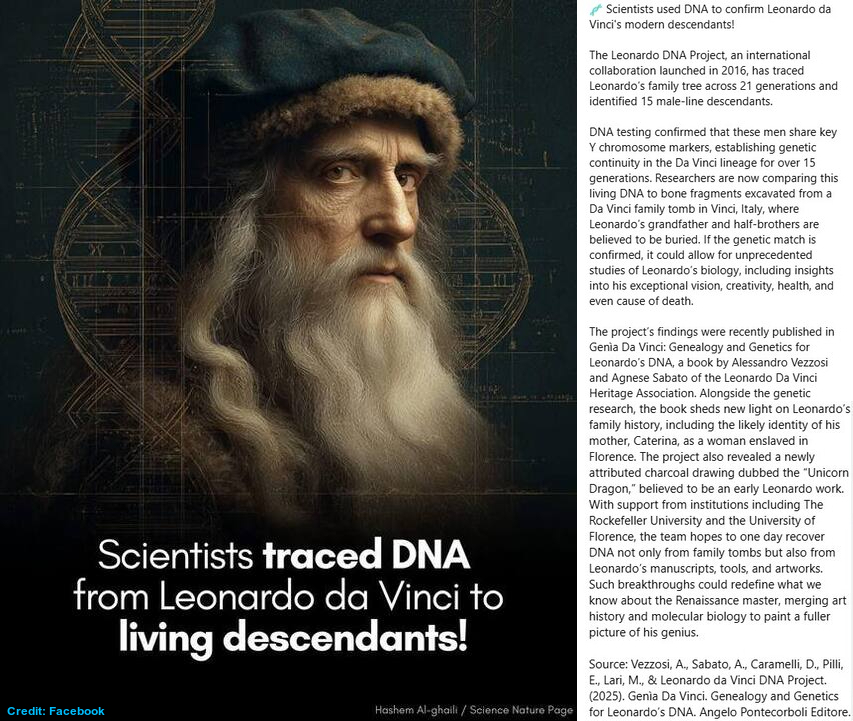
Still, this development is quite an important one. Firstly, the roots of an individual lie in her/his DNA. Advancements in genetic genealogy allow DNA analysis to provide insight into a person’s continental and regional origins, apart from revealing information about his family tree. In Western countries, numerous commercial companies allow individuals to submit DNA samples in order to trace their genetic family tree. The DNA analysis, particularly genetic genealogy, reveals ancestral heritage by tracing inherited gene patterns, showing how they blend (recombine) and pass down through generations via maternal (mitochondrial DNA), paternal (Y-DNA) and autosomal DNA over the years, providing insights into migration and familial connections beyond written records. It also helps map ancestral origins, uncover distant relatives and understand the biological story of family lineage.
DNA plays a vital role in modern criminology as well, as law enforcement officials are using DNA to establish the identity of unknown deceased individuals and to apprehend criminals. In other words, DNA analysis is connected to the Right to Justice of people in a broader sense. Its importance is naturally even greater in the case of eminent personalities. Celebrity DNA databases or gene museums have become a cultural pride, with nations institutionally preserving the DNA of famous personalities. After extensive research, scientists have revealed surprising facts, shattering long-held myths, in recent times, as the genetic roots of a White dictator have been found in the genes of Black slaves.
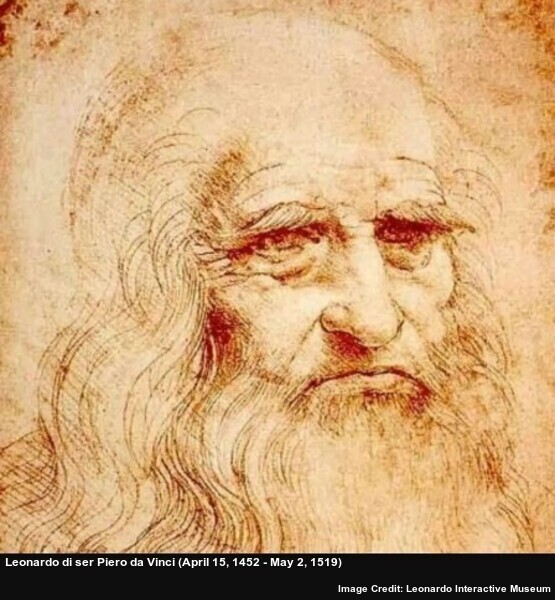
The importance of DNA analysis is immense in the world of art, too. Cases of valuable artworks by famous painters being forged have become a common phenomenon. However, DNA analysis can establish the fact or truth. The DNA of the contemporary environment of the artworks, such as who created the artwork, what materials were used and through how many hands it has passed over time, may be unknowingly preserved within an ancient artefact.
It can be easily imagined how difficult the job of the scientists is. In the case of this particular drawing by Leonardo da Vinci, the DNA of the painter has been mixed with, or contaminated by, countless other DNA traces as a number of people have handled this work over the centuries. Hence, scientists had to proceed with unwavering focus towards their goal, eliminating unnecessary DNA sequences one by one.
Again, unnecessary DNAs are not useless at all. From the Holy Child, scientists have found DNA traces of various bacteria, viruses, fungi and even plants from which one can get an idea about the materials used to draw the image and the method of its preservation. In other words, DNA analysis can reveal not only the identity and anthropological roots of an artist, but also her/his contemporary culture, geology and environment. Only science can trace so many facts in a single study.
Meanwhile,






Boundless Ocean of Politics on Facebook
Boundless Ocean of Politics on Twitter
Boundless Ocean of Politics on Linkedin
Contact us: kousdas@gmail.com

 ISMC
ISMC Boundless Ocean Of Politics