

Israel Rejects Pak Army’s Role In Gaza Strip
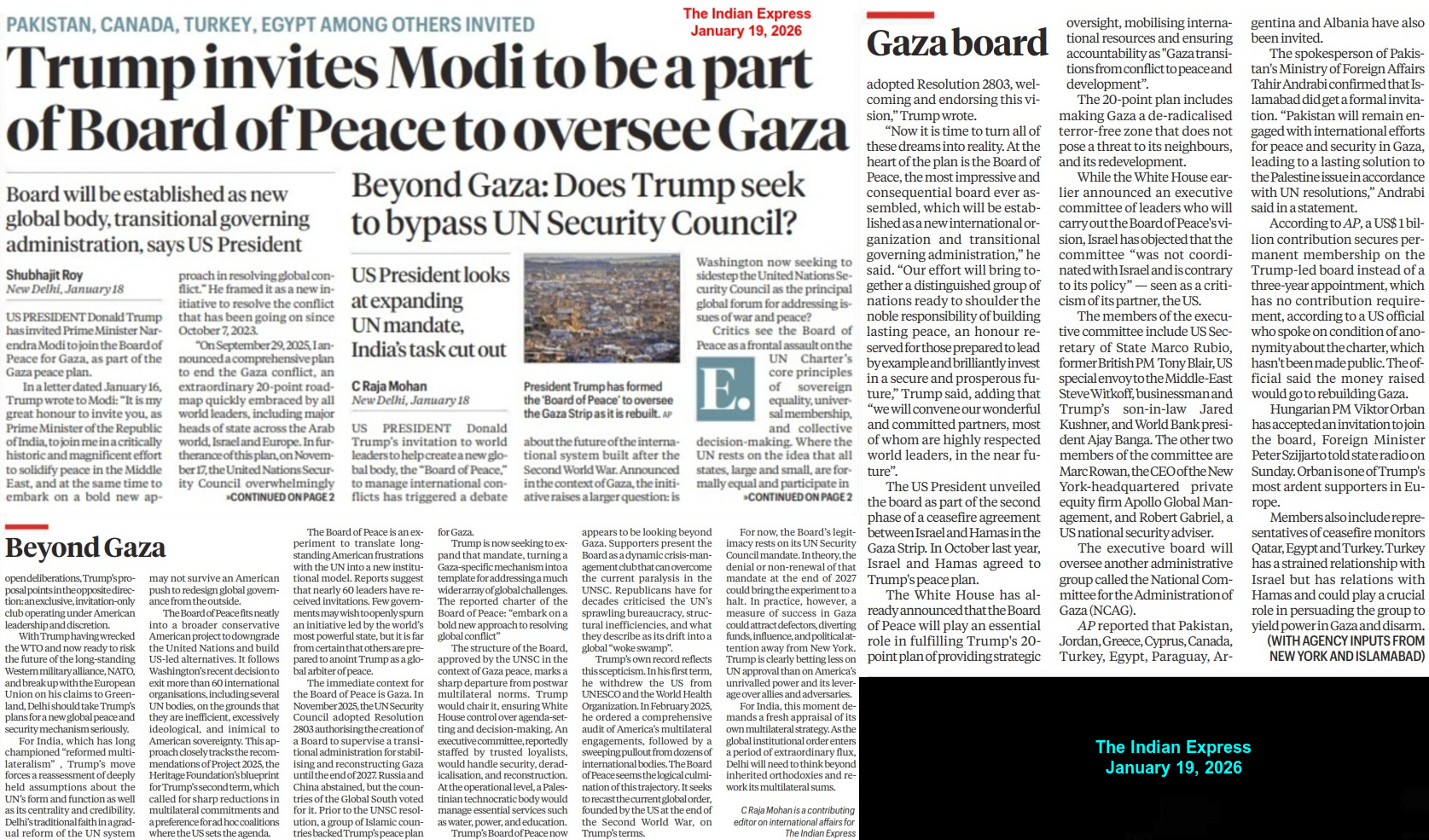
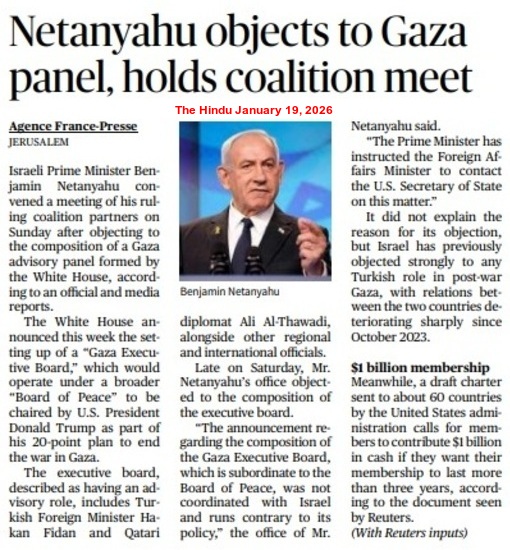
Pakistan is eager to participate in the Gaza reconstruction plan proposed by US President Donald John Trump. Islamabad has also submitted a proposal to that effect. However, Israel is not willing to work with Pakistan.
In an exclusive interview with NDTV, Reuven Azar, the Ambassador of Israel to India, recently said that “countries normally cooperate only with those they trust and with whom they have proper diplomatic relations“. “This is not the situation right now,” he added, making it clear that Israel does not consider Pakistan a credible or acceptable partner in any Gaza stabilisation mechanism.
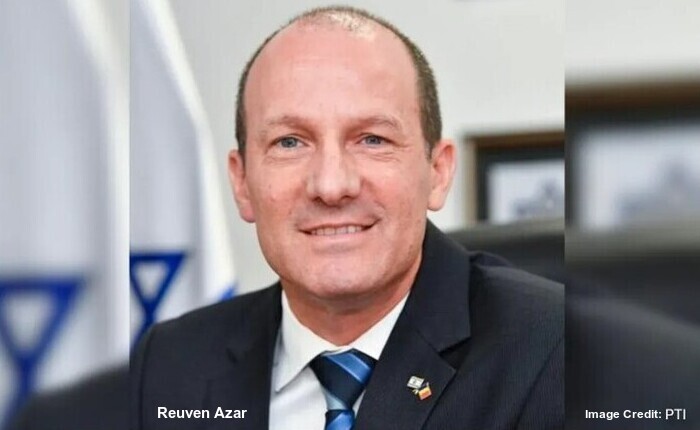
The envoy stressed that Israel would have no option, but to act on its own if diplomatic pressure fails to force the Palestinian Hamas Movement to comply with the Trump Plan. “Either Hamas dismantles, or it will be impossible to implement the second phase of any plan,” Azar told NDTV.
The global media recently reported that senior Hamas commander Naji Zaheer visited Pakistan in the second week of January 2026 to hold talks with Lashkar-e-Taiba (LeT) commander Rashid Ali Sandhu. They shared the stage at an event hosted by Pakistan Markazi Muslim League (PMML), which is widely believed to be the political front of the LeT, in Gujranwala. An undated video of that event is circulating on social media in which many, including Sandhu, can be seen presenting bouquets to the chief guest, Zaheer. Zaheer and Sandhu held a meeting on the sidelines of the event. In this context, Azar has stated that his country does not feel comfortable working with Pakistan.
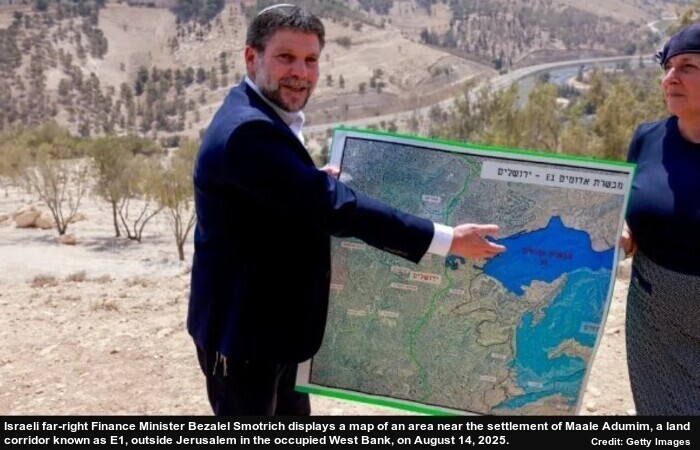
Meanwhile, Israel formally notified representatives of Bedouin communities and the Municipality of al-Eizariya, east of occupied Jerusalem, on January 8, 2026 of its intention to start implementing a major settlement project after a 45-day period. The implementation of this project, which is a part of Israel’s Greater Jerusalem plan, would geographically connect the two Israeli-occupied territories of Ma’ale Adumim and East Jerusalem, apart from dividing the Palestinian settlements in the occupied West Bank into two parts. The notice clearly states that the step, associated with the Life Fabric programme, would connect the occupied territories of the West Bank with Israel.
In October 2025, the Knesset (the Parliament of Israel), passed a resolution to impose Israeli sovereignty on the occupied West Bank (a move tantamount to annexation of the Palestinian territory) in the presence of Prime Minister Benjamin ‘Bibi’ Netanyahu. The move would be a blatant violation of international law. Furthermore, it would effectively negate the demand for an independent and sovereign Palestinian State. The proposed move could lead to a risk of escalating the conflict in the West Bank, in addition to Gaza.
The Jordan Valley, which spans approximately 2,400sqkm of area in the eastern part of the West Bank (of the Jordan River), has been under Israeli military control since the 1967 Arab-Israeli War (popularly known as The Six-Day War), during which most of the Palestinian residents were displaced. Before 1967, an estimated 250,000 to 320,000 Palestinians used to reside in that area. Currently, approximately 65,000 Palestinians and around 11,000 Israeli settlers live there.
The West Bank, excluding East Jerusalem, is divided into three administrative areas with differing levels of control, as stipulated by the interim Oslo Accords signed by Israel and the Palestine Liberation Organisation (PLO) in the 1990s. The Palestinian Authority (PA), which is dominated by the Fatah faction of the PLO, has formal responsibility for both civil administration and security control over just 18% of the West Bank, although the Israeli security forces frequently conduct operations in this area. The PA also maintains administrative (civil) control over 22% of the West Bank, but security control is shared jointly with the Israeli military. However, approximately 60% of the West Bank is under full Israeli military and civil control. This area includes all Israeli settlements, most of the Jordan Valley and vital natural resources. Palestinian construction and development are highly restricted in this area.
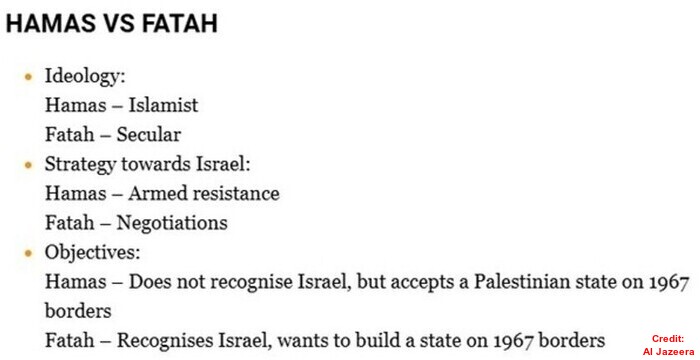
The PLO, which has historically called for the establishment of a Democratic Palestinian State where Christians, Muslims and Jews would have equal rights, is officially committed to democratic principles in its foundational documents and agreements. However, its implementation in practice has been widely criticised for being undemocratic, with no General Elections held for its key leadership bodies for many years. The relationship between PLO and the Palestinian Hamas Movement, the hardline Palestinian armed group, is a long and complex, often antagonistic, one. Once, Fatah used to rule the Gaza Strip. Hamas has been the de facto ruler in Gaza since 2007, after defeating President Mahmoud Abbas’ long dominant Fatah Party in the Parliamentary Elections.
Meanwhile, the Palestinian Authority Government in the West Bank has strongly condemned Israel’s recent announcements of new settlement construction and expansion plans in East Jerusalem and the wider West Bank.
Meanwhile,



Boundless Ocean of Politics on Facebook
Boundless Ocean of Politics on Twitter
Boundless Ocean of Politics on Linkedin
Contact us: kousdas@gmail.com

 ISMC
ISMC Boundless Ocean Of Politics