

Ancient Pleasure Boat Discovered Off Egypt’s Coast
Egypt’s sands have long concealed astonishing mysteries and priceless artefacts. Researchers recently made a mysterious discovery near the coast of Alexandria, sparking a great excitement in archaeological circles. The latest discovery is not a mummy or tomb of a pharaoh, but an ancient Egyptian pleasure boat as mentioned by Strabo (64/63 BC – 24 AD), the Greek geographer who lived in Asia Minor during the transitional period of the Roman Republic into the Roman Empire, in his works. Members of the Egyptian royal family used this vessel on special occasions. As the vessel has been discovered off the coast of Alexandria, it has become a subject of discussions among archaeologists.
Underwater archaeologists have discovered the remains of this rare and luxurious ship while excavating a submerged ancient harbour in Alexandria. Alexandria, founded by Alexander the Great around 331 BCE, rapidly became a premier ancient city, serving as the capital of Egypt, a massive trade hub linking East and West, and a global centre for learning and culture. The second-largest city of Egypt is also famous for its Lighthouse (one of the Seven Wonders) and Great Library, flourishing for centuries under Greek/Roman rule before declining after the Arab conquest.
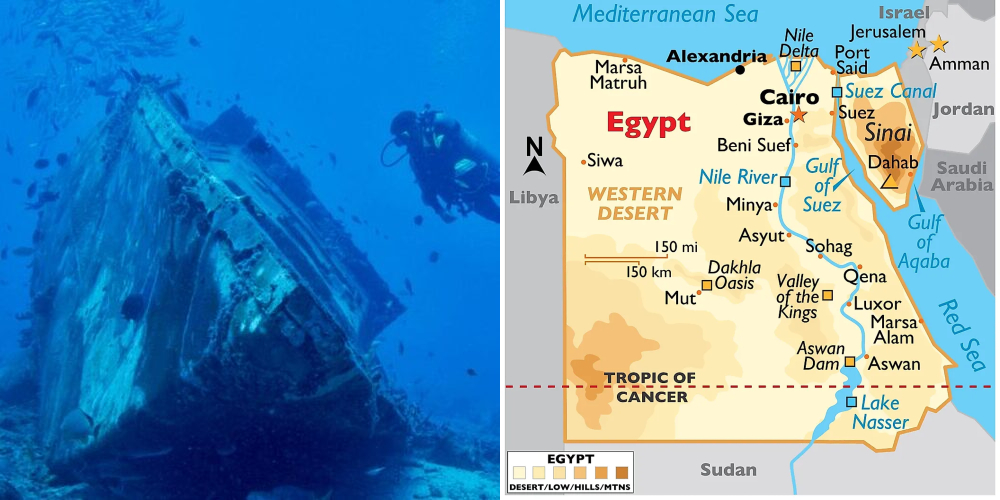
It may be noted that the tiny island of Antirhodos was a key part of Alexandria’s Portus Magnus (Great Harbour), serving as a luxurious royal enclave with palaces and temples for Ptolemaic rulers, like Cleopatra. However, it sank centuries ago because of earthquakes and subsidence, now lying submerged near modern Alexandria’s coast. Archaeologists have discovered the remarkably well-preserved, 2,000-year-old pleasure boat with a grand central cabin near the sunken Antirhodos Island. It offers rare insights into Roman-era luxury and ritual life in the great harbour. Interestingly, the luxurious vessel has been discovered less than 50mt from the submerged Temple of Isis. The exceptionally preserved wooden pleasure boat, measuring 35mt (115ft) long and approximately 7mt (23ft) wide, was buried under silt at a depth of just 7mt in the sea. The vessel was so spacious that it featured actual architectural structures, like a room (cabin/drawing room/library) and a pavilion.
The flat-bottomed hull and a sharp chain fitted to its frontside allowed the pleasure boat to navigate effectively in shallow waters, such as rivers, lakes, canals and close to shorelines. According to archaeologists, the ship could only be propelled by oars and more than 20 sailors used to tow this massive, luxurious boat. Nearly 2,000 years ago (between 29 BC and 25 BC), Strabo described this pleasure boat in his works after visiting Alexandria. He mentioned that members of the Egyptian royal family and ministers used this vessel for leisure.
Based on the Greek-style drawings or inscriptions found on the vessel’s main structure; experts have come to the conclusion that it dates back to the first half of the 1st Century. The Greek graffiti on its timbers confirms its Alexandrian origin and use by elite figures, like Cleopatra, providing the first physical example of such a luxurious vessel used for festivals and leisure in Roman Egypt.
The timeline also matches the account of Strabo, who described a specific type of ancient Egyptian pleasure boat, called Thalamegos (or Thalamagos), used by the royal court for festivals, leisure and religious ceremonies, with people playing flutes and dancing, along the canals surrounded by dense forests near Alexandria. The Greek geographer, who visited Alexandria around 29-25 BC, wrote: “These vessels are luxuriously fitted out and used by the royal court for excursions; and the crowd of revellers who go down from Alexandria by the canal to the public festivals; for every day and every night is crowded with people on the boats who play the flute and dance without restraint and with extreme licentiousness.”
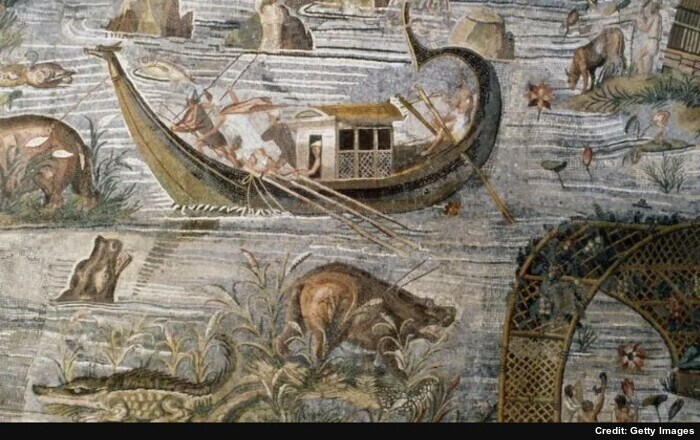
Professor Franck Goddio, a French Underwater Archaeologist at Oxford University, led this excavation in collaboration with the Egyptian Ministry of Antiquities and the European Institute for Underwater Archaeology. He told the Guardian: “It’s extremely exciting because it’s the first time ever that such a boat has been discovered in Egypt… Those boats were mentioned by different ancient authors, like Strabo, and they were also represented in some iconography – for example in the Palestrina mosaic, where you see such a boat of a much smaller size with noblemen hunting hippopotamuses. But (an actual boat) has never been discovered before.”

According to Professor Goddio, the Thalamagos likely sank around AD 50 when the Temple of Isis, located on the island of Antirhodos in Alexandria’s sunken harbour, was catastrophically destroyed, possibly by an earthquake and subsequent tidal waves. He has claimed that research on the wreckage is still in its initial stages. Professor Goddio has further said that the wreck will remain on the seabed, adding: “We are following the regulation of UNESCO, which considers that it is better to (leave) the remains underwater.”
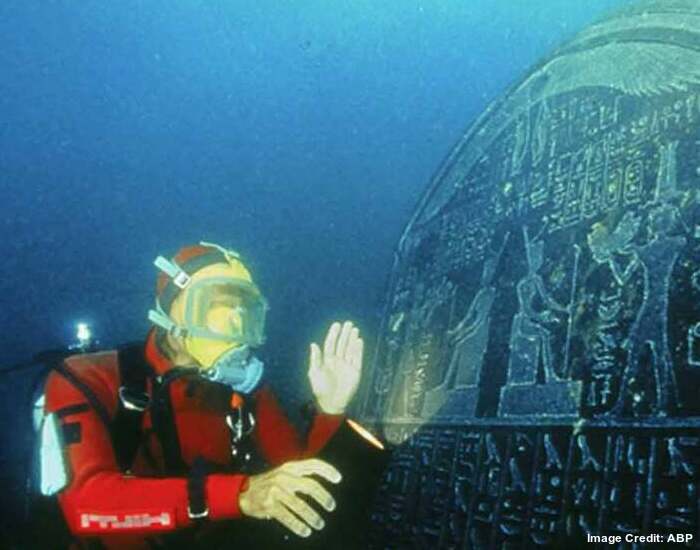
Meanwhile, excavation shall be continued in the surrounding areas as researchers believe that the graffiti carved on the ship would provide more detailed information about daily life, religious practices and the leisure activities of the elites in the ancient city of Alexandria.
Meanwhile,






Boundless Ocean of Politics on Facebook
Boundless Ocean of Politics on Twitter
Boundless Ocean of Politics on Linkedin
Contact us: kousdas@gmail.com

 ISMC
ISMC Boundless Ocean Of Politics