

Understanding The Reality
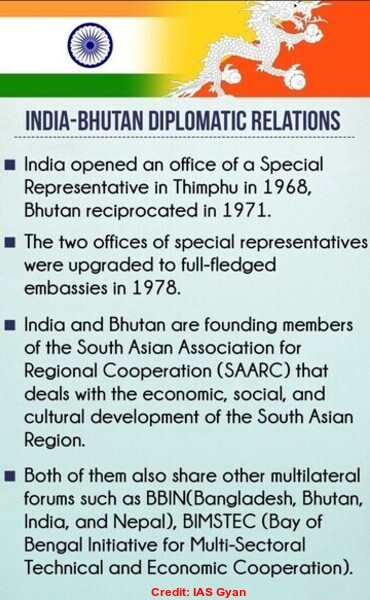
India’s relations with most of its neighbours have deteriorated in recent times. However, Bhutan is an exception. Hence, the recent two-day state visit of Indian Prime Minister Narendra Modi to the Himalayan nation indicates New Delhi’s commitment to stand by its neighbours.
India and Bhutan signed several agreements in the fields of solar power, green energy, biomass, health and medicine, and PEMA Secretariat during the visit of PM Modi. The Indian Prime Minister and Jigme Khesar Namgyel Wangchuck, the King of Bhutan, jointly inaugurated the 1020 MW bilateral hydropower project Punatsangchhu-II on November 11, 2025. This project, a key part of the bilateral energy partnership, significantly increases Bhutan’s hydropower generation capacity by nearly 40%, apart from boosting regional energy security. Furthermore, Prime Minister Modi offered a concessional credit line of nearly USD 455 million to fund new energy projects in Bhutan. The underlying reason for this diplomatic goodwill is the strategic vulnerability of both the countries in the changing world order highly influenced by China.
India has always tried to limit the influence of outside powers in South Asia. Hence, it has considered Bhutan an important partner in its efforts to secure the eastern Himalayan border region, especially the vulnerable Siliguri Corridor or Chicken’s Neck. In fact, India used to guide the foreign policy of Bhutan in the past. It officially abandoned this policy in 2007, when the two countries signed a new friendship treaty.
The regional power dynamics have changed (in South Asia) in recent times, with the rise of China as a major power. The aggressive foreign policy of Beijing and the Sino-Indian rivalry have started creating troubles for smaller nations in the region. China views Bhutan’s closeness to India negatively, which fuels territorial disputes and strategic competition. Given the unresolved territorial disputes between China and Bhutan, India fears a threat to the Chicken’s Neck Corridor if Bhutan cedes the Doklam plateau to the Asian giant because of the strategic location of this plateau near the corridor. Control of the plateau would give Beijing a military advantage by bringing its forces closer to the narrow Siliguri Corridor, which connects the north-eastern provinces of India to the rest of the country, potentially jeopardising the South Asian country’s supply lines and security.

Also, Bhutan is going through various internal crises. Long-standing unresolved economic problems, social issues and little economic diversification have increased unemployment in this tiny Himalayan nation, prompting citizens, especially the younger generation, to leave the country. Furthermore, a section of the business community and youth of Bhutan has become over-dependent on India.
In such a situation, India has no choice but to play a leading role in addressing Bhutan’s economic issues. Political analysts are of the opinion that India’s success would depend on mutual cooperation. Currently, Indian dominance in South Asia is facing tough challenges due to the growing military strength and diplomatic influence of China.
New Delhi must learn from its challenges in Nepal by prioritising an inclusive, competitive and respectful policy that addresses local sentiments and security concerns, to effectively counterbalance China’s expanding influence. India must realise the fact that a democratic Bhutan cannot ignore the growing aspirations of its youth. One of its most viable options at the moment is to align its strategic interests with the economic aspirations of Bhutan’s youth.
Meanwhile,


Boundless Ocean of Politics on Facebook
Boundless Ocean of Politics on Twitter
Boundless Ocean of Politics on Linkedin
Contact us: kousdas@gmail.com

 ISMC
ISMC Boundless Ocean Of Politics