

His Next Book To Remain Sealed Until 2114
Noted Indian author Amitav Ghosh (b. July 11, 1956) wants no one to touch his next manuscript until the year 2114. Perhaps, he plans to leave a prophecy for his readers. Reports suggest that the next works of Ghosh and 11 other authors from different parts of the globe will remain locked in a room in the Norwegian capital of Oslo for the next 89 years.
On August 13, 2023, The Guardian reported that Ghosh would “submit his manuscript at a ceremony in the Future Library Forest in May or June 2026, when the work’s title will be revealed“. It has been decided that the next works of Ghosh, Margaret Atwood, Han Kang, Ocean Vuong, David Mitchell, Elif Shafak, Karl Ove Knausgård, Tsitsi Dangarembga, Valeria Luiselli, Sjón, Judith Schalansky and Tommy Orange would not be read for the next nine decades as those would be kept in a specially designed silent room at the Deichman Bjørvika Public Library in Oslo in the form of manuscripts. The project is called Future Library Project.

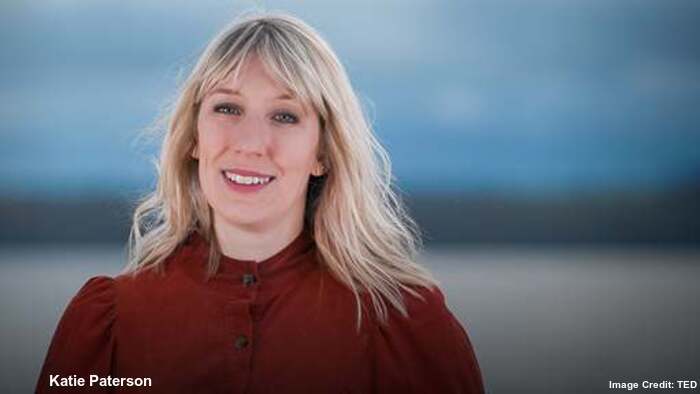
The Future Library Project, conceived by Scottish visual artist Katie Paterson, is a century-long artwork that involves a forest planted in Nordmarka, near Oslo. For 100 years, authors will contribute texts that will remain sealed until 2114, when they will be printed on paper from the forest Paterson planted. It may be noted that Paterson planted 1,000 spruce trees in Nordmarka in 2014. Those trees will turn 100 years old in the year 2114. As per Paterson’s plan, all the trees would be cut down in 2114 to create paper for a collection of 100 books. She has made an agreement with the Oslo city authorities on the basis of which the Future Library Trust would take care of this project until its completion.
For Ghosh, the celebratory connection between books and trees is quite motivating. The Indian author is highly concerned about the environmental crisis as he has penned a number of books, such as The Hungry Tide (2004), Jungle Nama (2021) and Gun Island (2019), on forest. The mangrove forests of the Sundarbans are a prominent setting in several of Ghosh’s novels. He told The Guardian: “It will be an exciting challenge to make a connection between the forests of the far north and those of the tropics, at this time of extreme planetary crisis.” Ghosh stressed: “I am moved to be part of a work that intertwines ecology, literature and patience on such a monumental scale.”
For the Indian author, another important factor is that the Future Library Project “compels us to think beyond our lifetimes, to imagine readers who have not yet been born”. He has described the project as a unique blend of ecology, literature and patience, stating that being invited to participate in the Future Library Project was a “profound honour and a humbling act of trust”.
Meanwhile, Paterson has claimed that Ghosh’s writing “is expansive, urgent and deeply attuned to the shifting ground of our world”. The Guardian quoted her as saying: “His stories traverse oceans and centuries, revealing how the climate crisis is inseparable from histories of empire, migration and myth.”

Paterson has invited one writer every year to submit a manuscript which would be sealed and locked in Oslo’s main public library, unread. According to the Future Library Trust, Ghosh was chosen “for his deeply resonant literary voice and his longstanding engagement with themes of ecology, history and time”.
Boundless Ocean of Politics on Facebook
Boundless Ocean of Politics on Twitter
Boundless Ocean of Politics on Linkedin
Contact us: kousdas@gmail.com

 ISMC
ISMC Boundless Ocean Of Politics