

To Overcome The Fear Of Death
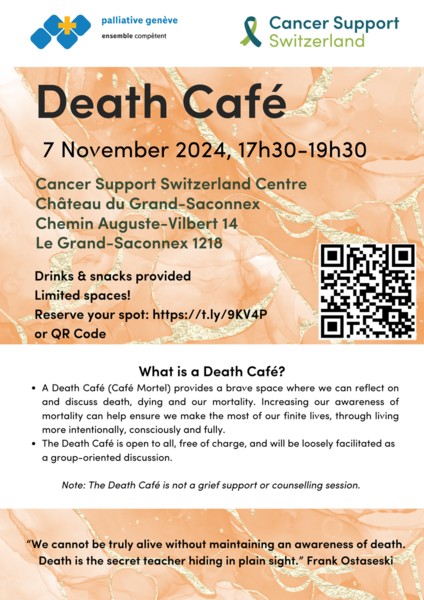
A café was established in Switzerland more than two decades ago mainly to discuss a topic that everyone wants to avoid… Death! Hence, it is called Death Café. Death Café is not a restaurant, but a place where people gather for a couple of hours to discuss various issues related to death, including fear or anxiety about one’s own death, or the grief of a loved one’s demise, or the condition of a sick person awaiting death. Such discussions, along with tea, coffee and snacks, can also take place at someone’s residence or some other places. However, such a discussion is quite important. The Swiss people felt the need for such a space to discuss a sensitive issue, like death, long ago.
No matter how long one’s life is, s/he has to accept death at the end. Surprisingly, each and every person wants to forget this ultimate truth. Death is not only inevitable, but one can also feel the decay of her/his own body. According to Indian Philosophy, the process of death begins with birth! Hence, our body shape changes with aging. Still, every culture, as well as custom, tries to avoid discussions on death, as if to pronounce the word death is inhumane. Even when someone suffers from a terminal illness, her/his well-wishers assure the person that s/he will recover soon. Hence, treatment continues despite her/his reluctance.
Leo Tolstoy (born Count Lev Nikolayevich Tolstoy; August 28/September 9, 1828 – November 20, 1910) gave a glimpse into the mental state of a dying person in his 1886 novella The Death of Ivan Ilyich. Physicians could not pinpoint the source of the illness of Magistrate Ivan Ilyich who passed away after developing sepsis following an accident involving some sort of ladder, where he damaged his appendix. However, doctors assured him that he would recover. This lie was the most painful for Ilyich. In the 21st Century, doctors believe that it is their duty to inform a patient whether s/he suffers from a terminal illness and to make a final decision regarding the treatment after receiving her/his consent. The patient enjoys the right to refuse risky treatment and to spend the remaining days of her/his life as per her/his wish.
The question arises here: Do doctors really present the overall situation to patients? Indian physician Atul Gawande has claimed that although doctors often explain the risks of surgery in detail, they do not inform their patients that they might not be able to lead a normal life even after a successful operation. In other words, surgery sometimes delays the inevitable only. According to Dr Gawande, physicians have limited power. In his 2014 publication Being Mortal: Medicine and What Matters in the End, the physician mentioned that India’s medical education system does not teach to recognise death, guide a dying patient or provide a patient with comfort.

Usually, medical practitioners consider death as their enemy, as they try their best to save lives. However, religion, philosophy and literature advise people to welcome death. It is a kind of reassurance one usually needs before leaving this world.

Initiatives, like Death Café, have been made with the belief that one should be prepared to welcome death, or to bid farewell to a traveller who would leave for an unknown destination, or to encourage a person to enjoy a more meaningful rest of her/his life. However, such initiatives are rare. Perhaps, the cowardice of denying death through silence would not be easily overcome.
Boundless Ocean of Politics on Facebook
Boundless Ocean of Politics on Twitter
Boundless Ocean of Politics on Linkedin
Contact: kousdas@gmail.com

 ISMC
ISMC Boundless Ocean Of Politics