

On Polarisation
Merriam-Webster, the US’ most trusted dictionary, has named Polarisation as its 2024 Word of the Year. The editorial board made a final decision in this regard after considering the outcome of the 2024 US Presidential Election that rattled the country and sent shockwaves across the globe or were cause for celebration, depending on the thought process of a person. The word Polarisation describes the division of two sharply distinct opposites. Peter Sokolowski, the Editor at Large of Merriam-Webster, explained: “Polarisation means division, but it is a very specific kind of division. Polarisation means that we are tending toward the extremes rather than toward the centre.” Analysts are of the opinion that this particular word rightly explains the recent transformation of US politics, keeping in mind the return of Donald John Trump as the President.
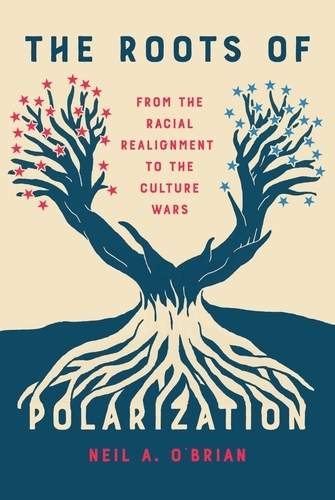
In fact, the Trump Era began after the 2016 US Presidential Election. It was basically the dawn of a new era of Fake News and Post-truth! An extreme polarisation not only rocked the US, but the entire world nine years ago. Therefore, it would be a mistake to blame Trump alone. The global community did not plunge into the wonderland of post-truth all of a sudden. Instead, analysts find the seeds of post-truth all in the course of events half a century ago. In his 2024 publication The Roots of Polarization: From the Racial Realignment to the Culture Wars, Neil A O’Brian, the Assistant Professor of Political Science at the University of Oregon, mentioned that the Civil Rights Movement of the 1960s influenced the contemporary partisan culture conflict in the US. And, the roots of the Civil Rights Movement could be traced to various cultural clashes of the 1930s.
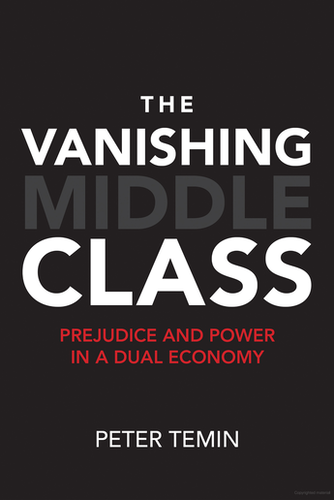
The Forbes magazine recently warned that Cultural Polarisation became a tough challenge at workplaces. However, the increasing polarisation across the globe is surely the product of multidimensional events, including economic, geographical and technology-related factors. All these change the direction of a society. According to analysts, rising income inequality and unequal distribution of wealth help increase political polarisation. In his The Vanishing Middle Class: Prejudice and Power in a Dual Economy (2017), Peter Temin, an Economic Historian and the Gray Professor Emeritus of Economics at MIT, mentioned that the Lewis Model of the Dual Economy recently became well-suited to the American context. Various issues, like globalisation, free economy, new technologies, which favour capitalists and professionals, and the declining protection of the working class contribute to the shrinking of middle class in the US. Even in countries where the proportion of the middle class appears to be increasing, the definition of the middle class has changed in various ways.
In October 2024, Merriam-Webster Dictionary added 200 words, including Far Left and Far Right. Be it politics, sports or entertainment, support was mainly divided into two camps in the past. Arguments between the supporters of two political parties with ideological differences, two football teams or two eminent personalities were a common phenomenon in the world of politics, sports and entertainment, respectively. However, the Centrists used to play an important role in a society. Unfortunately, they have started losing acceptance! Hence, there is hardly anyone to play the balancing act. Therefore, ideological differences gradually turn into hatred! One can mention the conflict between the two US rappers, Drake and Kendrick Lamar, in this regard. Polarisation of opinions was seen after the International Olympic Committee (IOC) stripped American gymnast Jordan Chiles of her bronze medal after the 2024 Paris Olympics. From Italy to Argentina and the US to India, polarisation is clearly visible everywhere.
Polarisation certainly means division, but a certain kind of division. In the 21st Century, the majority of people lean toward the poles, rather than the centre. French President Emmanuel Jean-Michel Frédéric Macron or German Chancellor Olaf Scholz surely understands the danger of abandoning the centrist standpoint. Many countries, including some in Europe, have experienced social instability in the absence of strong moderate politicians in recent times.
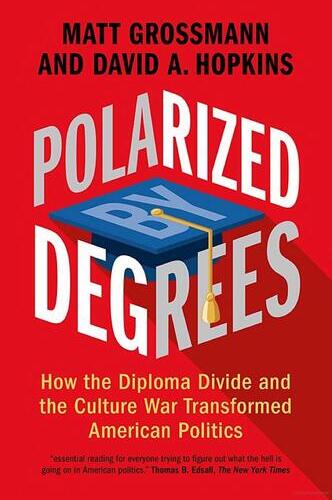
In their latest publication Polarized by Degrees, Matt Grossmann and David A Hopkins have stated that the American society has experienced a number of fundamental changes over the decades. According to the two authors, changes in relationships between social groups, evolution of linguistic norms and behaviour, increasing value of educational qualification, etc., have polarised the political climate of the US, igniting the perpetual cultural war. The Democrats have gradually become the party of the highly educated people with progressive social views, while the Republicans have become an outfit of degree-less Whites, who have no trust in teachers, scientists, journalists, universities, etc. One lives in an increasingly complex world, where everything becomes a part of politics and politics is going on about everything.
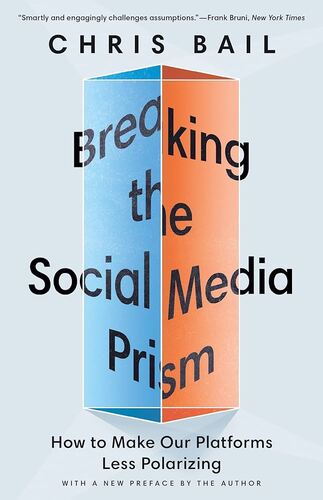
Technology, too, intensifies polarisation by helping a particular class of society to become powerful and wealthier. The rise of the internet, social media and Artificial Intelligence (AI) have contributed enormously to global polarisation in the last couple of decades. In his 2021 publication Breaking the Social Media Prism: How to Make Our Platforms Less Polarizing, Chris Bail narrated the political impact of social media. The author showed how the ever-widening gap between social media and face-to-face interaction led to increased political polarisation. It may be noted that Bail did not describe social media as a mirror, but as a prism through which people see themselves and others obliquely.
In the 21st Century, no one can ignore the impact of AI that has already widened the division in a society mainly through social media. The development of AI would further polarise the society which would concentrate only on two poles in the coming years.
Boundless Ocean of Politics on Facebook
Boundless Ocean of Politics on Twitter
Boundless Ocean of Politics on Linkedin
Contact: kousdas@gmail.com

 ISMC
ISMC Boundless Ocean Of Politics