

On Privacy, Secrecy & Confidentiality
K S Puttaswamy (February 8, 1926 – October 28, 2024), the former Judge of the Karnataka High Court (India), recently passed away at the age of 98. However, the Indian democracy shall remember him chiefly as a plaintiff in a case against the State as he challenged the Government of India in 2012 over making Aadhar mandatory. Aadhar is a 12-digit Unique Identity Number (UIN) that can be obtained voluntarily by all residents of the South Asian country, based on their biometrics and demographic data. The data is collected by the Unique Identification Authority of India (UIDAI), a statutory authority established in January 2016 by the Government of India. Justice Puttaswamy had submitted to the Supreme Court (of India) that this particular scheme of the Indian Government was intruding on the privacy of citizens! He argued that “it is a clear violation of citizens’ privacy and among various other reasons this programme was rejected by the Parliamentary Standing Committee on Finance, but still the Government of India went ahead with it. How can this awfully wrong programme roll out without a clear legislation?“
Finally, a nine-judge Constitution Bench led by the then Chief Justice of India (CJI), J S Khehar, upheld the Aaadhar Scheme on August 24, 2017. However, the Bench unanimously recognised Privacy as a Fundamental Right. The following day, Justice Puttaswamy called the verdict correct and beneficial, stressing: “I expected a fair-minded judgment, particularly because the Attorney General first argued that privacy was not a Fundamental Right, but then came around to the point that it was. The possibility of the court accepting the Right to Privacy as a Fundamental Right was very bright after this.“
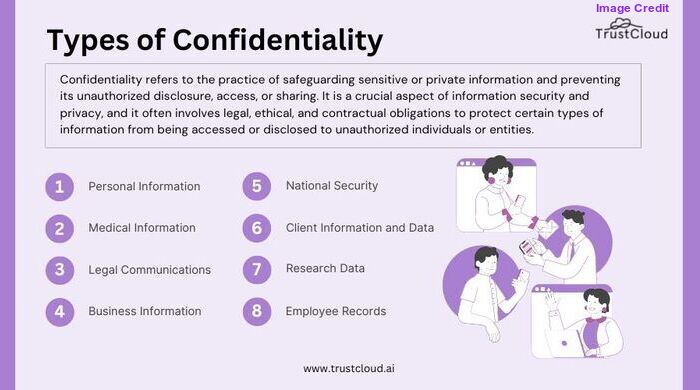
There is an undeniable difference between the terms privacy and confidentiality or secrecy. While some believe that privacy is all about keeping a secret information confidential, others are of the opinion that privacy means keeping one’s self secret! In fact, it is possible for a person to maintain her/his privacy even in a crowd. Hence, privacy is not just about confidentiality. Once, Gabriel García Márquez said: “All human beings have three lives: public, private and secret.” It seems that some consider privacy as confidentiality of personal space.
Samuel D Warren II and Justice Louis Dembitz Brandeis had penned an article, titled The Right to Privacy, in the Harvard Law Review way back in December 1890. In their view, the framework of privacy rests primarily on the Right to be let Alone! Brandeis, who served as an Associate Justice of the US Supreme Court from 1916 to 1939, discussed the Right to Privacy in his famous dissenting opinion in Olmstead versus United States case, stressing that the Right to be let Alone was the most comprehensive, as well as precious, right to civilised men.

In 2019, Brian X Chen, the lead consumer technology writer for The New York Times, asked security researchers what they could find out about him from just his cell phone number. He was shocked to know that a single phone number could churn out an incredible amount of (personal) information! Sinan Eren, the Chief Executive of Fyde, reportedly said: “If you want to give out your number, you are taking additional risk that you might not be aware of. Because of collisions in names due to the massive number of people online today, a phone number is a stronger identifier.”
Now, Artificial Intelligence (AI) has started encroaching the privacy of one’s personal space. In an article published in 2023, Wall Street Journal columnist Joanna Stern described how she cloned herself with the help of AI, and how her AI counterpart fooled her bank, as well as family! In her 2020 publication Privacy Is Power: Why and How You Should Take Back Control of Your Data, Carissa Véliz provided an insightful account of the relationship between privacy and power, setting out steps one could take to protect her/his privacy in an age of big data. She also discussed how tech companies were collecting information about our locations, preferences, habits, relationships, concerns and medical history without our knowledge and consent. Most importantly, those with whom we often communicate over phone sell the information to the decision-makers! Hence, the decision-makers come to know about the dilemma of people. According to Véliz, privacy is no longer just a personal matter, but a collective one!
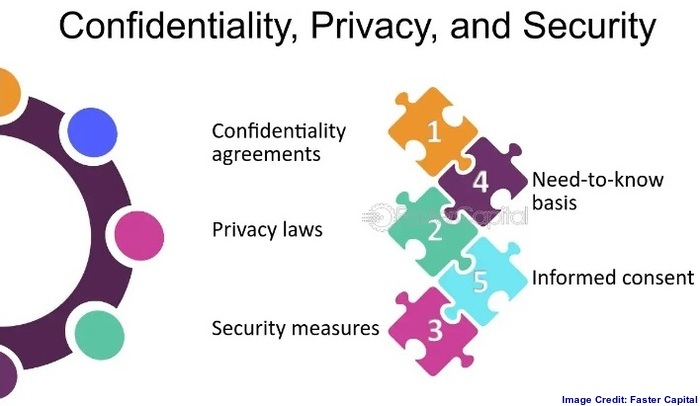
The traditional concepts of privacy are in constant conflict with the activities of the state in different parts of the globe. In fact, the state needs to know a lot of information about its citizens to ensure the welfare of them, and to ensure its security and sovereignty in the contemporary world. However, the thin line between the privacy of the citizens and confidentiality of one’s personal information is often breached. It varies from country to country, society to society, time to time, and of course with technological development. Hence, the debate continues, with people constantly redefining the boundaries of privacy and rights of a state.
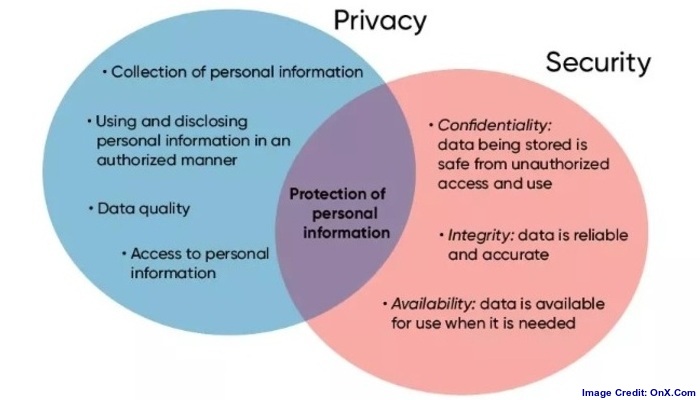
People, too, often mistakenly consider the security of their personal data, including financial information, as a matter of privacy. Security and privacy are not the same. In fact, security is required to protect information and it is only a part of privacy. Also, the majority of people do not really value their privacy! Otherwise, how do they expose their personal lives on social media and share their phone numbers in public? This is called Privacy Paradox.
In Peter Weir‘s 1998 movie The Truman Show, Truman Burbank was unaware that he was living his entire life on a colossal soundstage, and that it was being filmed and broadcast as a reality television show which had a huge international following. All of his friends, family and members of his community were paid actors as their job was to sustain the illusion and keep Truman unaware about the false world he inhabited. The moment Truman learned of his imprisonment at age 30, he erupted in rebellion and went to an uncontrollable state! The film helps one to realise that privacy is not a man-made concept. Instead, it is a desire deeply rooted in our hearts.
People, like Justice Brandeis or Justice Puttaswamy, have made a serious attempt to construct the form of privacy within their geographical boundaries.
Boundless Ocean of Politics on Facebook
Boundless Ocean of Politics on Twitter
Boundless Ocean of Politics on Linkedin
Contact: kousdas@gmail.com

 ISMC
ISMC Boundless Ocean Of Politics