

Almost ‘Perfectly Preserved’ Ancient Artefacts Found
Researchers have traced perfectly preserved artefacts near an Iron Age medieval mountain pass in Norway, thanks to melting of ice.
Ice is melting near the poles at a rapid rate because of Global Warming! Experts have already expressed serious concern over this development, stating that the melting of glaciers and ice sheets would not only cause sea levels to rise, but could also lead to coastal flooding, erosion and the loss of wetlands. However, they have ignored the fact that mountain ice and glaciers hold history to the past of Planet Earth. In September 2024, archaeologists confirmed that they recently found a treasure trove of artefacts circa 300-1500 AD, with peak activity in 1000 AD, in Scandinavia!
According to an article published in Miami Herald on September 10 (2024), the permafrost (a ground made up of soil, sand, sediment or rock that remains frozen for at least a couple of years) at high elevations just over 200 miles north of Oslo continues to melt because of Climate Change, prompting the Glacial Archaeology to play an important role in discovering the ancient artefacts. This particular field of archaeology focuses mainly on studying sites where ice is melting rapidly and revealing clues about civilisations throughout the ages.
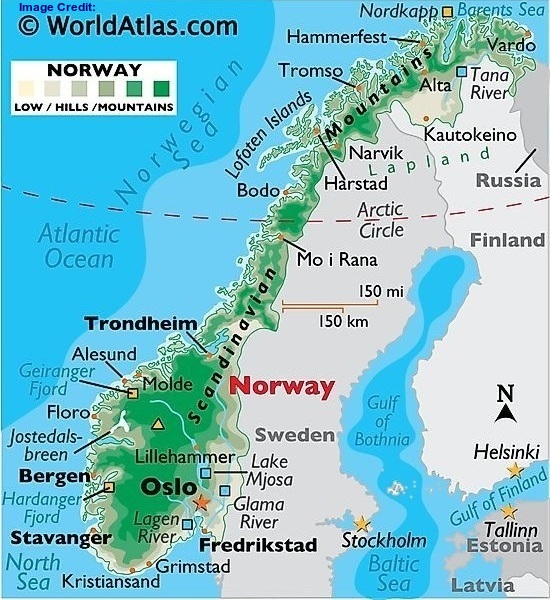
In Central Norway, archaeologists have found more than 3,000 artefacts, including textiles, animal bones, hunting tools, etc., which remained nearly untouched for thousands of years! What is really interesting about this find is that elements of the Earth would cause a normal degeneration in case of organic substances. However, they have fought a good fight in case of these glacial treasures that were revealed! Archaeologists have opined that the recently discovered artefacts would help them to know more about how people lived in ancient times. It may be noted that discoveries specific to the Lendbreen area have shown evidence of a Viking-era Mountain pass, leading to a better understanding of how groups had travelled throughout the Scandinavian region. The Lendbreen Glacier is situated in southern Norway, a roughly 200-mile drive northwest of Oslo.
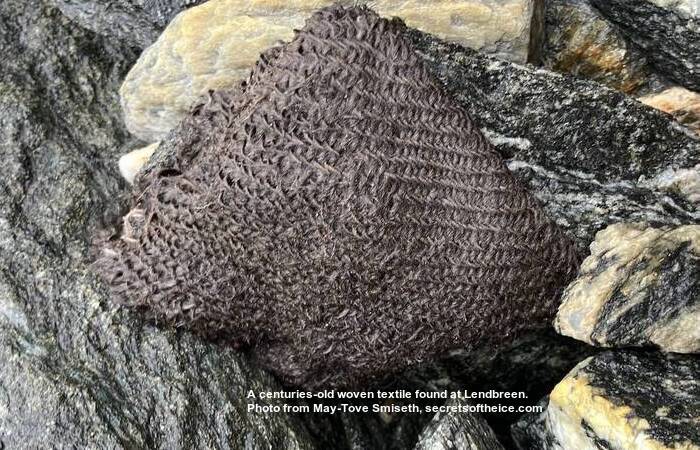
As archaeologists found a piece of woven textile in this pass, Project Co-Director Lars Holger Pilø stressed: “It is likely to be cut from a larger piece of textile, but we need to unfold it to be sure. That is the job of an archaeological conservator, not something we would do ourselves.” He informed the press that fabric finds were typically rare for them as these materials disintegrate quickly in such environmental conditions. However, glaciers are an exception. Fabrics trapped in glaciers are preserved in a perfect manner and begin to deteriorate only after being re-exposed to the air!

According to Pilø, they found nearly 50 clothes, including the woven textile, while surveying the melting ice in Lendbreen. They also found another exciting fabric artefact… “a leather or hide object”. “This object is likely from the Viking Age or Medieval period. It appears to have at least two different types of seams,” stated the archaeologist. Pilø added: “The leather or hide object may be a shoe, but again we need to let a conservator examine it first. If it is a shoe, they tend to be made of rawhide with the fur side facing out for a better grip on the snow.” He further said: “The hair normally disappears over time, so it is difficult to say now if this was originally made in rawhide or leather.”
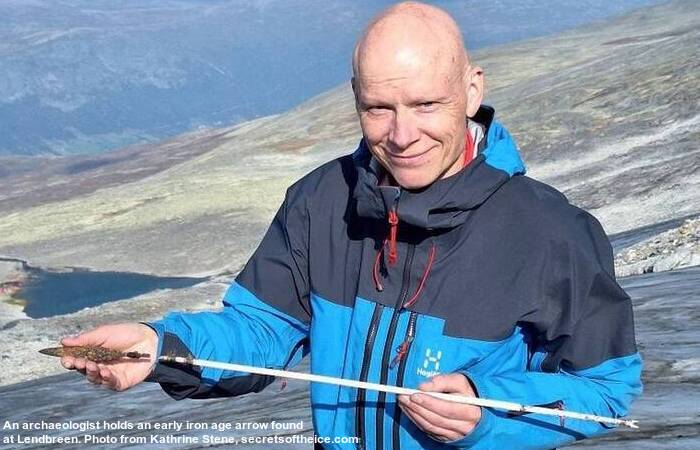
The historic finds at Lendbreen also included “three incredibly well-preserved Iron Age arrows”! Pilø claimed that it was evident from the shape of the arrowhead and nock that one of those wooden arrows was used between 300 and 600 AD. “This discovery will be a goldmine of information about ancient archery techniques when we get it back to the lab! Until this year, we had never found (such) well-preserved arrows on this site,” stressed Pilø. He said: “This is a sign that the melt is now reaching deep into the ice, exposing artefacts that have not been out of the ice since they were lost. It was a very rewarding week of fieldwork.”
As Planet Earth continues to get warmer, ice would continue to melt and the glacial archaeology would play a crucial role in revealing hidden stories beneath the ice!
Boundless Ocean of Politics on Facebook
Boundless Ocean of Politics on Twitter
Boundless Ocean of Politics on Linkedin
Contact: kousdas@gmail.com

 ISMC
ISMC Boundless Ocean Of Politics