

Serbia Takes A Cue From Croatia
Serbia has been facing a serious labour shortage in different sectors for a long time. In order to resolve the crisis, the Government of Prime Minister Ana Brnabić in Belgrade has made it easier for immigrants to get work permits in the Balkan nation. The concerned authorities in Serbia have claimed that employers are looking for workers in public transport, construction, hotels and restaurants, and some other sectors, as well. Those sectors are suffering a lot due to inadequate manpower. According to the Serbian Government, an estimated 30,000 Serbs leave the country every year and the majority of them are young people.
Jelena Jevtović, the spokesperson of the Serbian Employers’ Union, has said that some companies are implementing various effective measures in order to attract foreign employees. They have started hiring translators and interpreters for migrant workers. Although many employers communicate with foreign employees in English, there are some who cannot even communicate through this language properly. Hence, it becomes important for some employers to recruit translators and interpreters. Experts are of the opinion that Serbia would have to take effective measures, like neighbouring Croatia, in an attempt to attract workers from foreign lands. It may be noted that Croatia has already taken various measures to employ foreign workers in different sectors. Some Croatian companies have even started Croatian language courses for foreigners.

Gordan Bosanac, a member of the local Government in the Croatian capital of Zagreb, has stressed that such a decision was essential for Zagreb, as learning the Croatian language was the first step to integrate foreign workers. He has claimed that the number of active immigrants is constantly increasing in Croatia. Bosanac recently told Euronews that the number of foreign workers was around 23,000 in Zagreb only. Cities should not wait for the Central Government‘s unification mechanism to resolve the labour crisis, he added.
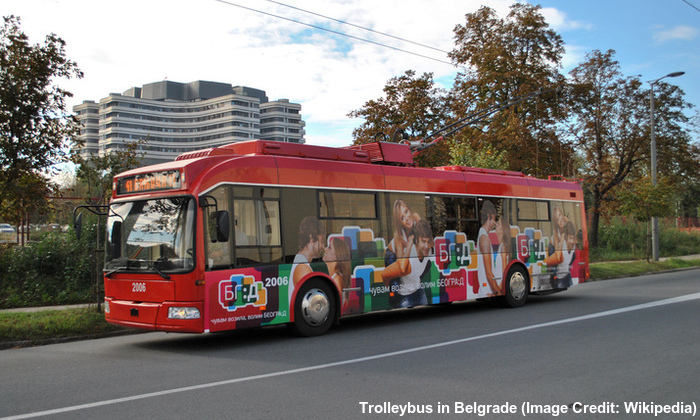
In its latest report, Forbes Serbia has mentioned that at least 50,000 migrant workers arrived in Serbia on work visas in 2023. Although this number increases every year, the Ana Brnabić Administration is yet to arrange any language courses in order to integrate them. The National Employment Service, too, has admitted that there is no language course for foreigners. Arriva, the largest international bus operator with a strong presence in Belgrade, recently brought some bus drivers from Sri Lanka. Arriva issued a statement in January 2024, saying that it resolved the language problem for the time being by organising a three-month training course for the Sri Lankan drivers. The course helped those drivers to learn Serbian.
According to Jevtović, the Serbian Employers’ Union is well aware of the language issue. One of the Union’s contractors, who recently employed some Turkish construction workers, realised the importance of teaching them the Serbian language. Jevtović told the press that the contractor hired an interpreter to handle the situation. The contractor, along with the interpreter, visits the construction site every day to communicate with the Turkish workers. Meanwhile, Jevtović has admitted that it is not always possible to solve the problem in this way, as many foreign workers are not interested in learning Serbian.
Serbian employers believe that it would not be a wise decision for the Government to invest in language training courses only for foreign workers, because most of them wait for the right opportunity to leave Serbia. Jevtović has recalled that a group of Cuban workers arrived in Belgrade with work visas to explore employment opportunities in the hotel sector. However, they left for Spain and the US after staying in the country for just three days. She told the media that the Government did not discuss language courses while working on a new law on the employment of foreigners. Jevtović has opined that such initiatives would not work for workers coming to Serbia for a short period of time. Such courses shall be beneficial for those who stay in the Balkan nation permanently or for a long time. “If they stay in Serbia for three months, they won’t really learn anything,” added the spokesperson.

Sasa Torlaković, the leader of the Trade Union of Construction and Building Materials Industry Workers of Serbia (SRGIGMS), has stated that foreign workers are taught sign language in the Netherlands. According to the trade union leader, workers from 10-12 countries work on a single Dutch construction site and the northwestern European country has constructed one million housing units for them. Torlaković has stressed that no one in Serbia is worried about the housing and language issues (faced by foreign workers). The burden of accommodation is often left to the workers or their employers, he added.
According to Torlaković, often there is only one member of a group of foreign workers who can speak English. The employer has to depend on this person to communicate with others. Hence, communicating with workers becomes a real problem for subcontractors. He has advised the Government to think about how to come to terms and conditions with workers from Nepal, India or Indonesia so that the migrant workers feel safe in Serbia.
Meanwhile, Forbes Serbia has confirmed that it become easier for foreigners to get a work permit under the new Employment Law in Serbia in February (2024), saying that procedures for obtaining residence permits and work permits have been unified. The entire procedure has become a two-week affair. As per the previous law, a foreigner coming to Serbia on a work visa had to check in a hotel and register with the Police before applying for a residence permit. They had to wait for a couple of months to receive the permit. Now, foreign employees are doing everything online.
Interestingly, Serbia is a major transit country in the Balkan Region as thousands of asylum seekers and refugees reach Western Europe via Serbia every year.
Boundless Ocean of Politics on Facebook
Boundless Ocean of Politics on Twitter
Boundless Ocean of Politics on Linkedin
Contact: kousdas@gmail.com

 ISMC
ISMC Boundless Ocean Of Politics