

The Crumbling Of Canada-India Relations
One country is situated in North America, while the other one in Asia. The distance between them is 11,462km. Canada and India share cordial ties in different fields, such as education, culture, trade, etc. A large number of Indians live in Canada. As per Worldometer Elaboration of the latest UN data, the current population of the North American country is 38,860,391 as of September 28, 2023. Among them, 1.4 million are Indian nationals, and the majority of these people have arrived in Canada for high quality education and research opportunities or employment.
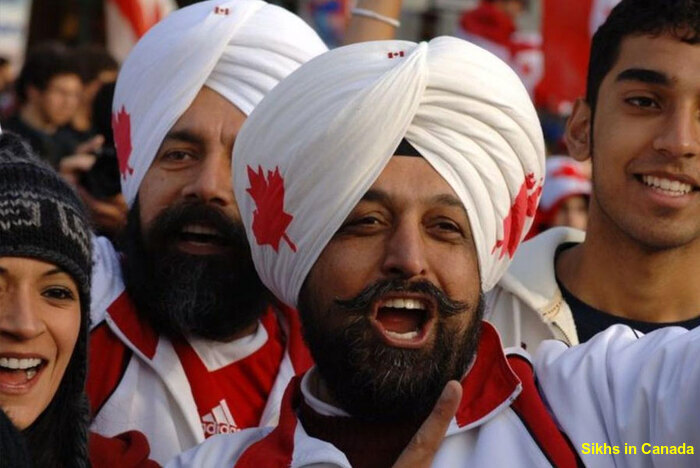
The Indian diaspora in Canada is 3.7% of its total population. Many Indian expatriates in Canada are followers of Sikhism or Sikhi or Sikh, an Indian religion and a philosophy that originated in the Punjab region of the Indian Subcontinent around the end of the 15th Century. There are 770,000 Sikhs in Canada or 2% of the country’s total population. Interestingly, the proportion of Sikhs in the Indian population is lower than in Canada! Sikhs constitute only 1.7% of India’s total population. Most importantly, Sikhs have played an important role in the formation of the Justin Pierre James Trudeau Government in Ottawa. Sikhs are quite active in Canadian politics, as the House of Commons has 18 Sikh members. It is more than India in terms of percentage. Hence, neither Prime Minister Trudeau nor any political party in Canada wants to hurt the Sikh sentiment.
Bilateral trade relations, too, are quite strong, as the two countries depend on each other for various products. Trade volume between Canada and India reached its peak in 2022. India mainly imports fertilisers and energy materials, like coal, coke and briquettes, from Canada, and exports consumer goods, vehicles, aircraft manufacturing equipment, electronic equipment and apparel. According to data published by the Canadian Government, trade between India and Canada was worth USD 9 billion in 2022. It was 57% higher than the previous year. India received the largest amount of fossil fuels (worth USD 1 billion) from Canada in 2022. In addition, Canada exported about USD 750 million worth of fertilisers and USD 390 million worth of wood products to India. Canada occupies the 17th position in the list of foreign investors in India. Since 2000, Canada has invested more than USD 3.6 billion in the Indian market.
The education sector of Canada attracts a huge number of Indian students. They visit Canada for higher education, as talented Indian students are valued in that country. According to Canadian Government statistics, Indians make up about 40% of the 0.8 million international students in Canada at present. The Canadian Bureau of International Education has confirmed that the number of Indian students in Canada is 320,000. A large number of Sikhs from India have migrated to Canada and settled there in the last two decades, mainly for higher education and employment.

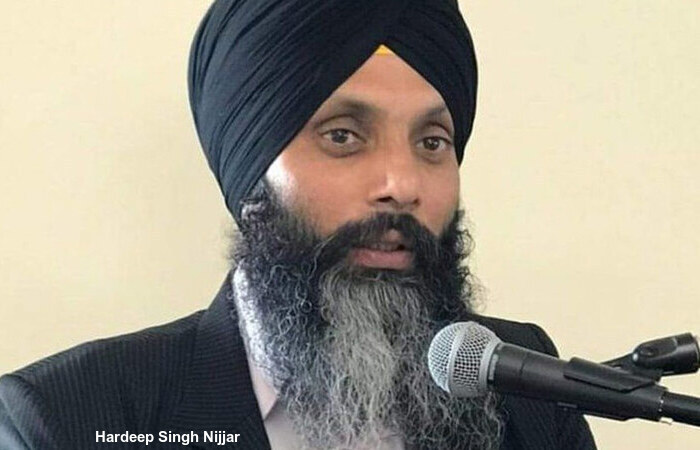
The relationship between the two countries has always been strong due to their respective trade and commercial interests. However, the bilateral ties have deteriorated in the past couple of months. Two unidentified miscreants assassinated Hardeep Singh Nijjar (October 11, 1977 – June 18, 2023), a Canadian Sikh and a Sikh separatist leader involved in the Khalistan Movement, in June 2023. He was the head of a gurdwara (Sikh temple) in British Columbia and the supremo of pro-Khalistan organisation Khalistan Tiger Force (KTF). Canada has claimed that India plotted the murder of Nijjar.
It may be noted that the Khalistan Movement is a separatist movement, seeking to create a homeland for Sikhs by establishing an ethno‐religious sovereign state called Khalistan in the Punjab region. The proposed boundaries of Khalistan vary between different parts of India and neighbouring Pakistan. Some suggest the entirety of the Sikh-majority in the Indian Province of Punjab, while larger claims include Pakistani Punjab and other parts of North India, such as Chandigarh, Haryana and Himachal Pradesh. Shimla (India) and Lahore (Pakistan) have been proposed as the capital of Khalistan.
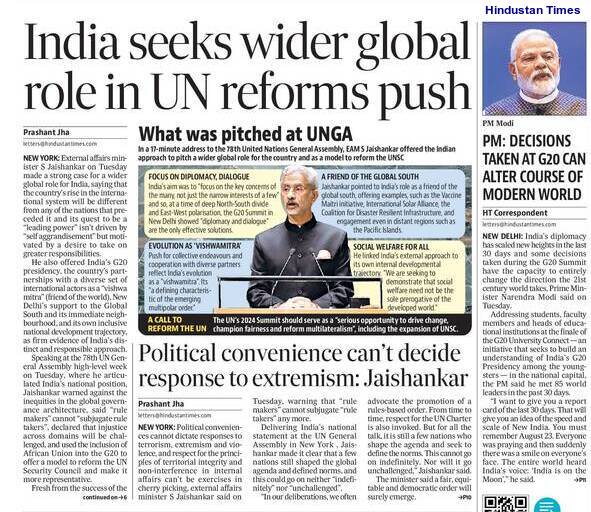
The Trudeau Administration expelled an Indian diplomat following the assassination of Nijjar. The Canadian Prime Minister claimed that he had credible evidence of the involvement of Indian agents in Nijjar’s murder. Prime Minister Trudeau stressed that he had discussed this issue with his Indian counterpart Narendra Modi on the sidelines of the recently-held G20 Summit in New Delhi. Meanwhile, India described Canada’s allegations as unreasonable, as well as motivated. The Modi Government also strongly criticised the expulsion of Indian diplomats, and asked a senior Canadian diplomat to leave India within five days.
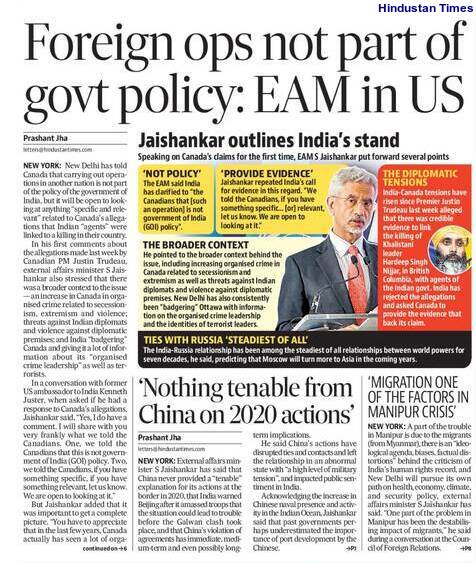
Ties between the two countries have been deteriorating in the past few years. Prime Minister Trudeau backed the Farmers’ Movement in India in 2020, and also sent a message to the Indian farmers in support of the anti-Government protests. He further expressed concern to Indians in Canada about the agitation against an Agrarian Act passed by the Indian Parliament. At that period of time, New Delhi advised Prime Minister Trudeau not to interfere in India’s internal matter. India also accused Canada of backing pro-Khalistan separatists and sheltering them. The National Investigation Agency (NIA) of India issued details of 43 individuals associated with the terror-gangster network, having links to Canada, on September 20, 2023. According to the NIA, many people, who are on the most wanted list in India, have taken refuge in Canada. The Government of India summoned Canada’s High Commissioner in March 2023, expressing concern over pro-Khalistan protests in the North American country.


The Khalistan issue is the main reason for the deterioration of India-Canada ties. Time and again, Prime Minister Trudeau has assured India that Canada does not support any separatist movement in the South Asian nation. However, Ottawa continues to provide the Khalistani separatists with shelter. In the current situation, it is difficult to predict the future direction of bilateral relationship.
Boundless Ocean of Politics on Facebook
Boundless Ocean of Politics on Twitter
Boundless Ocean of Politics on Linkedin
Contact: kousdas@gmail.com

 ISMC
ISMC Boundless Ocean Of Politics