

Specially Crafted Solar Panels At Pompeii, And
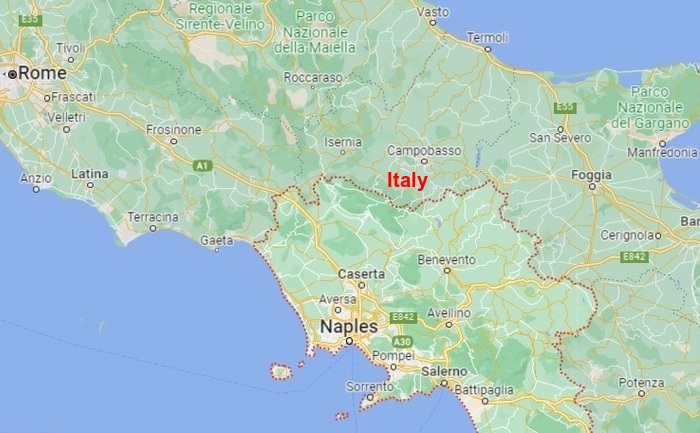
Invisible solar panels have recently been installed at various places in the ancient Roman city of Pompeii. The move is aimed at protecting the environment, apart from reducing the consumption of electricity. The project was implemented in two archaeological areas of Pompeii in February 2023. Remains of Pompeii are scattered throughout the Campania region, south-east of Naples. Some of its ruins have been under renovation for the last two decades. One of them is the House of the Vettii, a domus located in Pompeii. The nobles of Pompeii used to live in this House that was buried by volcanic lava after the eruption of Mount Vesuvius in 79 BC.

A place, called the House of Syria, was also renovated. It was popularly known as snacks bar in ancient Rome. These two places have recently been reopened for tourists. Invisible solar panels have also been installed at these two sites in the archaeological park of Pompeii. Gabriel Zuchtriegel, the Director of Pompeii Archaeological Park, said they ensured that the modern panels fit in with the ancient ruins. “They look exactly like the terracotta tiles used by the Romans, but they produce the electricity that we need to light the frescoes,” stressed the German-born archaeologist. According to Zuchtriegel, the invisible solar panels are used to illuminate the exterior of the ruins.
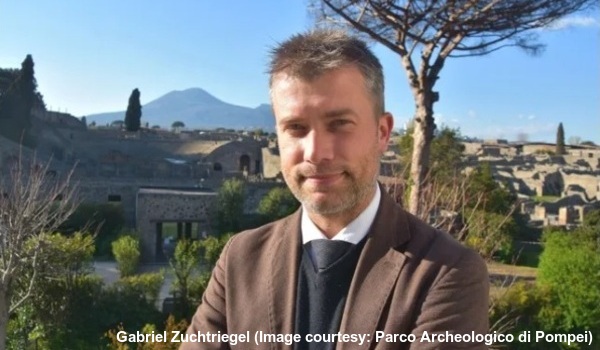
The director claimed that the solar panels would not harm the ruins of the ancient city of Pompeii. He told the press that the design of solar panels matched the background. They are designed in such a manner so that tourists would not be able to find them easily. As per official data, around 3.5 million tourists visit the ruins of Pompeii, which was once buried by volcanic lava, every year.

The concerned authorities had to pay a huge electricity bill for lighting this ancient Roman city. Hence, the authorities opted for an unconventional way of lighting. Furthermore, a more extensive excavation would have been required to supply electricity by conventional means. Also, there would have been a risk of loss of precious resources of the archaeological site. Zuchtriegel explained: “Pompeii is an ancient city which in some spots is fully preserved. Since we needed an extensive lighting system, we could either keep consuming energy, leaving poles and cables around and disfiguring the landscape, or choose to respect it and save millions of Euros.” He claimed that the new technology would help the archaeological site cut energy bills and make it more enjoyable.

Dyaqua, an Italian company, designed and manufactured the invisible solar panels that are technically known as traditional PV tiles. Elisabetta Quagliato, whose family owns Dyaqua, informed the media that the solar panels were designed to appear like stone, wood, concrete or brick, and they could be hidden on walls, floors and roofs. Meanwhile, Zuchtriegel stated: “We are an archaeological site, but we also want to be a real-life lab for sustainability and the valorisation of intangible heritage. Our initiative is not merely symbolic. Through the million tourists who visit us every year, we want to send a message to the world: Cultural heritage can be managed differently and in a more sustainable way.”

In addition to Pompeii, the concerned authorities in Italy made an attempt to use this technology in order to light other historical places, including the commune of Vicoforte and the contemporary art museum, Maxxi, in Rome. Such panels would also be installed in other countries. Public buildings in Evora (Portugal) and Split (Croatia) would soon get invisible solar panels.
The installation of such panels at Pompeii has opened up a new technological horizon. “From now on, we will be taking this solution into account for all future renovation and restoration projects,” said Zuchtriegel.
Boundless Ocean of Politics on Facebook
Boundless Ocean of Politics on Twitter
Boundless Ocean of Politics on Linkedin
Contact: kousdas@gmail.com

 ISMC
ISMC Boundless Ocean Of Politics