

Lost Mayan City Discovered
To explore the unknown is like an addiction… Nothing can prompt a person to quit an addiction. Archaeologist Dr Ivan Šprajc is one such person who has been searching for ruins of the ancient Mayan Civilisation in the dense jungles of Mexico’s Yucatán Peninsula for the past three decades. The jungles did not disappoint him, as the Slovenian archaeologist has uncovered the ruins of several ancient Mayan cities in that area since 2013. However, his recent discovery has made Dr Šprajc famous.

In June 2023, Dr Šprajc and his co-researchers from Mexico’s National Institute of Anthropology and History (INAH) discovered the remains of a centuries-old Mayan city in the Balamkú Ecological Reserve on the Yucatán Peninsula. Dr Šprajc has issued a statement, claiming that the settlement used to serve as an important regional centre during the Mayan Classic Period that spanned from CE 250 to CE 1000. The archaeologist has named this city Ocomtún, which means stone column in Yucatec Mayan language, as he has found a number of such columns at the site. According to the statement, there are many structures, including pyramids, stone columns and a ballgame court, spread all over the city. The height of some of these structures are more than 50ft.

The Mayan Civilisation is one of the oldest civilisations in the Western Hemisphere. The Mayan people virtually ruled America between AD 200 and AD 900. Researchers are of the opinion that the people of this civilisation were very proficient in astronomy, mathematics and science. They even invented chocolate and rubber. As the Mayans had their own language and scripts, they were familiar with written communication. However, this civilisation suddenly declined from the 9th Century, as people started leaving the cities.

Dr Šprajc discovered several Mayan cities from the dense jungles on the Yucatán Peninsula in the past. Notable among them is Chactún (or Red Rock), an 8th Century city discovered in 2013. Chactún was in its prime between AD 600 and AD 900 AD, as this city is made up of 15 pyramids, various plazas, homes and offices for elite members of society, and ball courts. Nearly 40,000 people may have lived in Chactún once upon a time. The city covers about 54 acres of land, and its nearest neighbour is Xpujil, another ancient Mayan town also in ruins. Dr Šprajc of the Slovenian Academy of Sciences and Arts has stressed that the discovery of Ocomtún may reveal exactly what caused the Mayan Civilisation to collapse nearly 1,200 years ago. It is still unclear whether the Mayans left their cities because of epidemics or attacks by the enemies or climate change. The change of lifestyle may also be another reason.

The biodiversity and density of the Balamkú Ecological Reserve is very high, as one can find at least 86 types of animal species here. Also, there is no way to enter the jungles. Dr Šprajc and his team members first prepared a map of the area with the help of Light Detection and Ranging (LIDAR) technology. Then, they started cutting the jungles to reach the ancient Mayan city. Like other ancient Mayan cities, Ocomtún also has a great architecture at its centre. There are sports arenas, three market areas, two pyramid-like structures of 50ft and 80ft, too.
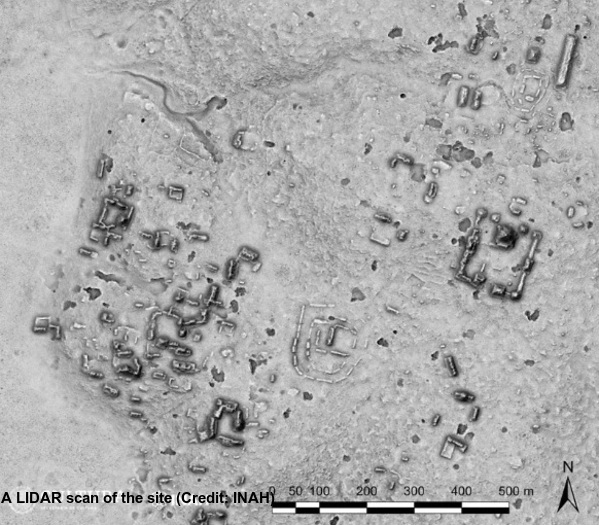
Commenting on the latest discovery by Dr Šprajc, experts have stated that Ocomtún can show a new direction in the 150-year-long study of the Mayan Civilisation. Maybe, this is how Indiana Jones turns out to be real.
Boundless Ocean of Politics on Facebook
Boundless Ocean of Politics on Twitter
Boundless Ocean of Politics on Linkedin
Contact: kousdas@gmail.com

 ISMC
ISMC Boundless Ocean Of Politics