

China’s Concern On Israel-Palestine Conflict, And…
A month after helping narrow the gulf between Saudi Arabia and Iran by brokering an agreement to resume diplomatic ties between the two arch rivals in West Asia, China has hinted that it is fully prepared to mediate Palestine-Israel talks, too. Soon after Mahmoud Abbas, the President of the State of Palestine, arrived in Beijing on June 13, 2023 for a four-day state visit, the Chinese Foreign Ministry said that the Asian Powerhouse would cement ties with Palestine, apart from playing a greater role in order to resolve the Palestine-Israel conflict.
The Global Times reported that Israel and Palestine had held direct peace talks, brokered by the US, way back in 2014 for the last time. Since then, the massive increase of Israeli settlements in the occupied West Bank has rendered a Two-State Solution all but impossible. The Chinese daily further claimed that President Abbas requested his Chinese counterpart Xi Jinping to help Palestine get the status of a full Member State of the UN during their meeting.
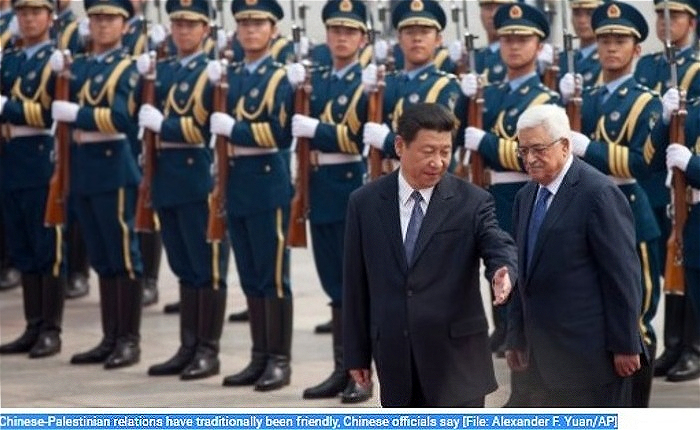
Experts believe that it is a great opportunity for China to promote its traditional friendship with Palestine to new heights, and to promote peace and stability in West Asia under the guidance of President Xi’s Global Security Initiative (GSI). According to experts, China’s move shall certainly put the US under tremendous diplomatic pressure, as Washington DC has never acknowledged or worked to end the Israeli Government’s apartheid. The US has failed miserably to resolve the Palestine-Israel conflict, the Syrian crisis, and to strike a nuclear deal with Iran. The failure of Washington DC has inspired Beijing to boost its influence in the Middle East, as the Xi Administration has rightly realised that the West Asian nations have lost faith in the US.
Meanwhile, Wang Wenbin, the spokesperson of the Chinese Foreign Ministry, called President Abbas an “old and good friend” of the Chinese people, stating that ties between the two countries have always been cordial. Wang recalled that China was one of the first countries to recognise the Palestine Liberation Organisation (PLO) and the State of Palestine in May 1965. Later in November 1988, China formally established diplomatic ties with Palestine. The Global Times quoted Wu Sike, the former Special Envoy of the Chinese Government on Middle East issues, as saying: “This year marks the 35th anniversary of the establishment of diplomatic relations between China and Palestine. Abbas’ visit is of special significance to bilateral relations.“

Geopolitical experts are of the opinion that West Asia is undergoing significant changes, with China heavily influencing regional politics. After helping Saudi Arabia and Iran begin a process of reconciliation, Beijing is eager to resolve the Israel-Palestine crisis in an attempt to ensure peace in the region. Wu has admitted that it would be a difficult task to promote the settlement of the long-standing and complicated Palestinian issue. Interestingly, Tunc Akkoc, the Editor in Chief of Harici Media in Turkey, has welcomed Beijing’s decision, stressing: “As a matter of fact, China’s mediation efforts in the Middle East have begun to pay off.” For his part, Professor at the Institute of International Relations (at the China Foreign Affairs University) Li Haidong stated that both Saudi Arabia and Iran used to back different forces in Palestine, as the disunity within Palestine allowed them to enjoy political mileage. “With the Saudi-Iran reconciliation, this problem will be gone,” stressed Li.
Israel, too, believes that the Chinese efforts to promote peace in West Asia shall irk the US, as Washington DC is concerned about Beijing’s increasing influence in the region, where the US has been the main power broker for decades. In a report published on June 13, the Times of Israel stated: “Beijing has sought to boost its ties with the Middle East, challenging long-standing US influence there – efforts that have sparked unease in Washington.” Commenting on this issue, Li said: “In fact, it is the US that cares most about its own influence and hegemony when intervening in Middle East affairs. The US might not want to see regional conflicts totally losing control, but it also tries to keep those conflicts from a peaceful solution, so it always plays the game of ‘divide and rule‘ to push confrontations between blocs, and to force regional countries to fight against each other.“
Boundless Ocean of Politics on Facebook
Boundless Ocean of Politics on Twitter
Boundless Ocean of Politics on Linkedin
Contact: kousdas@gmail.com

 ISMC
ISMC Boundless Ocean Of Politics