

When Women Say ‘You Are Overthinking’
She says everything’s fine… but something feels off. Her tone has changed. Her energy is different. Her words don’t match her actions. There are five common lies women tell when they are hiding something – whether it’s emotional detachment, secrets or a shift in loyalty. Narrated from a female perspective, this dark psychology deep-dive reveals what these lies really mean, why women use them and how men can read between the lines. If one has ever had that gut feeling that something is not right.
Let’s be honest… when a woman is hiding something, she would not tell you outright. Instead, she will use words that sound harmless, calm and even kind. However, behind them lies a story she does not want a man to norice.
Women rarely confess when something is wrong. Instead, they camouflage the truth using emotional language, distraction or even guilt to protect their image. But, here is the dark psychology behind it. When a woman hides something, her words always change before her behaviour does. There are five common lies women tell when they hide something… whether it is about emotions, attention or loyalty. These patterns always reveal the same thing: A woman’s emotional truth is trying to leak through the cracks. Now before we dive in, understand this: These are not accusations. These are observations and patterns that repeat across cultures, relationships and generations because human psychology does not lie even when people do and the sooner you understand the language of concealment, the sooner you stop being confused by mixed signals and start exploring the truth that has been in front of you all along.
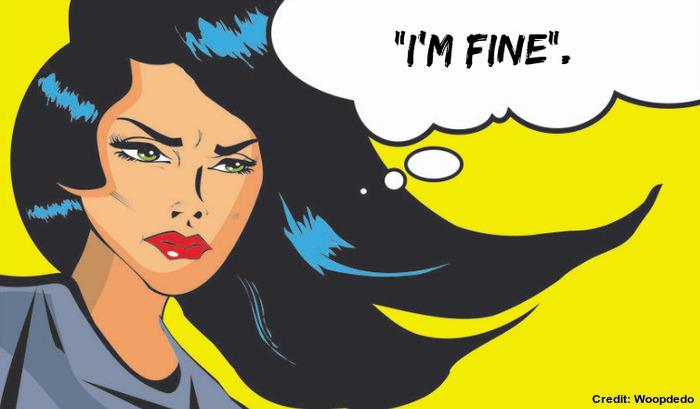
- I’m Fine: Let’s start with the most famous line of them all. “I’m fine.” You have heard it and probably believed it once or twice. But, when a woman says “I’m fine” in a flat tone, she is not fine. She is filtering, emotionally retreating, editing her truth to keep peace or maintain control.
Psychologically, this is called Emotional Concealment. When someone suppresses truth to avoid accountability or conflict, s/he does this because confrontation can expose emotions the person is not ready to explain. So, instead, they keep it short, vague and detached. When she says that she is fine, but her tone goes cold; it is not calmness, it is containment. She is holding something in and your instinct already knows it. Here is what most men miss. It is not just about the words; it is about the context surrounding them. When you ask her what is wrong and she responds with I’m fine while avoiding eye contact, crossing her arms or turning her body away from you, it is not agreement, but emotional withdrawal. She is creating a distance without creating a conflict. And that is the trap because by saying fine, she is technically not lying. She is just withholding. She is giving you permission to stop asking without telling you the truth.
In relationships, this becomes the power dynamic. The person, who controls the flow of information, controls the emotional temperature of the relationship. When she says I’m fine repeatedly, she is training you to stop seeking depth, to stop probing and to accept surface level answers as the full story. However, you already feel it, don’t you? That gnawing sense that something is off… that is your subconscious picking up on the incongruence between her words and her energy. Always remember that the truth hides not in her words, but in the pause before she says them.

- You Are Overthinking: This one is subtle, but powerful. It is the go to defence mode when a woman feels cornered by your intuition. When you sense something is wrong and her energy is off, her routines change and she says You are overthinking it, she is not reassuring you. She is redirecting the spotlight. This is a dark psychological tactic, called Gaslighting through minimisation. It makes you question your own perception so that she can protect her narrative. It is not that you are overthinking. It is that she is under-explaining. A woman, who has an open will, will clarify. But, a woman, who is hiding something, will deflect. Think about it.
When you bring up a legitimate concern and the response is not an explanation, but an accusation about your perception; what is really happening? She is turning a mirror back on you, making your awareness the problem, instead of addressing what triggered that awareness in the first place. This tactic works because it targets your self-doubt. It makes you second guess what you feel, what you saw and what you sensed. And, over time if you hear that you are overthinking enough, you stop trusting your gut, you start dismissing red flags as paranoia, you begin to apologise for noticing inconsistencies. That is not healthy communication. This is emotional manipulation dressed up as patience.
Here is the reality. Intuition exists for a reason. Your subconscious mind processes thousands of micro signals that your conscious mind does not register. That uneasy feeling is data. It is a pattern recognition. When she tells you that You are overthinking what she is often really saying is You are noticing things that I am not ready to explain. And, the moment you accept that label the moment you shrink your awareness to keep the peace. You have handed over your power. So, when she calls you paranoid or insecure what she is really saying is You are getting too close to the truth.

- I Have Just Been Busy: This one might look innocent. Everyone is busy. However, when busy becomes her favourite excuse, it is usually to cover up avoidance. You used to talk every day. Now, it is sorry. “I have just been busy.” She used to make plans. Now, it is I have a lot going on. This is how emotional distance hides in plain sight. In Psychology, it is called Avoidant Detachment. She starts relacing emotional intimacy with productivity or distractions.
However, here is the twist. It is not that she suddenly has lesser time, It is that she is giving that time to someone or something else that now feels more rewarding. Let’s break this down even further. Time is the currency or priority. We make time for what matters. We all have 24 hours in a day, and yet somehow, we find times for people and the things we truly care about. When a woman is genuinely interested, she does not need reminders to text back, she does not forget to call, she does not cancel plans at the last minute because something came up. She makes space, creates windows and reaches out even when her day is packed because connection matters more than convenience. But, when busy becomes a recurring theme, it is a signal not for her schedule, but for her priorities shifting. Maybe, she is losing interest or exploring other options or emotionally checked out, but has not found the courage or the reason to end things yet.
Whatever the cause, the result is the same. You are no longer at the centre. You have moved to the periphery. And, here is what makes this lie so effective. It is socially acceptable. No one argues with a busy person. It sounds reasonable, sympathetic even. But, pay attention to what happens when she is too busy for you, but never too busy with her phone, never too busy to post on social media, never too busy to engage with friends, hobbies or new interests. That is not a time management issue. That is a priority shift you are not being told about. The moment she stops being too busy with her phone, but too busy for you; you are not her priority. You are her backup plan.
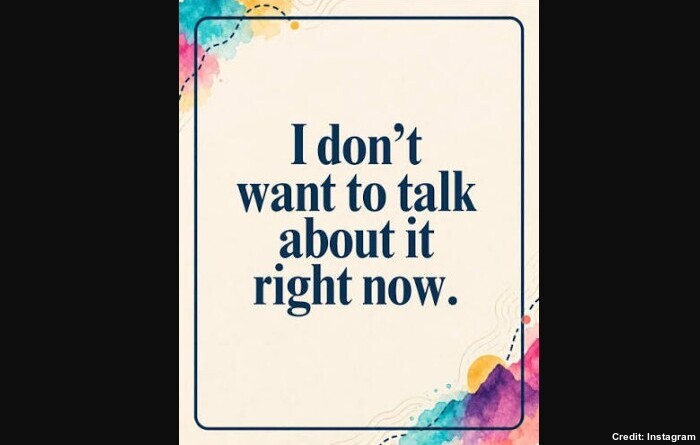
- Don’t Wanna Talk About It Right Now: This one feels gentle, even reasonable. But when it becomes a pattern, it is not emotional protection. It is emotional control. One must remember that women know timing is powerful. By saying Not right now, she pushes confrontation to a moment when she feels more prepared or when her man is too emotionally tired to bring it up again. That is not conflict avoidance, but conversation control. She is buying time to compose herself, rewrite her story or adjust what she will tell you next. The dark psychology behind this is simple: People hide best in silence. And when she avoids conversations long enough, her version of truth becomes the only one left standing.
Let’s dig deeper into why this works so well. When someone delays a difficult conversation, they are betting on two things that your urgency will fade and that the gap in time will make confrontation feel less relevant. It’s strategic ambiguity… by keeping you waiting, she controls the narrative, decides when the conversation happens, how it happens and what gets said.
Meanwhile, you are left in emotional limbo, uncertain, anxious and wondering if you should push or give her space, wondering if you are being impatient or if you are being played. And, here is the kicker. Most of the time, Not right now never becomes okay. Let’s talk. It just becomes why are you still bringing this up or I thought we moved past this. The conversation gets buried under time and your concerns get reframed as grudges. That is not resolution, but suppression. A woman, who genuinely values the relationship, will make space for hard conversations. Not because they are comfortable, but because clarity matters more than comfort. However, a woman, who is hiding something, will delay, dodge and deflect until you either forget or give up.
Never accept Not right now as the end of a conversation. It is just the start of a cover up.

- You Have Nothing To Worry About: This is the masterpiece lie. It is confident, calm and soothing, and that is exactly what makes it dangerous. When a woman says You have nothing to worry about while you are already feeling uneasy, it is not reassurance. It is psychological redirection. It is meant to soothe you enough to stop asking questions. But if everything were truly fine, you would not need convincing. Would you? In dark psychology, this is called False Reassurance Framing. It gives comfort while quietly protecting deception. It is manipulation coated in softness.
Think about the mechanics of this phrase. It is designed to do two things simultaneously: Calm your anxiety and shut down your curiosity. By telling you not to worry, she is implying that your concern is the problem and not whatever triggered it. She is reframing your awareness as insecurity, your caution as distrust. In that reframing, she positions herself as the reasonable one and you as the one overreacting. But here is what you need to understand: Genuine reassurance does not require repetition. It does not require convincing when someone is truly being honest and transparent. Their actions back up their words so consistently that reassurance becomes unnecessary. You don’t worry because there is nothing to worry about. Not because you have been told there is not. However, when reassurance is needed constantly and when you find yourself seeking confirmation again and again, that is not paranoia. That is your intuition screaming that something does not add up. A woman, who is truly innocent, would not need to tell you not to worry. Instead, her actions will make you feel safe.
Here is the truth about all of these. Women do not always lie to hurt you. Sometimes, they lie to protect themselves from judgment, from conflict, from confrontation, from the vulnerability of being fully seen. However, emotional truth is not about what is said, it is about consistency between words, tone and behaviour. If her words say one thing, but her actions whisper another; listen to the whispers because what women hide always comes through energy first… in the distance, in the silence, in the little emotional pauses that were not there before. And the moment you stop reacting to what she says and start observing what she does, you will never be confused again. Understanding these patterns is not about becoming cynical, it is about becoming aware, it is about recognising that communication is more than language. It is tonality, body language, consistency, follow through.
The lies we have explored are not unique to women. Humans hide truth when truth feels unsafe. However, in relationships, awareness is everything. When you know the patterns, you stop being reactive, you stop questioning your sanity, you stop accepting explanations that do not match the evidence. You become grounded in observation, not assumption and that is where your real power lies.
Source: Dark Psychology via Facebook
Meanwhile,









Boundless Ocean of Politics on Facebook
Boundless Ocean of Politics on Twitter
Boundless Ocean of Politics on Linkedin
Contact us: kousdas@gmail.com

 ISMC

