

Hardline Jewish Party Quits Bibi-Led Bloc!
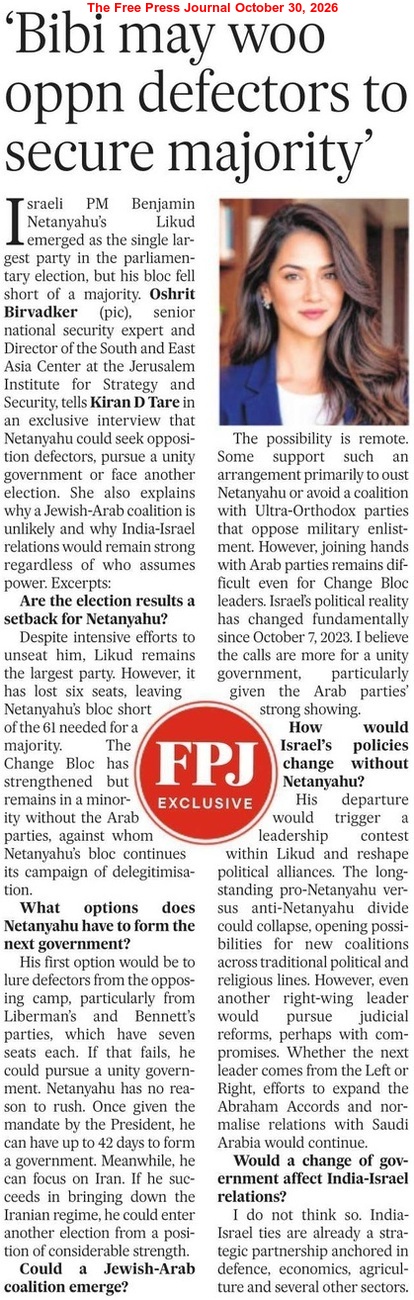
Speculation has begun as to whether Benjamin ‘Bibi’ Netanyahu will be able to prove a majority in the hung Knesset (the Parliament of Israel). The outgoing Israeli Prime Minister suffered a major setback as soon as the vote-counting process concluded, with United Torah Judaism (UTJ) – an Ashkenazi Haredi (ultra-Orthodox) political outfit – leaving the Likud Party-led coalition and joining the opposition camp.
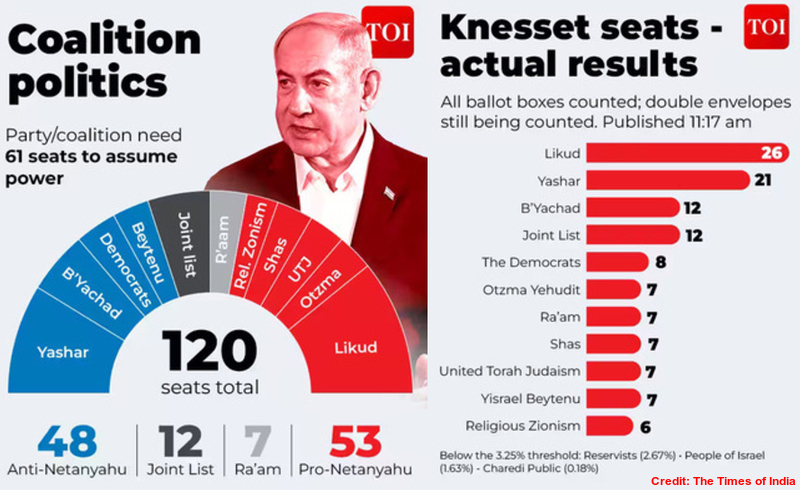
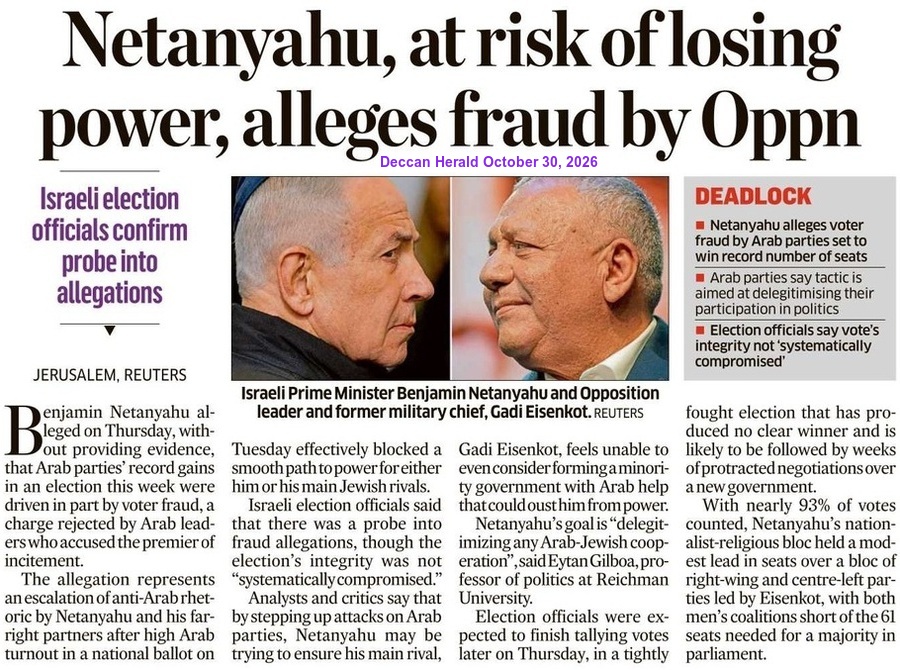
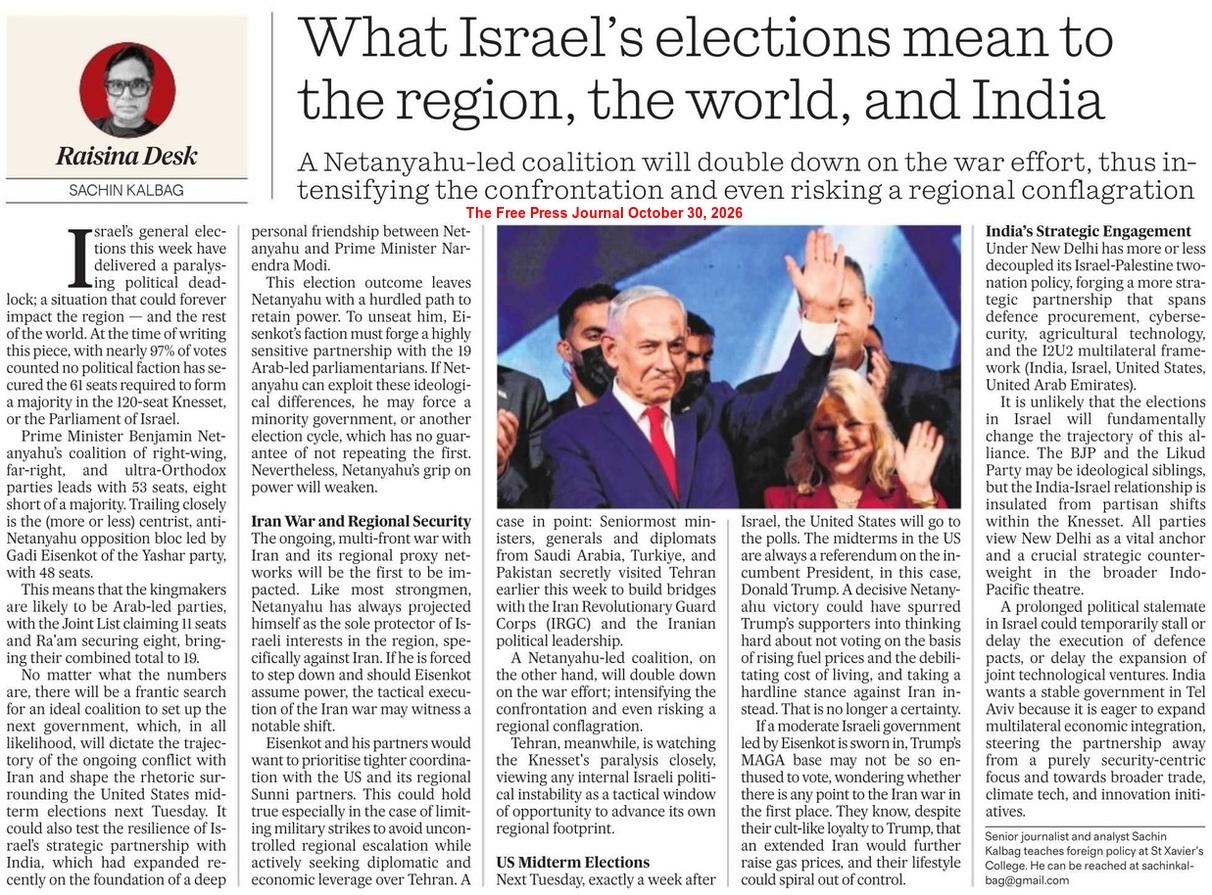
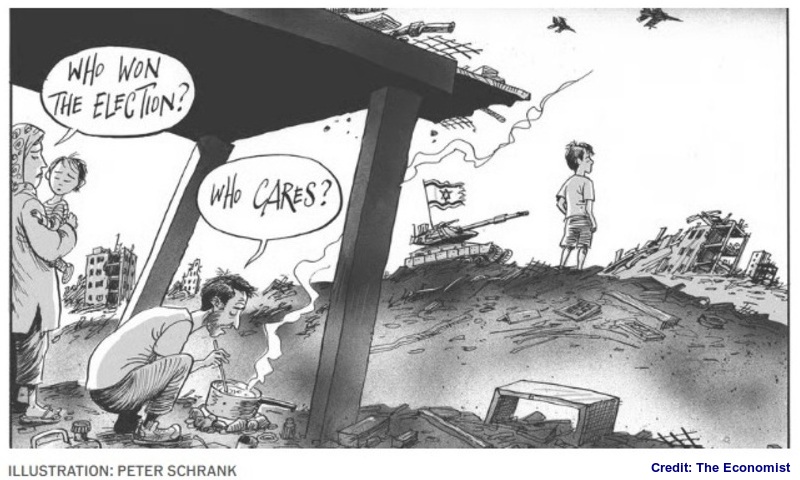
The total number of seats in the Knesset is 120. Therefore, the magic figure required to form the government is 61. However, not a single party or alliance has won that many seats. While the ruling coalition led by Netanyahu’s Likud Party has won 53 seats, the coalition led by opposition leader General (Retired) Gadi Eisenkot (also spelled Eizenkot) has bagged 48 seats. Meanwhile, the Arab parties have secured a record number of 19 seats in the Parliament, thus, emerging as kingmakers.
As far as the Netanyahu-led coalition is concerned, the Likud Party has won 27 seats (emerging as the single largest party), the UTJ has bagged seven seats, the Otzma Yehudit seven, the Shas six and the Religious Zionist Party has secured six seats. As a result, Netanyahu’s return to the post of Prime Minister becomes virtually impossible after the UTJ quits the alliance.
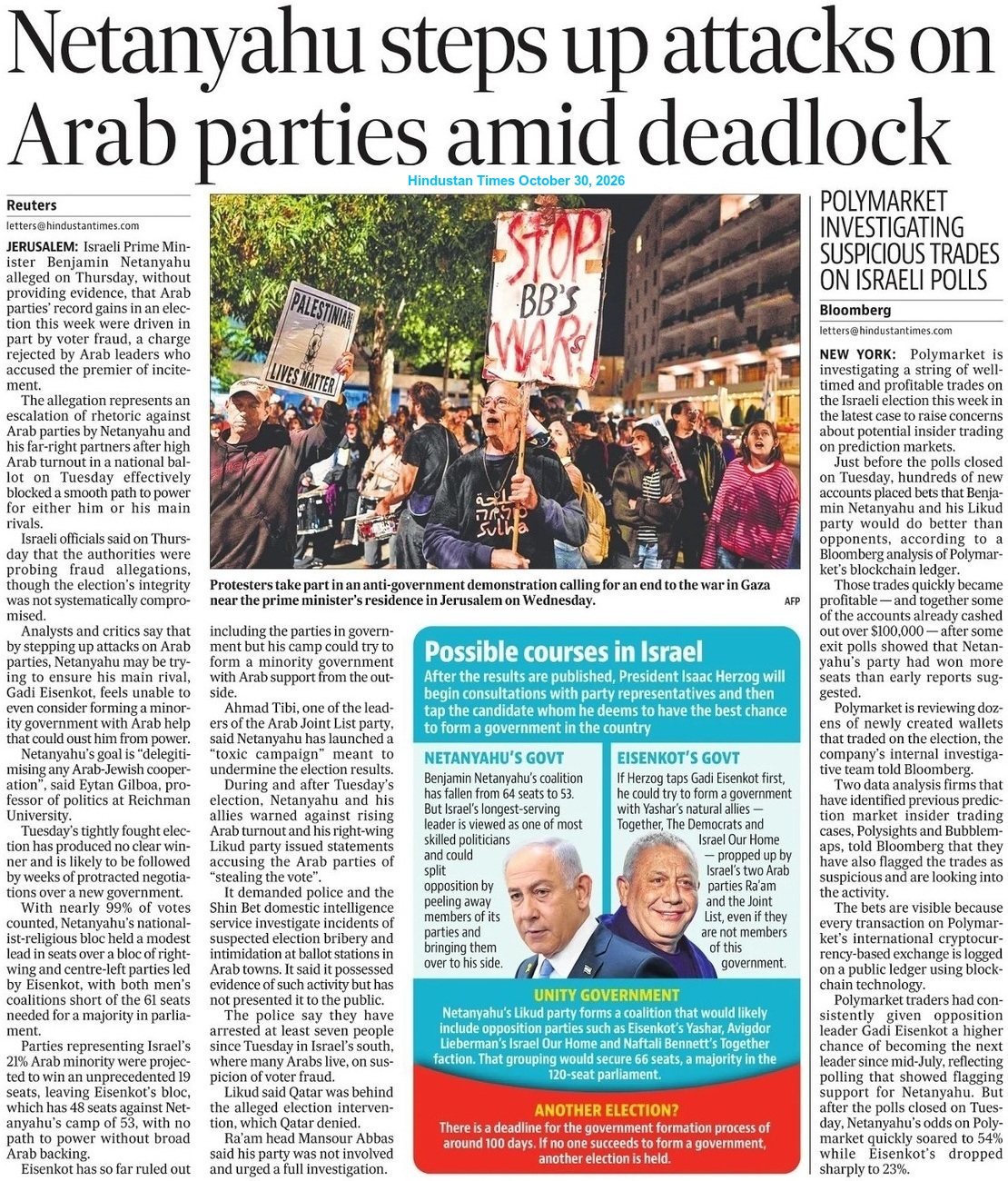
According to political analysts, the domestic politics of Israel could take three different turns because of the extreme uncertainty surrounding the formation of a government following the General Elections. Although the alliance led by Prime Minister Netanyahu has failed to secure an absolute majority, he still leads the largest single coalition. Hence, Israeli President Isaac Herzog might first invite Bibi to form a government in order to resolve the political deadlock. In that case, Netanyahu will have to win a vote of confidence in the Knesset to retain his position as the Prime Minister.
Meanwhile, another possibility is strongly emerging regarding the formation of the government. The alliance led by Eisenkot, too, could seize power with the support of the Arab parties. In that scenario, their seat count would reach 67 (48+19) which is higher than the magic figure. However, there is considerable uncertainty as to whether Eisenkot’s coalition will remain intact, if it secures Arab support.
The Arab alliance is primarily composed of three parties: Hadash (Democratic Front for Peace and Equality, A left-wing, joint Jewish-Arab party), Ta’al (Arab Movement for Renewal, a secular, nationalist party led by Ahmad Tibi) and Balad (National Democratic Assembly, a Palestinian nationalist party that advocates for transforming Israel into a state of equal citizenship for all its inhabitants rather than one with a preference for a Jewish national identity). Collectively, these three parties have secured 12 seats, while Ra’am – another Arab party – has won seven seats. In such a situation, Yair Golan, leader of the centre-left The Democrats Party, has called for the formation of a government with the support of the Arab parties. However, it is quite difficult for Eisenkot to accept this proposal.
Eisenkot’s anti-Netanyahu opposition alliance consists of a total of four political parties: Yashar! (led by Eisenkot), B’Yachad (the political alliance led by Naftali Bennett), The Democrats and Yisrael Beytenu (led by Avigdor Liberman). Joining hands with the Arabs carries the risk of causing a split among these parties.
In Israel, the President grants the designated candidate 28 days to form a government, with the possibility of a 14-day extension if requested and approved. If the largest party or alliance fails to form a government within that time frame, the President may choose another leader.
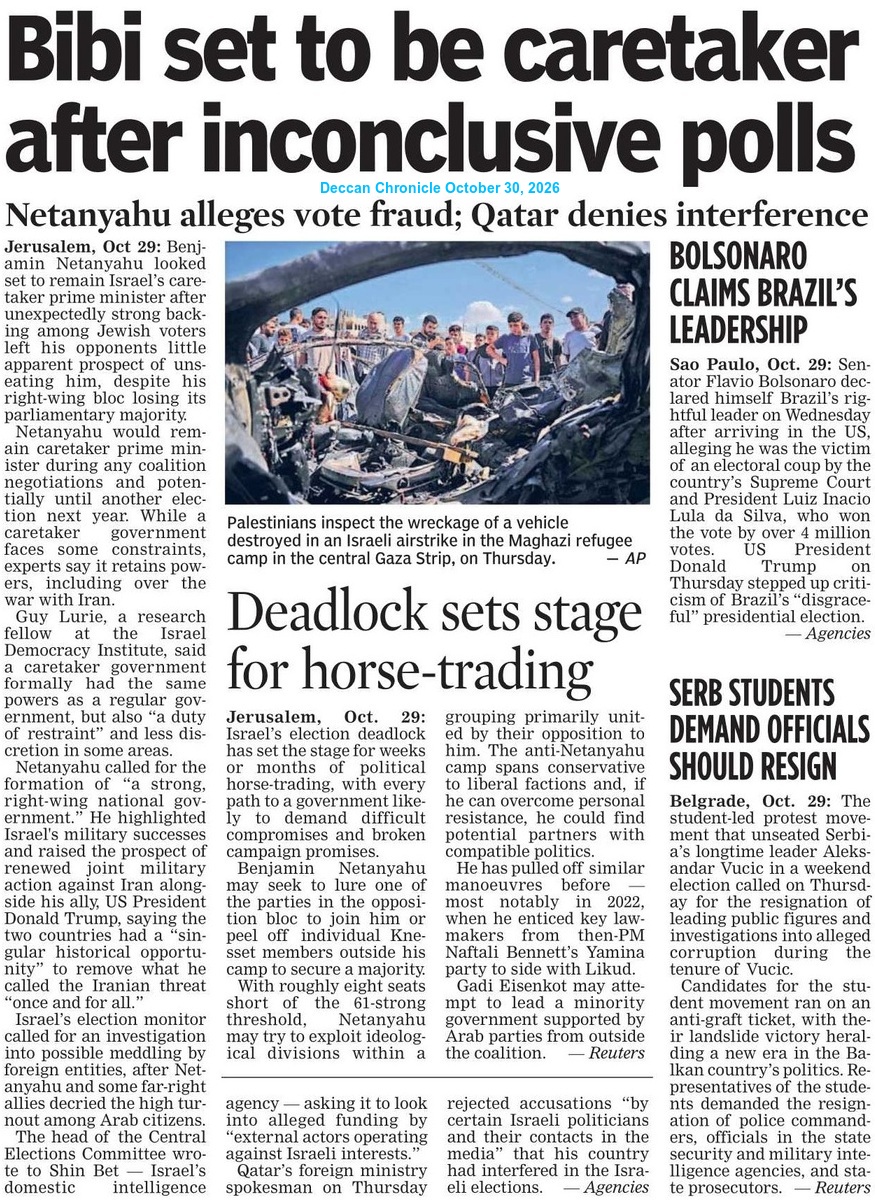
If the Prime Ministerial candidate chosen by the President fails to secure the necessary number of seats to form a government, members of the Knesset will have the opportunity to select a third leader. If the third leader, too, fails to form a government, then Israel will hold another General Elections and the process could take weeks or months. Until a new government is formed, the President asks the existing Council of Ministers to continue temporarily as a Caretaker Government led by the outgoing Prime Minister.
Meanwhile,




Boundless Ocean of Politics on Facebook
Boundless Ocean of Politics on Twitter
Boundless Ocean of Politics on Linkedin
Contact us: kousdas@gmail.com

 ISMC

