

Intact Horsehide Found In Burial Of 10th-Century Lady
The grave of a middle-aged woman was unexpectedly discovered while railway tracks were being laid in the Siberian region in 2014. However, this tomb was different from other tombs in that region. The skeleton of a newborn and the intact hide of a horse were also found there, alongside some personal belongings of that lady.
Archaeological excavation work was going on in the Sayan Mountains in 2014 ahead of railway construction. Archaeologists uncovered a stone-ringed mound, containing the remains of a 40-year-old woman and a newborn child while excavating the area. They also found the skull, limbs and complete skin of an adult horse, along with a sheep spine, a Chinese-imported bronze mirror fragment, gilt-bronze earrings, an iron knife and decorative horse stirrups.
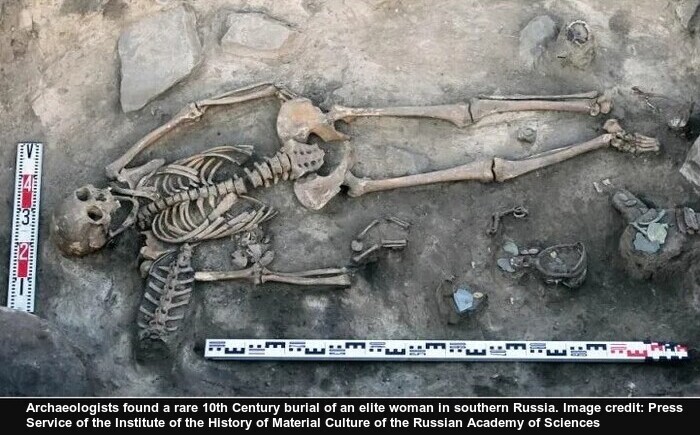
Andrey Poliakov, an Archaeologist and Director of the Russian Academy of Sciences’ Institute for the History of Material Culture who led the excavation, realised the moment he found all those items that the burial site was different from other ancient sites in Siberia. He stressed: “It’s quite clear that this is far from an ordinary burial. There are no more than a few dozen similar burials in the entire Sayan-Altai region.” However, extensive research was required to accurately analyse the significance of this burial site and it took more than a decade to do that. Two studies detailing the unusual burial and the horse equipment were published in the journal Bulletin of Novosibirsk State University (Series: History, Philology) in June 2026.
After extensive research, Poliakov and his colleagues concluded that it was a medieval tomb (The Middle Ages in Europe spanned from the 5th Century to the late 15th Century, although the timeframe varied by region). Radiocarbon dating of the burial site reveals that it was constructed sometime between the 9th and 13th Centuries. Meanwhile, researchers estimate that the woman and the newborn were likely buried in the 10th Century.

Significantly, the practice of burying bodies in this manner was rare among the nomads of the steppe region at that period of time. The steppe grasslands span an area of approximately 8,000km across Eurasia, geographically extending from present-day Hungary through Ukraine, Russia, Kazakhstan and Mongolia to Manchuria.
Archaeologists further observed artistic craftsmanship with multicultural motifs on a ritually broken bronze mirror and a ceremonial silver stirrup recovered from the burial site of the 10th-Century elite woman. As the craftsmanship features a winding vine and grape cluster design characteristic of Tang Dynasty luxury items from China, archaeologists are of the opinion that there was a cultural intermingling among various parts of Asia even in the 10th Century.
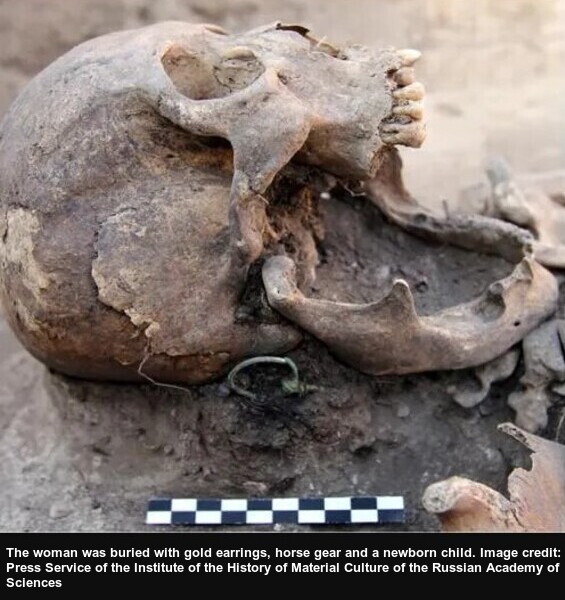
Also, the practice of burying a horse alongside a human has been observed in various places, like ancient Scythian, Viking and China. This ritual showed high social rank, deep companionship and a belief that the animal would help the person travel into the next world. However, such burials are rare in the mountainous region of Siberia.
Meanwhile,












Boundless Ocean of Politics on Facebook
Boundless Ocean of Politics on Twitter
Boundless Ocean of Politics on Linkedin
Contact us: kousdas@gmail.com

 ISMC
ISMC
