

USA@250: It’s Necessary To Review History
July 4, 2026, the 250th anniversary of American Independence, is being commemorated with the largest coordinated Independence Day celebrations in US history, collectively known as America250.
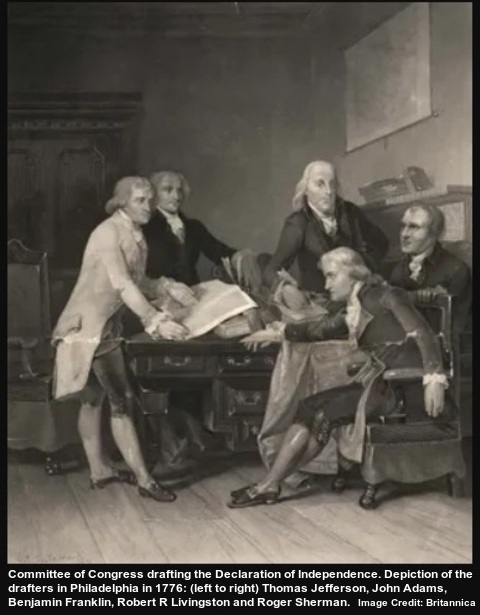
On this day in 1776, the Second Continental Congress adopted the Declaration of Independence in Philadelphia. The historic document severed the political ties of the 13 colonies from Great Britain, marking the official birth of the United States of America. It may be noted that both Thomas Jefferson’s Original Rough Draught and the final Declaration of Independence adopted by the Continental Congress explicitly named the new nation the United States of America. In fact, the assertion that “all men are created equal” not only possessed unalienable rights, such as life, liberty and the pursuit of happiness; but also provided the foundational blueprint for modern republicanism, influencing democratic movements across the globe.
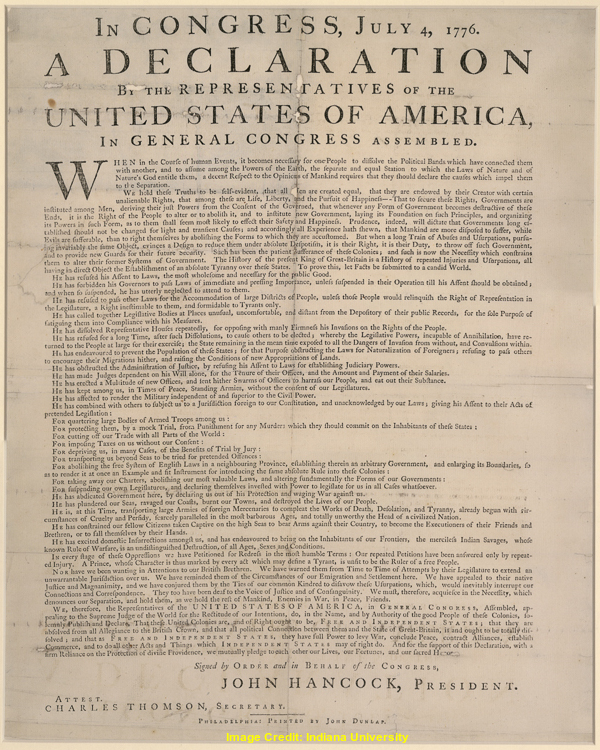
An anniversary is not merely a celebration of success or milestone; it is also a golden opportunity to reflect on the journey so far and to rethink the direction for the future. Hence, the organisers of the various events have decided to host multi-year, nationwide initiatives to celebrate the 250th anniversary of the Declaration of Independence. Instead of just observing a single historic day, these events are designed as a generational reckoning and an opportunity to reflect on past history and look ahead to the next 250 years.
The American Independence (or American Revolution) was an epoch-making event that profoundly transformed the global concept of rights. By rejecting hereditary monarchy and insisting that power is derived from the people, it shifted the global populace from being passive subjects to active citizens. Gradually, the concepts of rights and citizenship spread to other parts of the world and soon became the guiding principle for all democratic nations. By transforming into a republic and granting individuals legally protected, as well as enforceable, personal rights, the US became the first Constitutional Democracy in history.
Yet, the Semiquincentennial or America250 coincides with a period where organisations, like Freedom House, have recorded two consecutive decades of global democratic backsliding. Behind this lies a toxic and alarming rise of neo-imperialism, and ethnic, racial and populist politics. As expected, the Semiquincentennial has sparked widespread national introspection in the US. This milestone serves as a critical juncture to reconcile the nation’s foundational ideals with historical shortcomings and current societal divisions, with Donald John Trump transforming the President’s Office into a position of virtually absolute power in 2017. Trump’s ongoing second term has redefined the executive authority.
Today, strict party control and rising political polarisation are fundamentally altering democratic governance worldwide. By forcing legislators to prioritise party loyalty over institutional independence, these factors erode the Legislature’s constitutional role as a check on the Executive branch, leading to legislative paralysis and a dangerous concentration of executive power.
When Elizabeth Willing Powel, a local prominent citizen, asked Benjamin Franklin outside the Independence Hall on September 17, 1787 if the convention had created a monarchy or a republic, he replied: “A republic, if you can keep it.” Unfortunately, Global Democracy and Constitutional Systems have regressed to 1978 levels, with 74% of the world’s population (six billion people) now living in autocracies. In the 21st Century, both Liberalism and Democracy are under intense pressure.
In such a situation, a renewed commitment to protect Liberalism, Democracy and Constitutional Systems is widely considered essential to counter the global rise of authoritarianism, democratic backsliding and systemic threats to the Rule of Law. It is also essential to revitalise the democracy that has sustained the US through both triumph and disaster. As the US surpasses 250 years, ensuring foundational ideals – like equal opportunity, liberty and democracy – resonate with younger generations remains its most pressing test. However, maintaining this moral compass amid severe political polarisation requires actively engaging citizens to bridge widening generational and ethical divides.
Meanwhile,




Boundless Ocean of Politics on Facebook
Boundless Ocean of Politics on Twitter
Boundless Ocean of Politics on Linkedin
Contact us: kousdas@gmail.com

 ISMC
ISMC
