

The Rise Of Jamaat & Bangladesh’s Future
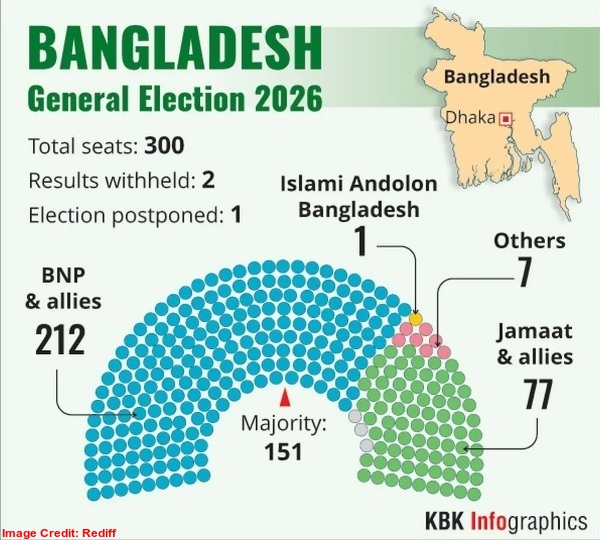
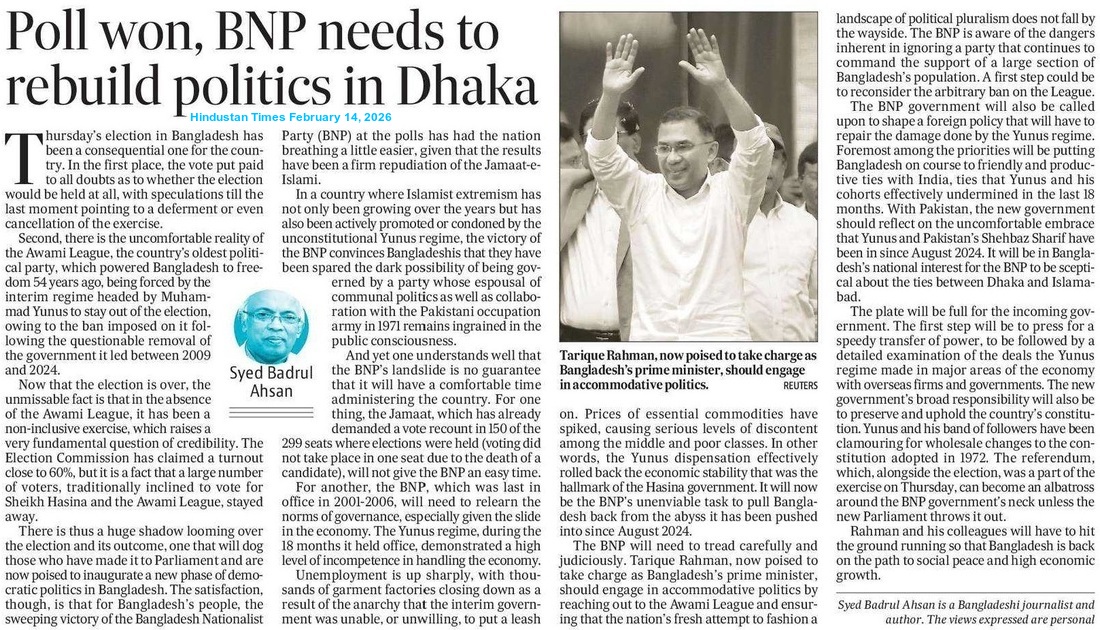
The centre-right Bangladesh Nationalist Party (BNP) secured a landslide majority in the Jatiyo Sangsad (Parliament) as it won 212 out of 300 seats (a two-thirds majority) in the Parliamentary Elections held on February 12, 2026. Interestingly, the Jamaat-e-Islami, the largest Islamist political outfit in Bangladesh that emerged from the East Pakistani wing of the Jamaat-e-Islami Pakistan in 1979, has emerged as the main Opposition party by securing 68 seats, highest ever number of seats in its history (while its allies won nine seats). Previously, Jamaat’s highest number of seats was 18 while the total vote share was 5-8%.
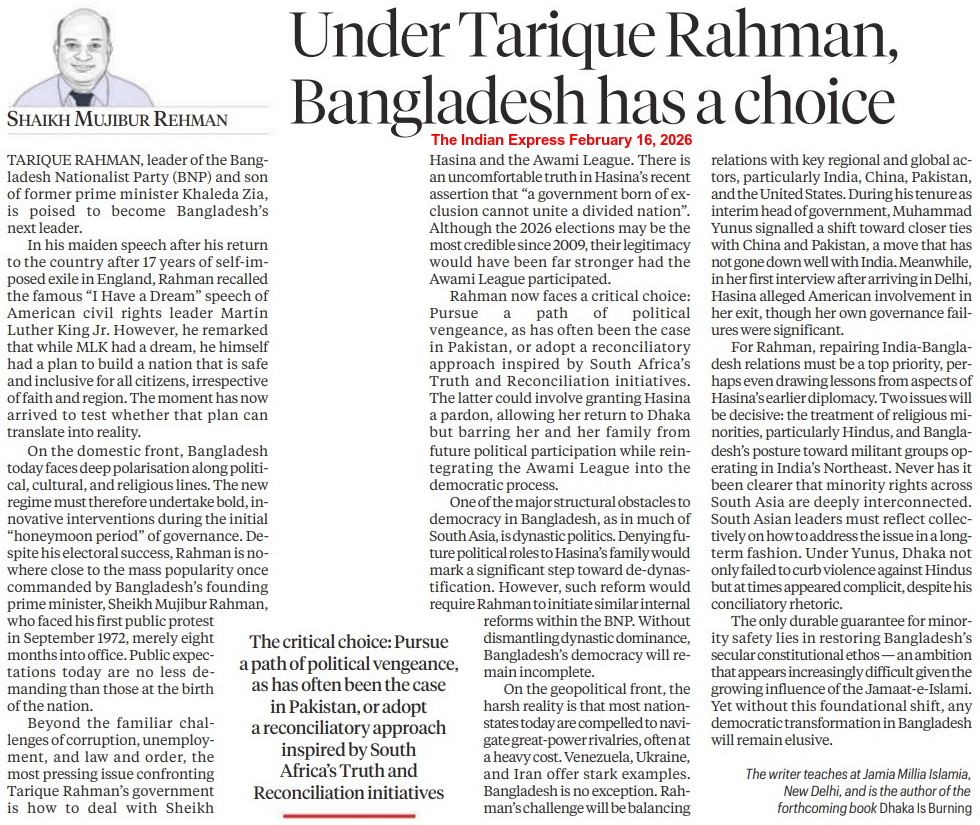
The role, as well as history, of the BNP in protecting democracy during the 1971 Liberation War (and its aftermath) are quite complicated and contentious. The party has a long history of deprivation, rampant corruption and misdeeds especially against the minority communities. Of course, it made some inclusive statements ahead of the 2026 Parliamentary Elections. Although they seem promising to many, the BNP did so only to secure votes of the supporters of the Awami League which was denied to participate in the elections.
Muhammad Yunus, the Chief Adviser of the outgoing Interim Administration, did not allow the Awami League to contest the elections mainly to wipe out the party and to prove that Bangladesh could survive without it. Yunus also made an attempt to establish that the Awami League is the main enemy of extreme Right-Wing forces at home and abroad. In fact, the Nobel laureate remains loyal to those forces and the BNP could not have won this election without being loyal to them.
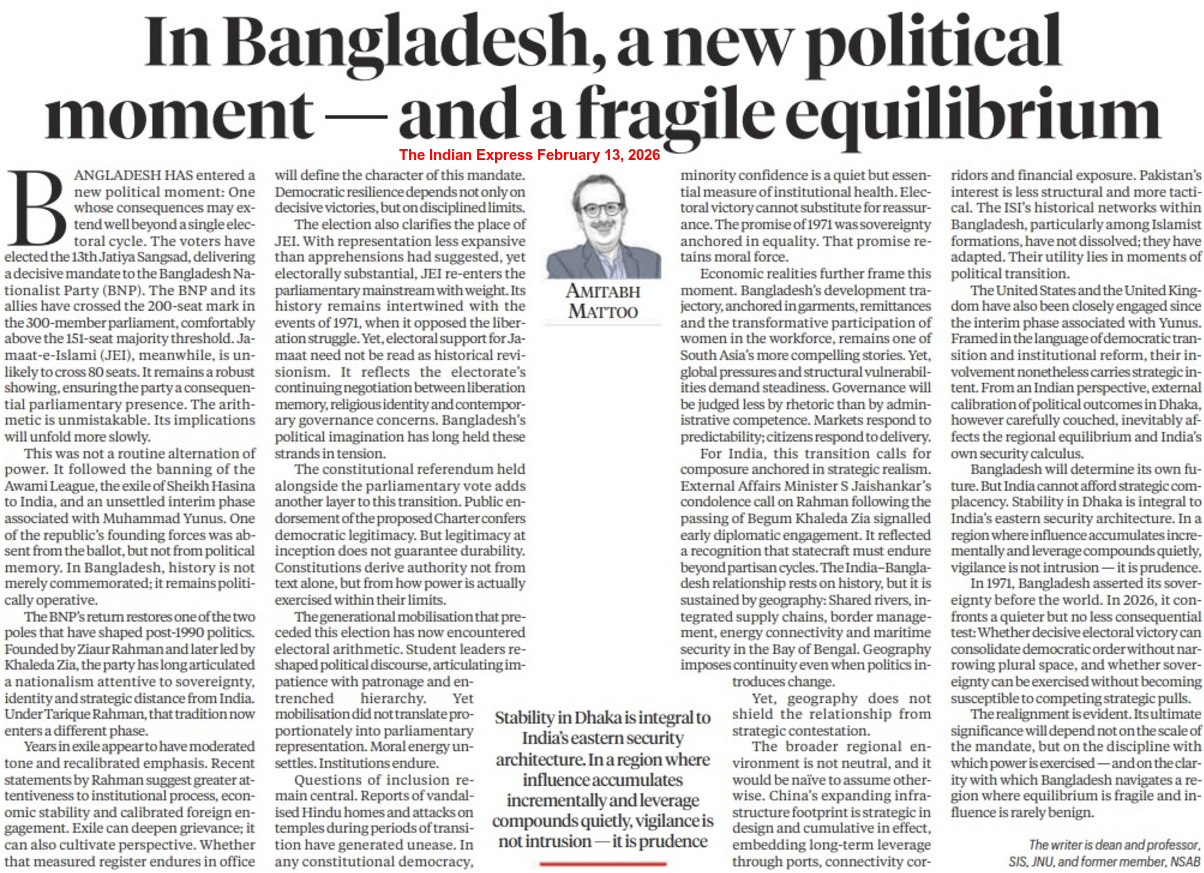
Meanwhile, liberals and minority communities in Bangladesh, who wanted Jamaat not to come to power, are helpless at the moment. One may recall the large-scale, state-sponsored migration of Bengalis from the plains into the Chittagong Hill Tracts (CHT), including Bandarban, began in the late 1970s and continued through the 1980s, primarily aimed at altering the demographic composition of the region. While this policy began under military ruler Ziaur Rahman (January 19, 1936 – May 30, 1981), the founder of the BNP, around 1979-80; it was a long-term state project rather than an action solely attributed to one specific BNP chief in isolation. Historical documentation suggests that the policy was continued and reinforced by subsequent administrations. This time, people had no other option, but to vote for the BNP in order to keep the 11-party coalition, led by Jamaat, out of power. However, this is an interim phase and the future of Bangladesh still remains uncertain.
It may be noted that the Indian Subcontinent is currently facing a complex array of interconnected socio-economic, environmental and geopolitical challenges that constitute a difficult phase. Imran Ahmed Khan Niazi, the former Prime Minister of Pakistan, is in solitary confinement. Reports suggest that he has suffered a devastating loss of eyesight (85% vision) and severe health deterioration because of “deliberate, inhuman and illegal treatment” carried out under the watch of Pakistan’s powerful military establishment. Nepal, too, is experiencing severe political instability and violent turmoil following a massive Gen Z-led uprising in September 2025 that toppled Prime Minister Khadga Prasad Sharma Oli, while Bangladesh is witnessing a rise in religious fundamentalism following the ouster of Prime Minister Sheikh Hasina Wazed in August 2024. Political observers, analysts and minority groups have expressed a serious concern over the growing influence of Islamist factions in the country’s political landscape.
It is a difficult time for the freedom-loving, secular- and liberal-minded people in South Asia. It is also time to learn a lesson. All politically-conscious people must understand how the ruling class presents democracy to them in various ways to stay in power in the era of Populist Politics.
Meanwhile,
Boundless Ocean of Politics on Facebook
Boundless Ocean of Politics on Twitter
Boundless Ocean of Politics on Linkedin
Contact us: kousdas@gmail.com

 ISMC
ISMC Boundless Ocean Of Politics