

Extinct Human Relative Was First To Use Weapons
Paranthropus boisei, a close relative of modern human ancestors, used to roam across Africa about 2.5 to 1.15 million years ago. They can be considered an evolutionary cousin of Homo sapiens, but not the ancestor. However, they had a number of similarities with human ancestors. A fossil recently discovered in Kenya has completely changed the way researchers think about this extinct species as the fossil reveals surprising details linked to Paranthropus boisei.
The oldest known fossils of Homo sapiens are approximately 300,000 years old, discovered at the Jebel Irhoud site in Morocco. Therefore, it may be assumed that modern humans emerged at that period of time. Before anatomically modern humans or Homo sapiens evolved around 300,000 years ago, a variety of earlier human species, including Homo erectus, Homo habilis and Homo heidelbergensis, lived on the Earth. These species, along with others, represent different branches, as well as stages, in human evolution. According to a long-held conventional view, only early humans (the Homo genus) knew how to make and use weapons, as well as tools, made of stone. However, the newly discovered fossil has hinted that other hominin species, outside the Homo genus, possessed and used weapon-making knowledge, challenging the previous assumption.
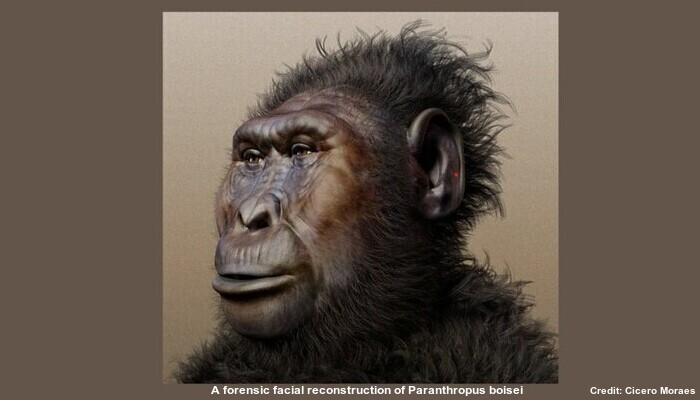
Historically, information on the physical structure of Paranthropus boisei was limited. Palaeoanthropologist Mary Leakey had discovered their first fossils in Olduvai Gorge, Tanzania way back in 1959. The specimen, nicknamed Zinj, was a skull and face. Later, the specimen was designated OH 5 and initially classified as Zinjanthropus boisei before being moved to the Paranthropus genus. Thereafter, researchers found some of their large teeth in Tanzania. It may be noted that the molar teeth (the large, flat teeth located at the back of the mouth, used primarily for grinding and crushing food) of Paranthropus boisei were up to four times larger than those of modern humans! This massive size, along with other craniodental specialisations, earned the species its nickname Nutcracker Man.

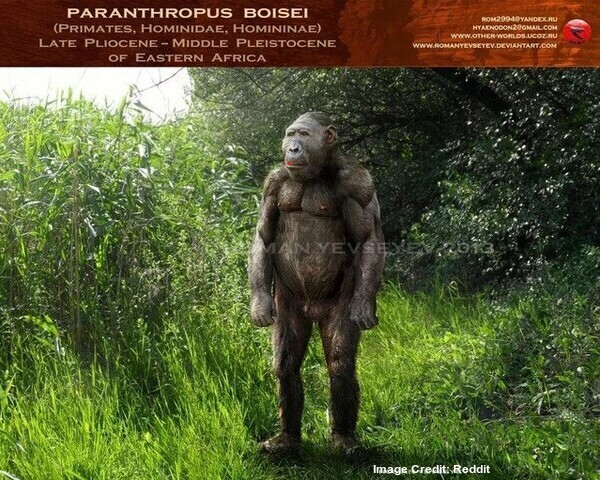
It is also assumed that they had large and strong jaws. Interestingly, the reason behind this robust facial structure is more complex than originally assumed. Research suggests that powerful jaws of the Nutcracker Man were an adaptation for processing large quantities of tough, fibrous plants, rather than for cracking hard nuts. However, what the rest of Paranthropus boisei’s body looked like remained a mystery for so long because most fossil finds consisted only of its distinctively robust skull and massive teeth. The latest discovery, including a landmark find published in Nature journal on October 15, 2025, has shed significant light on their postcranial anatomy, revealing that the creature was a capable biped, but retained surprisingly powerful, ape-like arms and hands.
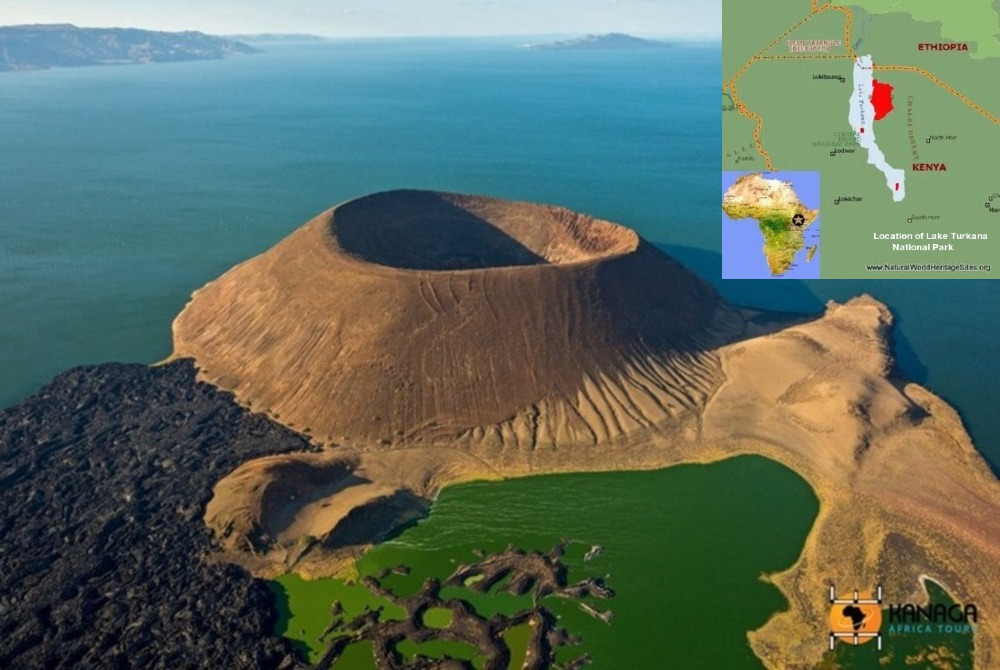
Lake Turkana is located approximately 515km from the Kenyan capital of Nairobi. The skeleton of Paranthropus boisei has been found at a paleontological site, called Koobi Fora, located on the eastern shore of the lake. Analysis has revealed that the skeleton is about 1.5 million years old. Researchers have described this skeleton as “contemporary with Paranthropus boisei“, some of the several other hominin species who used to share the landscape of East Africa.
In a rare first, scientists have discovered hand and foot bones of Paranthropus boisei, dating back to 1.52 million years ago, in Kenya. The most notable of those bones is the hand of the skeleton. The shape of their fingers has stunned the paleontologists as the hand bones reveal a combination of human-like dexterity and gorilla-like strength. While the thumb of Paranthropus boisei was long relative to other fingers (a key feature for forming a human-like precision grip that allows for nimble and precise movements), the little finger was robust, indicating great hand strength and a flexible joint, similar to modern humans. Other fingers were relatively short compared to the thumb and were straight, lacking the curvature associated with tree-climbing apes, like chimpanzees and gorillas. The blend of dexterity and strength suggests that Paranthropus boisei was capable of making, as well as using, rudimentary stone tools, challenging the conventional idea that tool use was exclusive to the Homo lineage. Researchers now have definitive proof that this species possessed a powerful grip, in addition to having human-like manual dexterity, allowing them to cling to heavy objects.

Dr Carrie S Mongle, a Paleoanthropologist and Assistant Professor of Anthropology at Stony Brook University in New York, stressed: “This is the first time we can confidently link Paranthropus boisei to specific hand and foot bones. The hand shows it could form precision grips similar to ours, while also retaining powerful grasping capabilities more like those of gorillas, and the foot is unquestionably adapted to walking upright on two legs.”
Meanwhile, Professor Tracy Kivell of the Max Planck Institute for Evolutionary Anthropology stated: “The hand is quite unexpected. It is clearly the hand of (a) human ancestor, but also has features that are remarkably similar to gorillas, which is surprising.” CNN quoted her as saying: “No other hominin that we know of has hand morphology that is so gorilla-like, which greatly broadens our perspective on what is ‘possible’ within (the) human evolutionary story of hand use.”
As Paranthropus boisei coexisted with Homo habilis, Homo rudolfensis and Homo erectus in Africa, their fossils have been found at the same sites, such as the Turkana Basin. According to Dr Mongle, although researchers have found no concrete evidence that Paranthropus boesei used stone objects, their physical structure suggest that they were physically capable of using weapons or tools made of stone. More research is needed to be sure about this, she stated. It requires finding a fossil that has stone weapons attached to it or ancient stone weapons need to be found in a place where only this particular species was present. Else, it would not be possible to confirm that Paranthropus boisei would have used stone objects.
Boundless Ocean of Politics on Facebook
Boundless Ocean of Politics on Twitter
Boundless Ocean of Politics on Linkedin
Contact us: kousdas@gmail.com

 ISMC
ISMC Boundless Ocean Of Politics