

Cleopatra-Era Port Discovered
The death of Cleopatra VII, the last ruler of the Ptolemaic Kingdom of Egypt who passed away on August 10/12, BCE 30, still remains a mystery. While some scholars hypothesise a murder or forced suicide by her Roman political rival Octavian, key uncertainties include the reliability of the ancient sources detailing the event, the feasibility of smuggling a large snake and the possibility that a poisonous ointment was used instead, which remains a constant source of historical debate and legend. She is remembered not only for her sharp intellect and political skill in maintaining Egypt’s autonomy and her romantic, as well as strategic, alliances with Julius Caesar and Marc Antony, but also for her dramatic death following her defeat by Octavian. Cleopatra’s tomb has not been officially found. However, recent discoveries of a sunken port and submerged tunnel near the ancient temple of Taposiris Magna suggest a potential location for the shared burial site of the queen and Antony. An archaeological team led by Kathleen Martínez believes that the port dates back to Cleopatra’s era.
Read: Antony, Cleopatra Were Victims Of Fake News
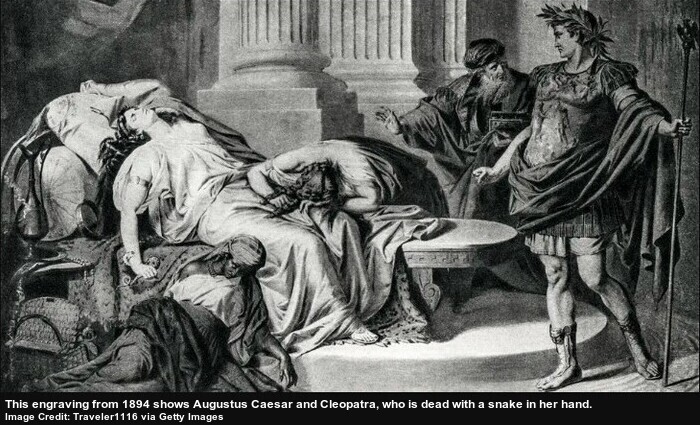
It is believed that Cleopatra had an affair with ancient Roman General Marc Antony. Some are of the opinion that Antony, after their decisive defeat by Octavian’s forces, heard a false report of Cleopatra’s death, prompting him to commit suicide. Cleopatra, instead of being killed in battle, then ended her own life, likely by poison, to avoid capture by Octavian and a humiliating public display in Rome. Meanwhile, popular tradition holds that the queen died from a snakebite and was buried inside her palace in Alexandria. Modern research works suggest that death from a snakebite is unlikely due to the practical difficulties of concealing a large snake and the low probability of a snakebite causing rapid death for multiple people. Others are of the opinion that the queen was buried somewhere else, and not in the palace.
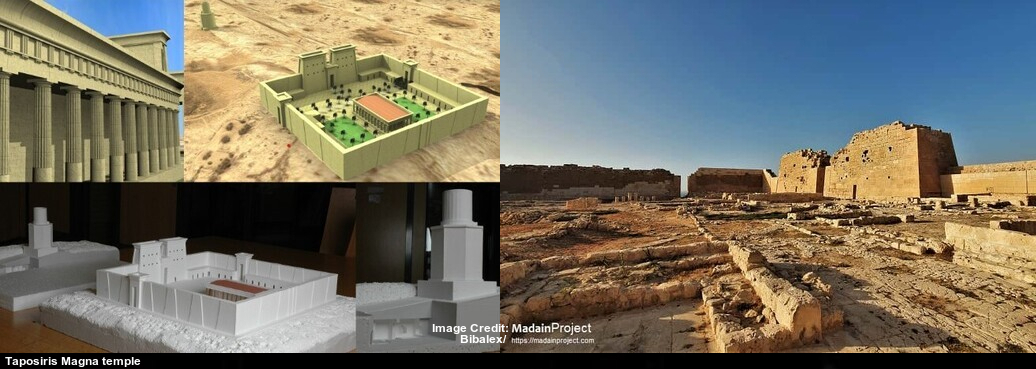
Martinez and her team have been trying to find the tomb of Cleopatra since 2005. Based on local information, they began searching for the tomb in New Borg El Arab, a new Egyptian city of the first generation located in Alexandria Governorate and administratively affiliated to the New Urban Communities Authority. This is the city where the Nile River meets the Mediterranean Sea. The archaeological team discovered a 1.5km-long tunnel deep inside the Taposiris Magna temple in 2022. After excavating the tunnel that merges with the sea, they found gold, several busts, and coins engraved with images of Cleopatra and the Ptolemies.
Since discovering the tunnel, archaeologists have expanded their search in the city. They conducted search operations not only on land, but also at sea with the help of Robert Ballard (often called Bob Ballard), the American oceanographer and marine geologist who had discovered the wreck of the RMS Titanic. They found various human-made structures, such as stone floors, anchors and amphoras (large, ancient ceramic containers, prevalent in the Greco-Roman era, used for the transport and storage of various goods, like wine, olive oil and grain, across the Mediterranean) beneath the sea. The Egyptian Ministry of Tourism and Antiquities has issued a statement, mentioning that the ancient temple city was not only a religious place, but also an important trading hub.
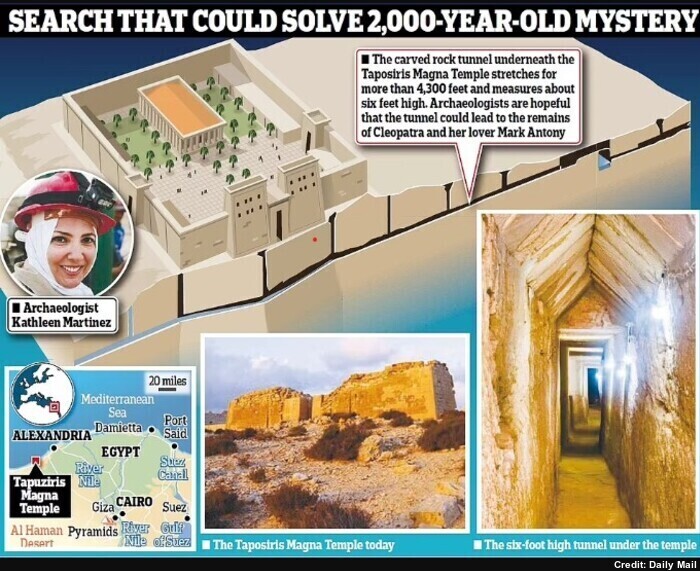
Martinez has claimed that the port has been submerged in the sea for about 2,000 years, stressing: “For 2,000 years, nobody has ever been there. We are the first ones.” Based on the ancient artefacts found in the seabed, the archaeological team has come to the conclusion that the ancient seaport used to serve as a crucial centre for maritime trade. After analysing the archaeological materials found there, Martinez has speculated Cleopatra was buried in this ancient temple city. According to the archaeologist, the tunnel, most probably, served as the path for her burial with Antony. She stated: “That makes the Taposiris Magna temple really important. It had all the conditions to be chosen for Cleopatra to be buried with Marc Antony.”
However, no direct evidence has yet been found linking Cleopatra to this lost port city. Martinez has stated that it is a Cleopatra-era port and the queen might have been buried somewhere near the port as indicated by the materials found in the tunnel and in the sunken port. Now, she wants to investigate in more detail.
It may be noted that there were six other Cleopatras among the Ptolemaic Dynasty before Cleopatra VII Thea Philopator. She ascended the Egyptian throne on March 22, BCE 51 (at the age of just 18) upon the death of her father, Ptolemy XII Neos Dionysos. Historians emphasise that Cleopatra’s perceived beauty was a combination of her charisma, intelligence and strategic use of persona to gain political power, rather than just her physical appearance.
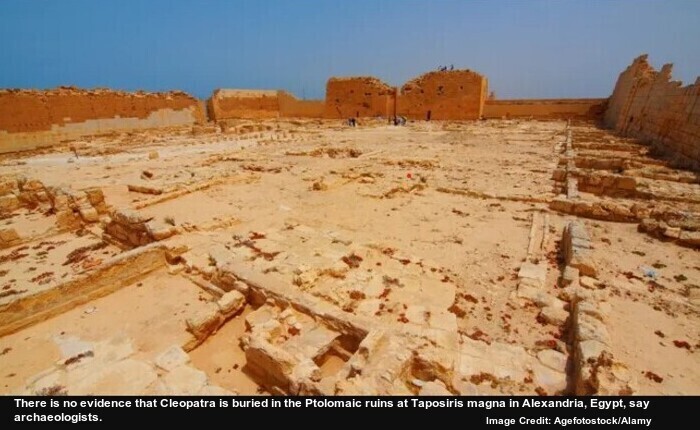
Historical accounts from ancient Roman authors, including Plutarch, Suetonius and Cassius Dio, state that Cleopatra and Marc Antony were buried together in a grand mausoleum. However, no one knows the exact location of her tomb. Hopefully, archaeologists shall discover it soon.
Boundless Ocean of Politics on Facebook
Boundless Ocean of Politics on Twitter
Boundless Ocean of Politics on Linkedin
Contact us: kousdas@gmail.com

 ISMC
ISMC Boundless Ocean Of Politics