

Speculations Arise Over The Next Dalai Lama
At a time when India and China are trying hard to normalise ties after four years of military activity on the border, a new issue has come up: Who will decide the successor to the 14th Dalai Lama (born Lhamo Thondup; July 6, 1935; full spiritual name: Jetsun Jamphel Ngawang Lobsang Yeshe Tenzin Gyatso, shortened as Tenzin Gyatso)?
It seems that two different individuals would replace the current Dalai Lama, one in India and another in China, after his demise. While one would be appointed by followers of the incumbent Dalai Lama as per his instructions, the Communist Party of China would choose the other. A belief central to the Tibetan Buddhist tradition, as well as the institution of the Dalai Lama, is that the reincarnated person is a living Bodhisattva, specifically an emanation of Avalokiteśvara (in Sanskrit) or Chenrezig (in Tibetan), the Bodhisattva of Compassion. Hence, the next Dalai Lama will be identified on the basis of the religious tradition and signs given by the incumbent Dalai Lama.
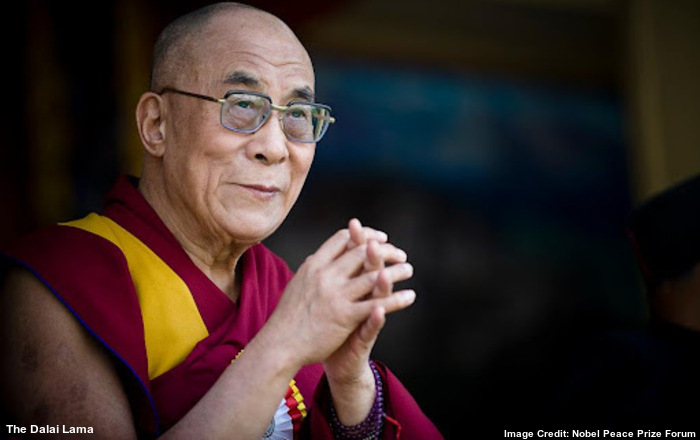
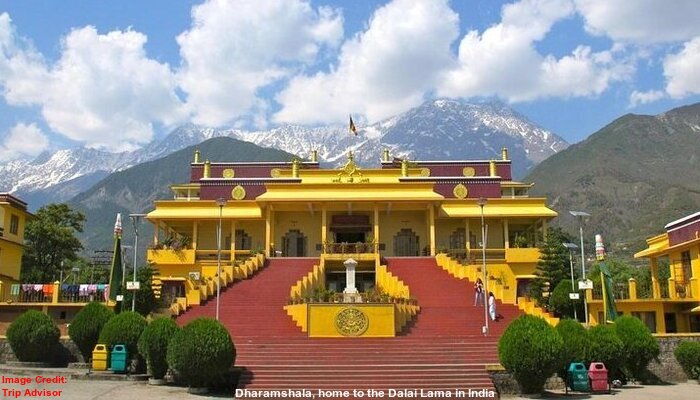
The 14th Dalai Lama previously announced that the Gaden Phodrang Trust, an organisation established by his office, would have the sole authority to identify his successor, effectively rejecting any external interference, including from China. The Gaden Phodrang Trust, situated in Lhasa, is quite old. The Dalai Lama founded an office of the Gaden Phodrang Trust in Dharamsala, India in 2011, mainly for overseeing the recognition of the next Dalai Lama and also for preserving the Tibetan identity, as well as culture. The trust is managed by Professor Samdhong Rinpoche, a senior monk and close confidant of the Tibetan religious leader. The incumbent Dalai Lama further warned that China should not elect his successor, stressing that the next Dalai Lama was expected to be born outside of China. With this, he hinted that his successor would be found in the free world, potentially in India.
Beijing wants senior Tibetan Buddhist monks to recognise the next Dalai Lama to be elected by China. The Asian Giant also passed a law to legalise the election process of the Dalai Lama. The concerned authorities in Beijing are of the opinion that the 14th Dalai Lama has no right to decide his successor. Instead, the Communist Party of China would elect the next Dalai Lama, employing the Golden Pot method, a traditional Qing Dynasty ritual involving drawing lots from a golden urn. In this case, some names are placed in a pot and one of them is selected. The selection of a name is meant to be random.

The 14th Dalai Lama is the head of the Gelug School of Tibetan Buddhism. His predecessors historically served as the Head of State of Tibet. Although the incumbent Dalai Lama held this position in the past, he formally stepped down from his political role in 2011. Since then, he has remained the spiritual leader of Tibetan Buddhism. He has also been a prominent advocate for the Tibetan people and their cultural preservation, especially since his exile in 1959. He has consistently worked to raise awareness of the Tibetan cause and promote Tibetan Buddhism internationally, while also seeking meaningful autonomy for Tibetans within China. China has emerged as a major global power in recent times, but has failed to put the Dalai Lama under diplomatic pressure. Beijing has made a serious attempt to portray the Dalai Lama as a separatist. However, Tibetans still believe that he is a symbol of their nationality and cultural identity. Perhaps, the Dalai Lama of Tibet will challenge the authority of India’s Dalai Lama in the near future.
Most countries, including India, consider Tibet as a part of the People’s Republic of China. However, not everyone is willing to accept the China-elected Dalai Lama as the successor of the incumbent Dalai Lama. The US Congress passed the Promoting a Resolution to Tibet-China Dispute Act, also known as the Resolve Tibet Act, in 2024. The Act pushes for negotiations “without preconditions” between the Chinese Government and the Dalai Lama or his representatives or the democratically elected leaders of the Tibetan community, apart from backing the Tibetans’ right to elect the successor of the 14th Dalai Lama. However, it is uncertain how President Donald John Trump would use this Act.
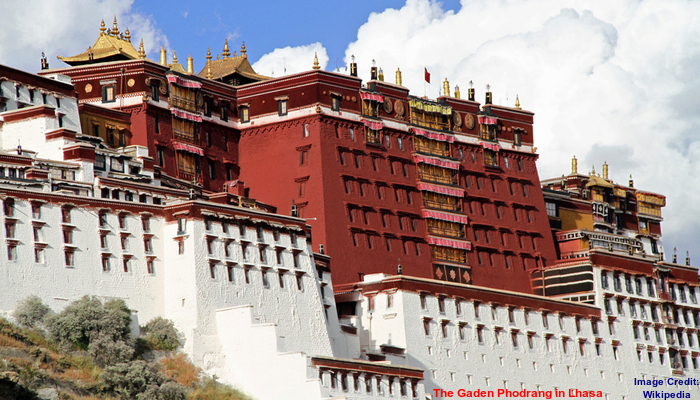
Tibet has long-standing religious, cultural and commercial ties with India. India has provided refuge to the Dalai Lama, the Karmapa and numerous other Tibetan Buddhist leaders and their supporters in the past 66 years (since 1959). Following the Chinese invasion of Tibet, the Dalai Lama and many other Tibetans sought asylum in India, establishing a significant Tibetan diaspora in the South Asian country. The four main schools of Tibetan Buddhism, namely Nyingma, Kagyu, Sakya and Gelug, are all present in India. On July 3, 2025, India raised a strong objection to China’s demand that Beijing must approve the reincarnation of the Dalai Lama, asserting that no one except the Tibetan spiritual leader himself has the authority to decide on his successor. In a statement, Indian Minister for Minority Affairs Kiren Rijiju said: “The position of the Dalai Lama is of utmost importance, not just for Tibetans but for all his followers across the world. The right to decide on his successor rests solely with the Dalai Lama himself.” In response, Beijing insisted that the Dalai Lama’s next reincarnation must follow the Chinese laws.
The question arises here: Why does Communist China, known as an atheist state, want to choose the next Dalai Lama? In fact, China wants to assert full control over Tibet. In addition to valuable mineral resources, Tibet is recognised as having the world’s third-largest freshwater reserve. It is often referred to as the Third Pole and the Water Tower of Asia because of its vast glaciers and numerous rivers originating from the Tibetan Plateau. The glaciers and high-altitude snowmelt of the Tibetan Plateau are the source of several major rivers in Asia, including the Yangtze in China, the Indus and Brahmaputra in India. Beijing is well aware of the fact that if Tibet gains independence, it could embolden the Uyghur Separatist Movement in Xinjiang Province, potentially leading to further instability and calls for secession in the region.
What was once the Indo-Tibetan border has now become the de facto border between India and China, with the McMahon Line serving as the eastern section of this boundary. It may be noted that Aksai Chin, the easternmost part of the Kashmir region, has been the subject of a territorial dispute between China and India since 1959. China administers the region and claims it as part of Xinjiang and Tibet autonomous regions, while India claims the region as part of Leh District of Ladakh.
In 1960, Mao Zedong reportedly said that it was better for the Dalai Lama to be in friendly India than in imperialist America. It remains to be seen whether the Xi Jinping Administration feels the same.
Boundless Ocean of Politics on Facebook
Boundless Ocean of Politics on Twitter
Boundless Ocean of Politics on Linkedin
Contact us: kousdas@gmail.com

 ISMC
ISMC Boundless Ocean Of Politics