

On Increasing Digital Distance
Although India is the third-largest digitalised country in the world (after the US and China), its digital user economy ranks 28th globally. A recent report jointly prepared by the Indian Council for Research on International Economic Relations (ICRIER) and the ICRIER Prosus Centre for Internet and Digital Economy (IPCIDE) has made it clear that the average Indian’s usage remains limited, with a significant digital divide existing between those with access and those without, particularly in rural areas and among lower-income groups. As per the report, while 71% of men and 62% of women use smartphones in urban areas, only 45% of men and 30% of women use the gadget in rural areas.
Decades ago, the digital technology raised hopes that its spread could empower marginalised and neglected people in India, increasing their inclusion in the economy and social activities. However, the majority of people do not have any access to digital technology in the South Asian country. Hence, they cannot use this technology. In spite of the expansion of digital services, the digital distance among people still exists.
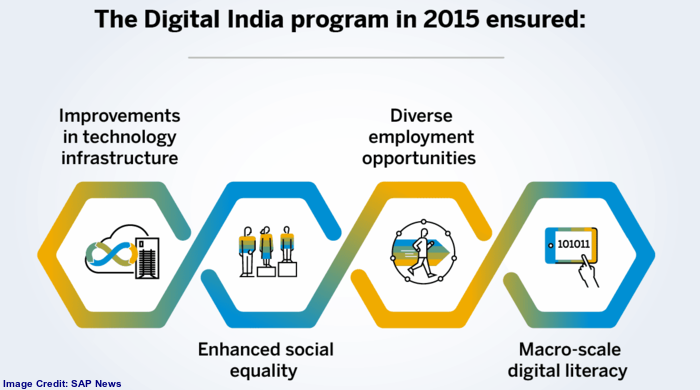
Industrialists are enthusiastic about the expansion of digital technology as online marketing is an easy way to capture the huge Indian market. In 2024, nearly four million people ordered food items through various apps (applications). It is a fact that the Indian youths are enthusiastic about using digital technology. The position of the country in IT exports is also quite strong, while mobile-based internet is expanding rapidly. At the same time, digital transactions have become easier because of the creation of digital infrastructure, like Aadhaar Card, Unified Payments Interface (UPI, an instant real-time payment system) and DigiLocker (an initiative towards paperless governance).
However, India’s digital economy accounted for only about 12% of its GDP in 2023. Also, just 26% of internet users made digital transactions in 2024, while only 43% used social media and 40% used email. India lags behind Brazil, Thailand and Mexico in terms of internet penetration (percentage of the population using the internet) mainly because of the lack of cyber security. In a report, the Reserve Bank of India (RBI) mentioned that financial losses due to data breach increased by 28% in 2020-23.
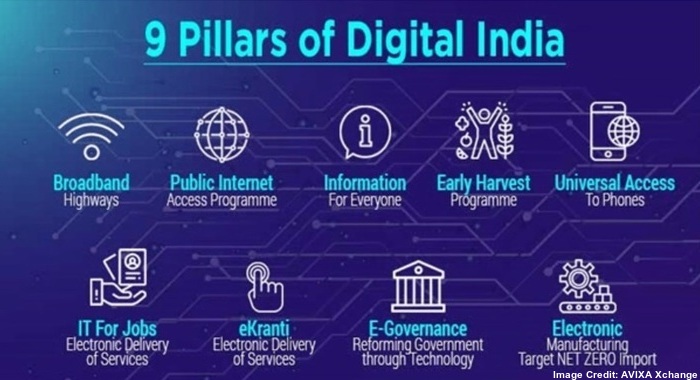
The Government of India should keep in mind that the social isolation of poor, marginalised and elderly people is deepening due to their limited access to the digital world. These people need to be digitally literate. Hence, the government would have to make smartphones and internet connectivity easily available across the country. Simultaneously, offline services need to be kept operational. Social justice cannot (and should not) be neglected in the excitement of new technology.
Boundless Ocean of Politics on Facebook
Boundless Ocean of Politics on Twitter
Boundless Ocean of Politics on Linkedin
Contact us: kousdas@gmail.com

 ISMC
ISMC Boundless Ocean Of Politics