

Private Capital Accelerates Space Research
The 1960s marked a pivotal era for Space Science, with 12 astronauts landing on the Moon in just three years (from 1969 to 1972). In the following years, space scientists started exploring the details of the Earth by sending various satellites into space. Scientists also realised that they would have to conquer space in order to establish human colonies there. Hence, it became important to transcend the boundaries of the Earth and to reach outer space.
Russia started building the International Space Station (ISS) at the very end of the 20th Century. In November 1998, Moscow launched the first module of the ISS, the Zarya Module (also known as the Functional Cargo Block or FGB), into orbit at an altitude of 460km above the surface of the Earth, marking the beginning of the ISS assembly. The US-built Unity connecting node was launched in the following month and linked to Zarya in orbit by US space shuttle astronauts. Gradually, the ISS was built with the help of many other countries. It set an amazing example of international coordination and cooperation as far as space research was concerned.
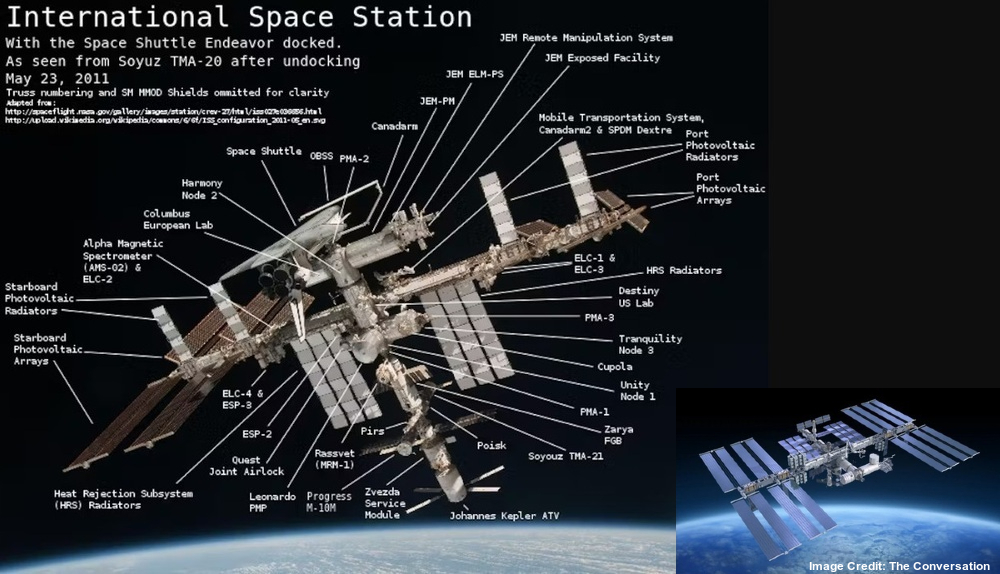
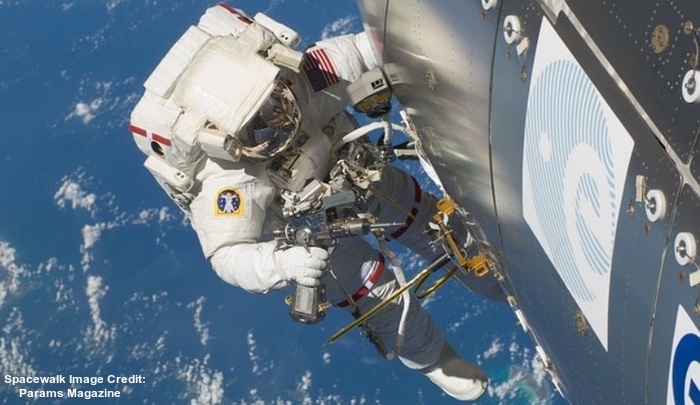
In addition to scientific experiments, scientists have been analysing the effects of space travel on human bodies, moving around in space outside a spacecraft (but connected to it) or spacewalks, testing and implementing new space technologies from the ISS since the beginning of the 21st Century. Six-seven astronauts always stay there to perform regular maintenance, research, collect data and provide information to other satellites. Usually, a new group of astronauts arrives at the ISS to replace the old group after a gap of six months.
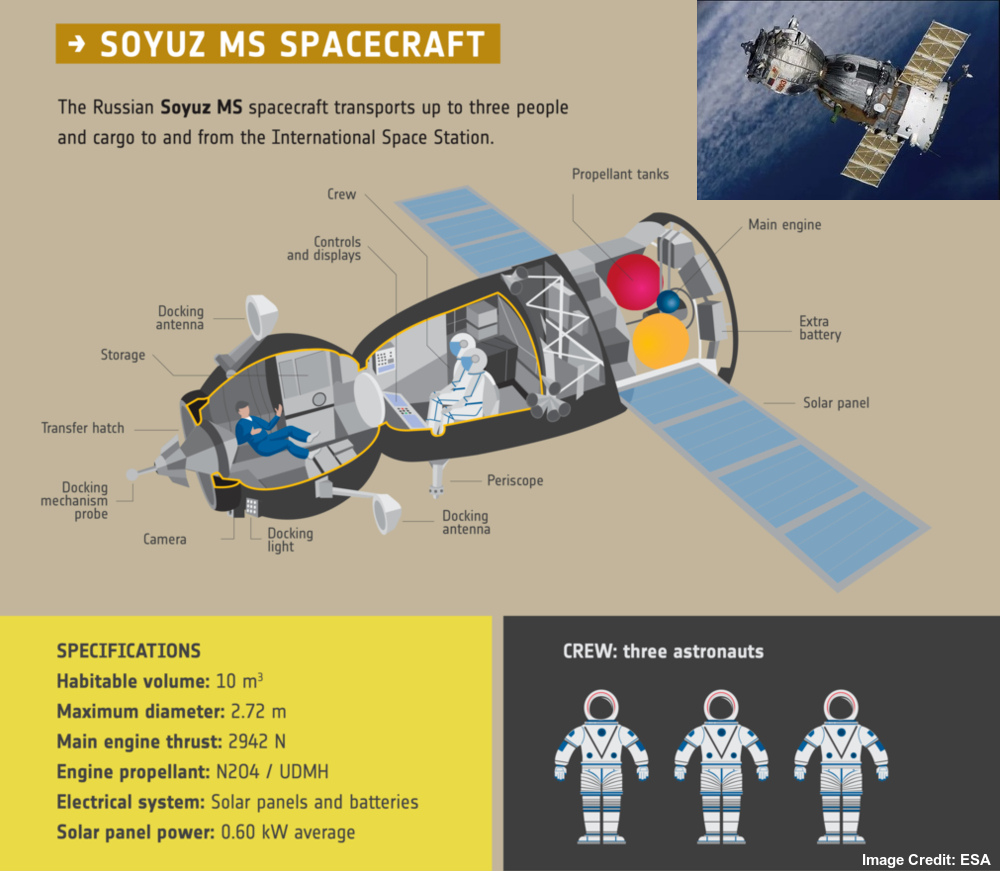
The success of the ISS depends on maintaining a safe, as well as reliable, system of spacecraft to travel to the station from the Earth on a regular basis. Initially, the Russian Soyuz spacecraft, a capsule-based design, used to transport astronauts to the ISS. Later, the National Aeronautics and Space Administration (NASA), an independent agency of the US Federal Government responsible for its civil space programme, aeronautics and space research, made an attempt to implement its Space Shuttle Project. However, NASA shut down the project in 2011 because of a few unfortunate accidents and financial losses. Hence, the US had to turn to Russia in order to send astronauts to the ISS. NASA reportedly paid around USD 55.8-62.7 million per seat on a Soyuz spacecraft for round trips to the ISS and another USD 90 million for a seat on a Soyuz crew launch.
Travel to the ISS began to be disrupted in 2014 due to the geopolitical conflict between Russia and the US. After considering the scenario, NASA decided to implement a Commercial Space Travel Project, allowing private companies to build spacecraft for sending astronauts to the ISS. After various levels of trials, analysis and testing, NASA signed an agreement with aircraft-manufacturing company Boeing and Elon Musk’s SpaceX in this regard. While Boeing developed the CST-100 Starliner spacecraft to transport crew to and from the ISS, SpaceX built Crew Dragon for the same. After nearly five years of research, both the companies started making preparations for a test launch (in 2019). Crew Dragon tasted success first as it safely reached space with two astronauts in May 2020 and completed eight successful missions by 2024.

Meanwhile, various flaws were being detected in Starliner. Sunita Williams and Barry Wilmore, who were working with Boeing engineers, took part in the first test flight of the Starliner on June 5, 2024. Although the two astronauts safely reached the ISS, Starliner failed to bring them back due to a technical glitch. The spacecraft returned to the Earth without the astronauts.
Williams and Wilmore were staying inside the ISS as they had sufficient food, medicines and other necessary items. However, scientists were worried about their health. Near-zero gravity often causes various changes in the human body. Doctors advised Williams and Wilmore to follow various instructions in order to maintain their physical, as well as mental, health. They used to do physical exercise and take special diets to ensure that physical strength did not decrease in space. It may be noted that experienced officials of the US Navy and Air Force, and astronauts prepared them to remain fit even in adverse conditions. Hence, Williams and Wilmore were able to conduct 150 scientific experiments for nearly 600 hours during their 286-day stay in the ISS. The rest is history.
Putting an end to all speculations, a SpaceX Dragon capsule, containing four astronauts, including Starliner’s test pilots Williams and Wilmore, splashed down in the Gulf of Mexico, off the coast of Tallahassee, at 9.57pm GMT on March 18, 2025 after a 17-hour descent. Williams and Wilmore will have to spend several months undergoing a number of physical tests. Doctors are trying hard to return their bodies to a normal state as quickly as possible.
The entire episode has had a far-reaching impact on the global community. The common people have realised that space is such an environment which could become inaccessible and frightening, depending on the circumstances. At the same time, the expertise and skills of space scientists have reached such a level that they are now capable of dealing with even the most difficult conditions.

So far, only three countries, Russia, the US and China, have attempted to conquer space. India may launch Gaganyaan, an Indian crewed orbital spacecraft intended to be the formative spacecraft of the Indian Human Spaceflight Programme, within a year. The Indian spacecraft would return to the Earth after spending about four days in space with two astronauts.
Boundless Ocean of Politics on Facebook
Boundless Ocean of Politics on Twitter
Boundless Ocean of Politics on Linkedin
Contact: kousdas@gmail.com

 ISMC
ISMC Boundless Ocean Of Politics