

India To Cover Its Skies With Security Blanket
It is like a huge impenetrable wall that is impossible to climb. It is also difficult to peep through it! India has decided to build such a wall in its border regions. After the completion of this project; aircraft, cannons, missiles or drones could not penetrate this wall.
India has once again resorted to its all-weather friend Russia to completely cover its skies with a blanket of flawless security. New Delhi is in the final stage of talks to acquire long-range Voronezh radar system from Moscow. Reports suggest that the two countries are in advanced discussions on a USD 4 billion defence deal to strengthen India’s air defence infrastructure. Be it the Russia-Ukraine War or the conflict between Israel, Hamas, Hezbollah and Iran in West Asia… the global community has realised the importance of the Air Defence System in modern warfare. Hence, the Indian Ministry of Defence has decided to acquire the Russian military’s most powerful long-range Voronezh radar system. During his visit to Russia on December 10-12, 2024, Indian Defence Minister Rajnath Singh discussed the issue with Russian President Vladimir Vladimirovich Putin. Later, Singh revealed that India would soon get the radar system from Russia.
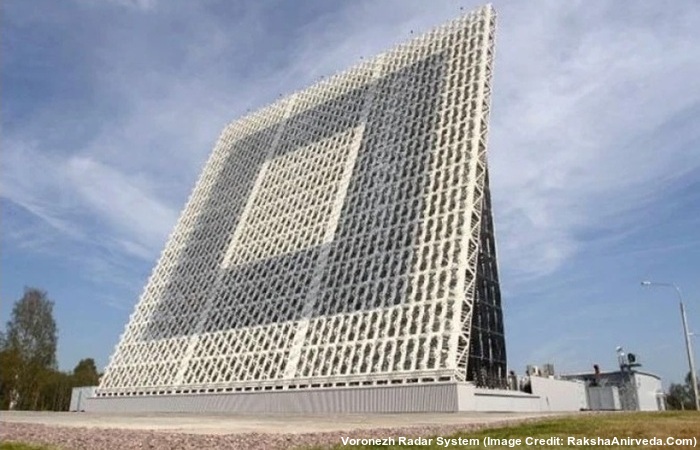
Almaz-Antey Corporation, a Russian state-owned company, manufactures various radars of the Voronezh series. Voronezh radars are the current generation of Russian early-warning radar, providing long distance monitoring of airspace against ballistic missile attack and aircraft monitoring. Defence experts are of the opinion that it is quite impossible to carry out airstrikes, bypassing this radar system. According to the Russian media, the range of the Voronezh radar is approximately 8,000km. Most importantly, this state-of-the-art radar can detect more than 500 objects simultaneously! Its greatest advantage is the identification of ballistic missiles and Stealth fighter jets. Most radars in the world fail to do so. The Russian Army started using the Voronezh radar system in 2012. However, it is not yet known which version of this radar system India wants to install.
Alexander Mikhailov, the head of Sputnik India‘s Bureau of Military-Political Analysis (BVPA), recently said: “When a satellite detects a launch, it alerts the Voronezh radar, which then confirms or refutes the threat. The key role of these radar systems is to verify the presence of a threat, such as a mass launch of intercontinental ballistic missiles, and provide crucial information for interception.” He added: “While the S-400 missile system monitors airspace up to 600km, the Voronezh radar system extends surveillance over a much larger area, monitoring air and near-space environments from distances of up to 8,000km.” Mikhailov explained: “Currently, it is being upgraded with new components that can operate across various frequency bands, from metre to centimetre wavelengths, allowing military experts to track targets of various sizes in air and near-space environments, calculate their distances and determine their potential for interception, if necessary.” The Russian Army has deployed this radar in at least 10 places along its border with Ukraine since the beginning of the war between the two former Soviet Republics on February 24, 2022.
The Sunday Guardian reported that Vladimir Medovnikov, the Deputy Chairman of Almaz-Antey, visited India in November 2024. He was accompanied by 10 senior officials of the Voronezh-manufacturing company. They discussed the offset share with the Indian officials, if there would be a bilateral defence agreement on the radar system. According to sources, India is emphasising on building this radar system in the South Asian country under Prime Minister Narendra Modi’s Make in India initiative. If Russia agrees, then the Indian defence agencies would construct 60% of the entire radar system. Officials of Almaz-Antey also visited different areas of New Delhi and southern Indian Province of Karnataka for this purpose.
Defence experts believe that the Voronezh radar system would further strengthen India’s air defence system. New Delhi plans to use this system to counter attacks not only from China and Pakistan, but also from Southeast Asia and the Indian Ocean Region. Air Marshal (Retired) Anil Khosla, the former Vice Chief of Indian Air Force, stressed on the need for such radars to maintain strategic stability amid the growing missile threat, stating: “In South Asia, India faces growing security challenges, including the potential deployment of advanced missile systems by neighbouring countries. An advanced radar, like Voronezh, would enable India to maintain technological parity and address evolving threats.“
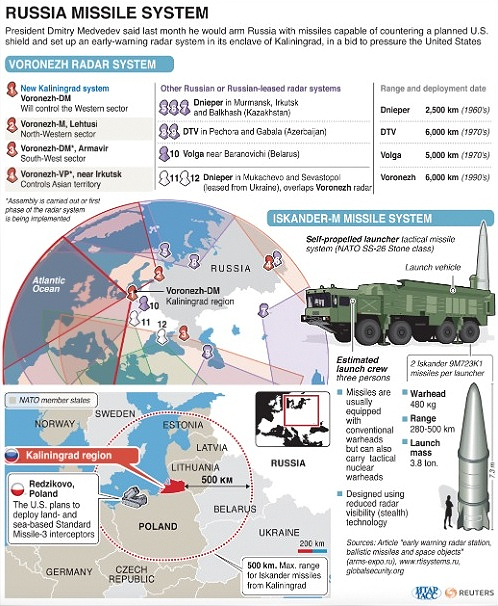
Most importantly, India shall also be able to use this radar system for space surveillance. In other words, Voronezh can be used for both military and civilian purposes.
Boundless Ocean of Politics on Facebook
Boundless Ocean of Politics on Twitter
Boundless Ocean of Politics on Linkedin
Contact: kousdas@gmail.com

 ISMC
ISMC Boundless Ocean Of Politics