

‘Biggest Upgrade To Workers’ Rights In A Generation’
The Government of Prime Minister Sir Keir Rodney Starmer in Britain is pushing ahead with the necessary legislative changes to introduce a four-day work week (mostly 32 hours). The Prime Minister recently called proposals for the four-day work week “the biggest upgrade to Workers’ Rights in a generation“!
In a workaholic country like Japan, at least 54 people die every year from work-related stresses, including heart attacks! Reports suggest that nearly 2,900 people committed suicide in the Asia-Pacific nation due to problems related to their work environment in 2023. Hence, the Government of Japan has been making serious efforts to innovate new work patterns since 2021, encouraging business houses and citizens to adopt a four-day work week.

There is nothing new in the idea of a four-day work week. Britain has been experimenting with this idea since 2022, with various organisations joining a six-month trial. According to the Government of Britain, a final decision in this regard shall be made after considering various issues, including benefits to employees, impact on their physical and mental health, productivity of the organisation, etc. A number of environmental consulting firms, such as Tyler Grange, introduced a four-day work week in 2022. However, the plan did not work at all in the case of Allcap, an engineering firm that supplies safety workwear, fasteners and fixings, engineering, power tools and hand tools. Supermarket chains WM Morrisons and Asda have outrightly ruled out the possibility of a four-day work week. Meanwhile, the opposition Conservative Party has claimed that the approach could harm businesses and reduce productivity.
British Historian Cyril Northcote Parkinson had penned an interesting article on this issue in The Economist in 1955, introducing the concept of Parkinson’s Law. As an example, he mentioned the story of a woman whose only job of the day was to send a postcard that could be done in three minutes. As she had plenty of time to do this job, the lady used to spend an hour looking for the card, half an hour looking for her glasses, an hour and a half writing the card and 20 minutes thinking about whether to go out carrying an umbrella. She, reportedly, would spend her entire day in this fashion. Rutger Bregman, too, wrote an article, titled The Solution to (Nearly) Everything: Working Less, in The Guardian on April 18, 2016. In his article, Bregman claimed that reduced working hours would certainly bring positive changes in terms of workers’ safety, environmental issues, stress, inequality, happiness and unemployment.

It may be noted that working hours are constantly decreasing with the progress of human civilisation! People used to work 15-16 hours a day before the Industrial Revolution. However, technological advancement and machine-based civilisation have increased leisure, allowing people to look beyond their professional lives. Although the daily working hours have decreased, the number of working days has remained the same in many countries. A peek into the history of civilisation shows that the five-day work week began a century ago… in 1926, thanks to US industrialist and business magnate Henry Ford (July 30, 1863 – April 7, 1947). In fact, the decision was made in 1922 as Edsel Bryant Ford (November 6, 1893 – May 26, 1943), the son of Henry Ford and the President of Ford Motor Company (from 1919 until his death), used to believe that everyone needs more than one day weekly off. Since then, technology has advanced exponentially and generative Artificial Intelligence (AI) has started influencing our way of activities. Still, debates are going on whether a four-day work week should be introduced or a five-day week should be continued.
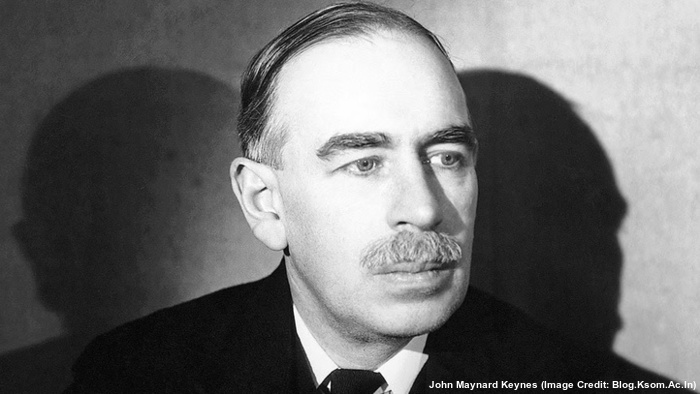
In an essay written in 1930, English Economist John Maynard Keynes (June 5, 1883 – April 21, 1946) mentioned that productivity would increase enormously in the next 100 years (by the year 2030) and people would not have to work more than 15 hours a week! He also predicted that people would work only for their own satisfaction! However, Keynes could not think of a less than five-day work week. It took another five decades to come up with the idea that a four-day work week would be enough. In a 1956 speech, Richard Nixon, the then US Vice President, predicted a four-day work week in the “not too distant future”. Later in 1979, President Nixon proposed the first universal four-day work week. However, the concerned authorities have been considering the four-day work week in a serious manner for the last 10-20 years across the globe.
Iceland carried out a social experiment, involving about 2,500 professionals from various fields in this regard from 2015 to 2019. Nearly 86% of people in the Nordic Island nation currently enjoy the right to work less hours due to the success of that experiment. Well, one should keep in mind that Island is a sparsely populated country and such an experiment could fail in a populous country, like India. Microsoft Japan, too, carried out an experiment with a four-day work week in 2019. The experiment showed that the cost of electricity fell by 23% because of lesser number of working days, while sales-per-employee increased by 40%!
In 2020, Andrew Barnes, a New Zealand-based entrepreneur who led efforts to create a four-day work week, co-authored a book, titled The 4 Day Week, with Stephanie Jones. Barnes considers the four-day work week as a cure for many of the illnesses of the Global Economy in the 21st Century. In February 2018, he offered employees of his organisation four-day a week at full pay, with no extra working hours. Barnes found that the move made his employees happier and healthier, as they got more time to enjoy their personal lives. At the same time, they became more focused and productive in the office.

The impact of a four-day working week may not be positive in all cases. A 2019 paper published in the Journal of Public Economics claimed that four-day-a-week classes in Oregon, the US, lowered reading and math scores among eighth-graders. In fact, a three-day work week is also not a new idea! Krones Inc, a US-based subsidiary of Krones AG (a German company that manufactures packaging and bottling systems, IT solutions and more), conducted a worldwide survey in 2028. While 34% of respondents were in favour of working four-day a week, 20% favoured a three-day work week (with no reduction in salary)! Speaking at the World Artificial Intelligence Conference in Shanghai in August 2019, Jack Ma, the Chinese business tycoon and the founder of Alibaba, stated: “I think people should work three days a week, four hours a day. I think that because of Artificial Intelligence, people will have more time to enjoy being human beings.” He added: “I don’t think we will need a lot of jobs. The jobs we need are (ones to) make people happier… people experience life, enjoy (being) human beings.”
In fact, the three-day work week was introduced five decades ago (in 1974) in Britain! As the production of electricity was interrupted because of the coal miners at that time, Sir Edward Richard George Heath (commonly known as Ted Heath; July 9, 1916 – July 17, 2005), the then Prime Minister of Britain, introduced a three-day work week to save power! Therefore, it could not be considered an ideal situation. According to many, there is no guarantee that some people would not pursue moonlighting for extra income with ample leisure time due to a shorter work day.

Andrew Barnes delivered a lecture (available on YouTube) on the chemistry behind the success story of four-day work week, with no extra working hours. He opined that people consider an extra day off as a gift! Perhaps, if the four-day work week becomes a norm, then the mentality of people would change! It seems that people will try to remain more focused and productive at their workplaces when they get three off-days a week. However, if they consider a four-day work week as their Right, then there shall be no change in their attitude!
Hence, the debate shall go on…
Boundless Ocean of Politics on Facebook
Boundless Ocean of Politics on Twitter
Boundless Ocean of Politics on Linkedin
Contact: kousdas@gmail.com

 ISMC
ISMC Boundless Ocean Of Politics