

Internet Use Disorder: Roots & Remedies!
A study carried out by researchers from the Public Health Foundation of India has revealed that people, who have had scary experiences in childhood, are more prone to become addicted to the Internet. The researchers considered the past and present of about 300 young people between the ages of 18 and 25 while conducting the study. They have come to the conclusion that people who have had repeated traumatic experiences in childhood are more likely to become Internet addicts. In particular, victims of sexual abuse in their childhood develop this tendency later.
There are always doubts about the reliability of such surveys, if they are conducted among just 300 people. However, the importance of the fact revealed by this study is huge. It is desirable, as well as expected, that sociologists would continue the research on this issue on a larger scale and in more depth.

Society is changing rapidly under the combined influence of economic and technological development. Inevitably, social change has a huge impact on children, adolescents and young adults. Various forms of change are constantly evident at different levels of society, and Internet-addiction is a well-known and much-discussed form of social change. Of course, what percentage of that is the result of childhood abuse can be debated. However, there is every reason to believe that a deeper societal malaise is to blame for both abuse and addiction. In a sense, it is a disorder of isolation or alienation.
Isolation is virtually ubiquitous and distressing. Many have lost their ties with the family structure and the old neighbourhood in recent years. This alienation has engulfed society in a wider and deeper sense. Individuals often do not find natural connections with others in various spheres of their lives, as mutual communication has become a mechanical one. This particular trend is increasingly intensified at the level of close relationships.

Instead of considering this trend as degeneracy or distortion, one should try to understand its practical implications. One of its consequences is that the children have become socially isolated, and harassment is one aspect of this trend. It is a fact that children were abused in the past, too; as the weaker beings have always been harassed by the stronger ones. Many incidents of sexual abuse, especially at the family or community level, have been suppressed under the veil of social discipline. The victims do not share their pain with the outside world. However, today’s children have become lonelier and their loneliness adds a new dimension to their pain. Apart from sexual abuse, social isolation makes their lives more painful.
In such a situation, children find shelter in mobile phones, as endless entertainment is there on the screen of this tiny electronic gadget. Adults often provide children with mobile phones in order to help them to get rid of loneliness. Unfortunately, the device takes no time to consume their psyche. This process gradually pushes the children to isolation, and young minds feel comfortable in isolation. With this, their natural connection with other human beings becomes uncomfortable.
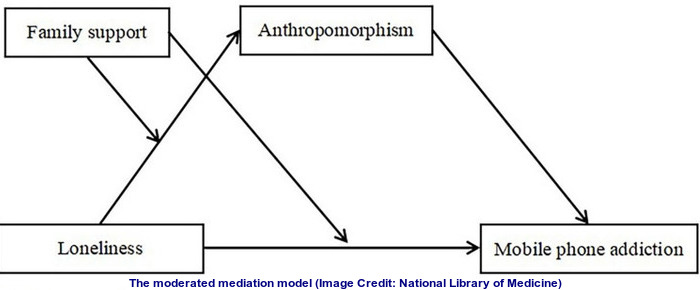
For many children, teenagers and young persons, the world of communication has shifted to Internet in recent times. Through this strange dialectical process, the technology of instant connection has paved the way for infinite isolation. Naturally, children who have been subjected to a traumatic experience make a strong bondage with the connectionless connection or the virtual world. This fact is reflected in the latest survey.
Boundless Ocean of Politics on Facebook
Boundless Ocean of Politics on Twitter
Boundless Ocean of Politics on Linkedin
Contact: kousdas@gmail.com

 ISMC
ISMC Boundless Ocean Of Politics