

Forest, Lost 22 Million Years Ago, Resurfaces
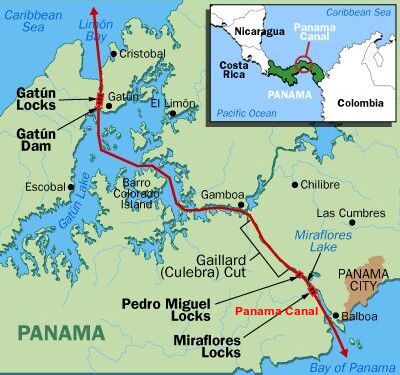
An entire forest had disappeared nearly 22 million years ago! Scientists claimed that volcanic eruption triggered the sudden disappearance of the forest. A part of that forest recently resurfaced near the Panama Canal. Researchers from the Smithsonian Tropical Research Institute found the lush green mangrove forest on Barro Colorado Island in January 2024. There, they also found some fossils that no longer exist in the world. Those fossils have made this discovery a remarkable one.
Researchers were surprised to find the mangrove forest on Barro Colorado Island, as there is no similarity between the newly discovered forest and other existing forests in the world. They felt as if they reached the past. Researchers are of the opinion that the South American and Caribbean Plates had collided with each other 22 million years ago, shaping the topography of present-day Panama and Central America. Because of the collision between the two plates, there was a major change in the landforms, with tiny mounds turning into hills. It also increased the size of some islands.
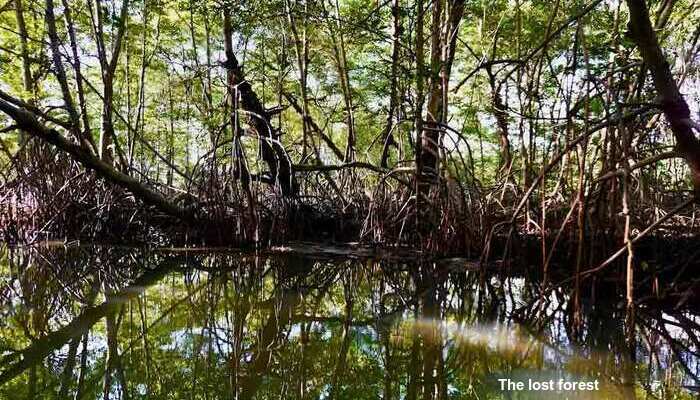
Now, one can find 130ft-tall gigantic trees in that forest of Panama. After testing the sediments, researchers have confirmed that once there was a mangrove forest in this region. Also, freshwater and saltwater mixed there in the past. Hence, researchers have noticed strange variations in the world of species in this particular region. There were only mangroves in this forest millions of years ago. No other tree varieties used to grow there. Later, the landforms started to change because of the collision between the South American Plate and the Caribbean Plate. As fresh water intruded, the levels of carbon dioxide in the air increased in the region. The atmospheric carbon dioxide concentration soared significantly higher than contemporary levels, estimated to be at least 500ppmv (parts per million by volume), in contrast to today’s approximately 400ppmv. This heightened concentration facilitated the growth of these ancient mangroves to towering dimensions unparalleled by their present-day counterparts. A section of researchers believes that it can also happen when the mangrove trees die or rot. However, the real reason is still not clear.
Researchers have further opined that the trees became taller in order to absorb more oxygen. That is why towering trees can be seen on Barro Colorado Island. After testing around 121 pieces of wood from the forest, they came to the conclusion that all of them were mangrove trees. This type of trees can also be found in South and Southeast Asia, especially in Sundarbans (a mangrove area in the delta formed by the confluence of the River Ganges, Brahmaputra and Meghna in the Bay of Bengal). However, fossils of no other plant have been found from that particular region of Barro Colorado Island.
Fossils of the mangrove trees have helped researchers to realise that volcanic eruption caused the disappearance of the mangrove forest 22 million years ago. The eruption triggered an aggressive flow of water, mud, rocks and ash, which have a remarkable ability to cover large areas almost instantaneously. After the lava dried up, a concrete coating formed over the trees and fauna in the region. While various species gradually rotted under the lava, sediments accumulated on it. Later, trees grew in that area. Finally, researchers have discovered the lost forest after 22 million years.
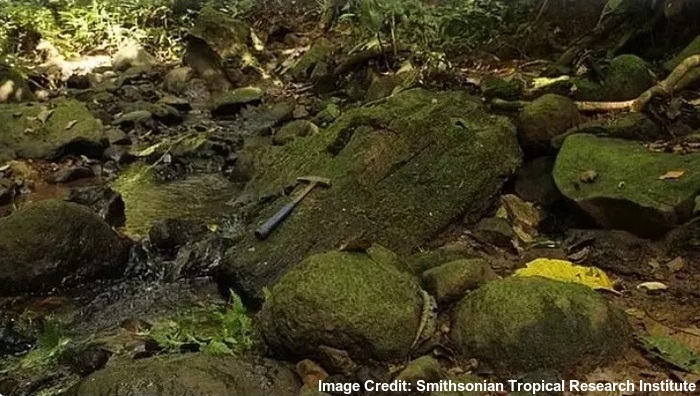
This rediscovered ancient forest at Barro Colorado Island not only offers a glimpse into a prehistoric ecosystem, but also explains how the interplay of geological forces and catastrophic events have shaped the history of our planet. This discovery will take one back to the Miocene Epoch, around 23 million years ago!
Boundless Ocean of Politics on Facebook
Boundless Ocean of Politics on Twitter
Boundless Ocean of Politics on Linkedin
Contact: kousdas@gmail.com

 ISMC
ISMC Boundless Ocean Of Politics
1 Comment »