

The ‘Oxford History Of…’
Oxford is considered as the city of dreams especially by students, as it has one of the best universities in the world. It is claimed to be the oldest university in the English-speaking world. Students from different parts of the globe flock to this English city in order to shape their career. However, a recent study has revealed that Oxford was the epicentre of terror in the Middle Ages. Murder was a common phenomenon in this city, as one can still find blood stains in the history of Oxford.
A student had reportedly brought a sex worker to the University of Oxford in 1296. She was murdered inside the university campus by the classmates of that student. A student was playing with a ball on a street in 1303. As he encountered three Irish researchers, they attacked him with knives and the student received serious injuries in his face and throat. Later in 1324, a group of students killed a Police constable with a sword on a summer night.

All the three cases happened in Oxford. The city had witnessed crimes committed by students once upon a time. The latest study has revealed that more murders had taken place in Oxford compared to London or York. According to researchers, the per capita homicide rate in Oxford was four to five times higher than late medieval London or York. And, the number of crimes committed in English cities in the Middle Ages was almost 50 times higher than in the 21st Century. Researchers have revealed that murder was quite a common incident after petty quarrels during a football match. Students of the University of Oxford often stabbed sex workers to death when they demanded payments. “Knives were omnipresent in medieval society. Axes were commonplace in homes for cutting wood, and many men carried a staff,” stated Dr Stephanie Emma Brown, a Historian of Crime and Criminal Justice interested in the prosecution of violent crime from 1350 to 1900, and a Historical Criminologist at the University of Cambridge.
England was a haven for criminals in the Middle Ages. Englishmen were familiar with murder and bloodshed. Experts are of the opinion that Oxford was the crime capital of the European country at that time. The city had a population of around 7,000 by the early 14th Century, and the number of students was approximately 1,500. The new study, called The Medieval Murder Map, has created a map of murders in medieval England. The conspiracies behind crimes have come to light after a lengthy investigation, as researchers thoroughly examined a series of murders, spanning 700 years of criminal history. As far as Oxford is concerned, it is found that 75% of murders were committed by students or officials of the university.

Manuel Eisner, the Wolfson Professor of Criminology at the University of Cambridge and Deputy Director of the Cambridge Institute of Criminology, led the team of researchers who created the murder map. He told the BBC that Oxford had a “deadly mix of conditions” which contributed to the high homicide rate. Professor Eisner stressed that the “combination of young male students and alcohol was a powder keg for violence“. “Oxford students were all male and typically aged between 14 and 21, the peak for violence and risk-taking,” he explained. The BBC quoted Professor Eisner as saying: “Circumstances that frequently led to violence will be familiar to us today – such as young men with group affiliations pursuing sex and alcohol during periods of leisure on the weekends.” He added: “Weapons were never far away, and male honour had to be protected.“
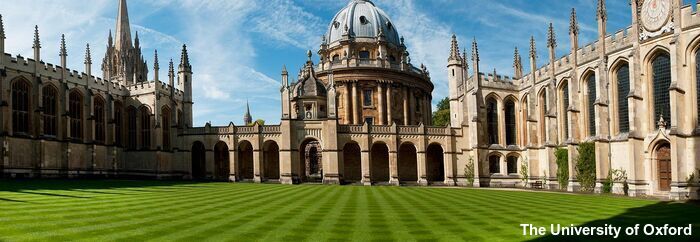
The new website of Cambridge’s Violence Research Centre has mentioned details of all recorded murders in three Medieval English cities (Oxford, London and York). The organisation has also mentioned in its website that an enthusiastic person can read everything about murders, stories behind them, plots of those murder and the weapons used in committing those crimes. Meanwhile, Professor Eisner has claimed that although Oxford University was a hotbed of medieval murder, the laws were quite strict in England. “Life in medieval urban centres could be rough, but it was by no means lawless,” says Professor Eisner. He further said: “The community understood their rights and used the law when conflicts emerged. Each case provides a glimpse of the dynamics that created a burst of violence on a street in England some seven centuries ago.”
Boundless Ocean of Politics on Facebook
Boundless Ocean of Politics on Twitter
Boundless Ocean of Politics on Linkedin
Contact: kousdas@gmail.com

 ISMC
ISMC Boundless Ocean Of Politics