

Located 9 Billion Light-Years Away
A ball of fire had come out from the Sun. Over time, it cooled down and then, a layer of soil and water were formed on its surface. Majority of scientists agree with this theory of creation of the Earth. The third planet from the Sun is estimated to be 4.54 billion years old, plus or minus about 50 million years. Scientists came to know about the age of the Earth after discovering rocks, about 4.03 billion years old, in northwestern Canada. These are the oldest rocks to radiometrically date. Gradually, there was a transmission of life, and plants came into existence. Along with other species, humans found their place on the Earth through evolution. Although the age of the Earth is 4.54 billion years, the history of the Universe is much older. While measurements made by NASA’s WMAP spacecraft have shown that the Universe is 13.77 billion years old (plus or minus 0.059), the age has been further refined by European Space Agency’s (ESA) Planck spacecraft to be 13.8 billion years old. The Earth recently received a radio wave from that distant past.
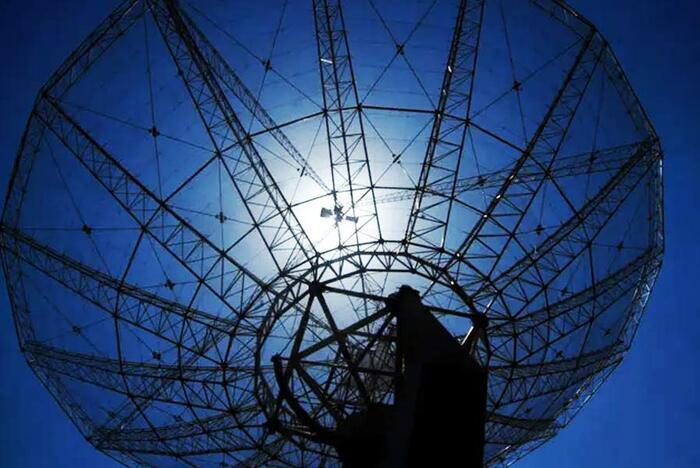
A Giant Meteorite Radio Telescope of India recently captured the radio signal emitted nearly nine billion years ago, allowing scientists to see the distant past. In fact, that radio signal has brought with it the time when it was emitted. After observing the radio signal, researchers at McGill University and the Indian Institute of Science claimed that the wave had originated from the distant star-forming galaxy, known as SDSSJ0826+5630, 8.8 billion years ago. Never before has the Earth received a radio signal from so far away. Scientists believe that they can uncover the enigmatic secrets of the early Universe through this signal.
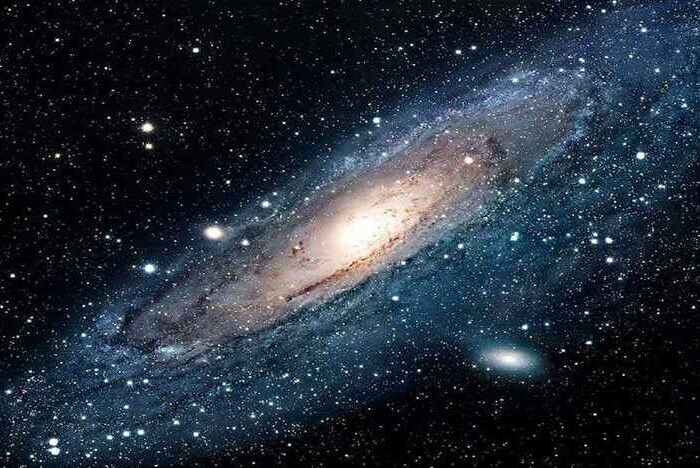
Scientists are of the opinion that it took about nine billion years for this radio signal to reach the Earth, as the distance between the Earth and SDSSJ0826+5630 galaxy is about nine billion light years. A beam of light carried the signal across the distance. Interestingly, the signal was emitted at a specific wavelength, known as the 21cm line or Hydrogen line. This type of radio signal has been detected from such a significant distance in a rare first. This sort of wavelength is generated by neutral hydrogen atoms.
Arnab Chakraborty, a Post-Doctoral Researcher at McGill University, explained: “A galaxy emits different kinds of radio signals. Until now, it’s only been possible to capture this particular signal from a galaxy nearby, limiting our knowledge to those galaxies closer to Earth.” He added: “But thanks to the help of a naturally occurring phenomenon called ‘gravitational lensing’, we can capture a faint signal from a record-breaking distance. This will help us understand the composition of galaxies at much greater distances from Earth.”
Researchers have so far recovered some surprising information from this radio signal, which is older than the Earth itself. They have found the presence of hydrogen gas in the SDSSJO826+5630 galaxy. The atomic mass of hydrogen gas in that constellation is about twice the atomic mass of hydrogen in all stars visible from the Earth. Hydrogen provides primary fuel for the formation of stars in a galaxy. In other words, the number of stars was much more in that distant galaxy than any galaxy known to scientists, let alone our own Milky Way.
Scientists have explained how it is possible to see the past through this radio wave. They have stressed that it took about nine billion years for the signal to travel the distance it came from. Hence, what happened in that galaxy at that period of time remained captured in the signal. Scientists believe that it is quite possible to get an idea about the creation and evolution of the Universe through this radio signal. What scientists have come to know about the Universe so far is very little. More information can be obtained through this signal, and scientists are trying to do that.
Boundless Ocean of Politics on Facebook
Boundless Ocean of Politics on Twitter
Boundless Ocean of Politics on Linkedin
Contact: kousdas@gmail.com

 ISMC
ISMC Boundless Ocean Of Politics