

On An Ancestor To ‘Homo Erectus’
His pet dog was running away. The nine-year-old Matthew Berger stumbled while trying to catch the dog. The boy had no idea that his miss footing would reveal an unknown historical fact. The rock on which he stumbled near South Africa’s Malapa Cave in 2008 was embedded with a clavicle and a jawbone of a new species of man! This particular species of human beings probably roamed on the Earth two million years ago. Researchers still have a lot of confusion about the period. Hence, research is still going on about the species who used to exist on the Earth at that period of time.
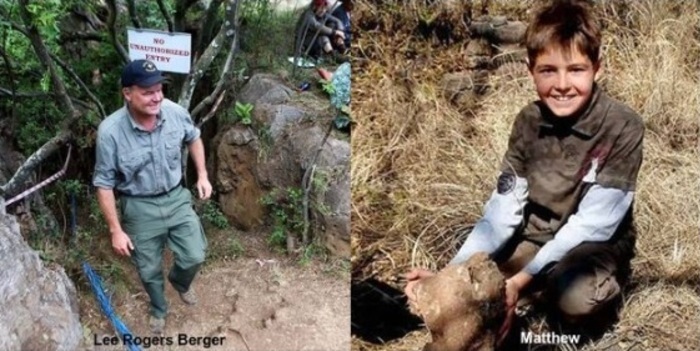
Matthew’s father Lee Rogers Berger (b. December 22, 1965) is a South African paleoanthropologist born in the US and National Geographic Explorer-in-Residence. He had been searching for ancient fossils north of Johannesburg for nearly two decades. Immediately after Matthew informed his father about the rock, Lee rushed to the spot and was pleasantly surprised as it was a fossil that he had been looking for so many years.
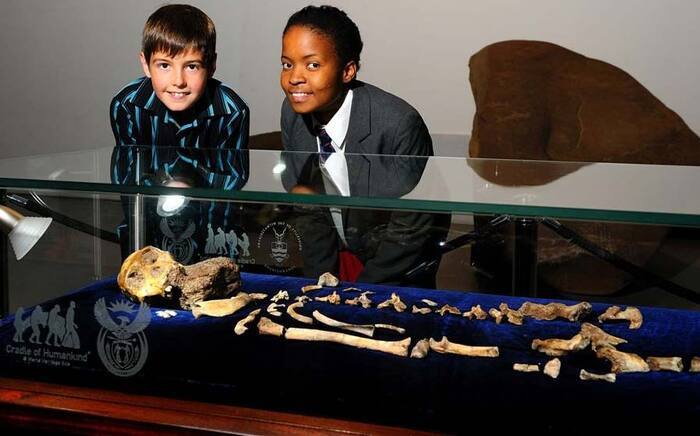
The fossil found by Matthew was of a boy just like him. The skull of the 4ft 2inch height boy was perfectly preserved after all these years. Later, Lee and his team recovered the remains of a woman, along with the boy. Both the woman and the boy have a mixture of primitive and modern physique. They were not exactly like modern human beings or primitive monkeys. The new species was named Australopithecus Sediba. Australopithecus Sediba was initially described as being a potential human ancestor, and perhaps the progenitor of Homo. However, this is contested and it could also represent a late-surviving population or sister species of Australopithecus Africanus who had earlier inhabited the area.
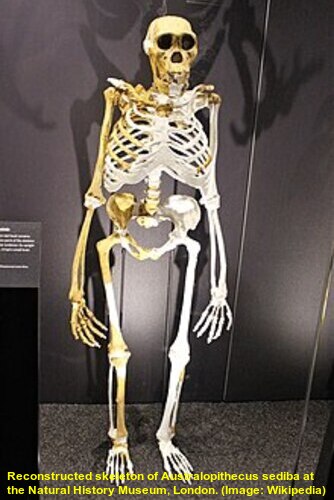
Although Sediba had two long legs, it had human-like hips and pelvis. Interestingly, its arms were quite long, like that of the monkeys. According to researchers, it is evident from the shape and form of the arms that Sedibas used to climb trees. The face of Sediba is quite similar to that of modern humans, as they had smaller teeth. However, like a primitive man, Sediba’s head was quite small. Their feet, too, were like those of primitive man. Researchers believe that Australopithecus Sedibas were on the Earth from 1.78 million to 1.95 million years ago. They were contemporaries of the first species of modern human beings.
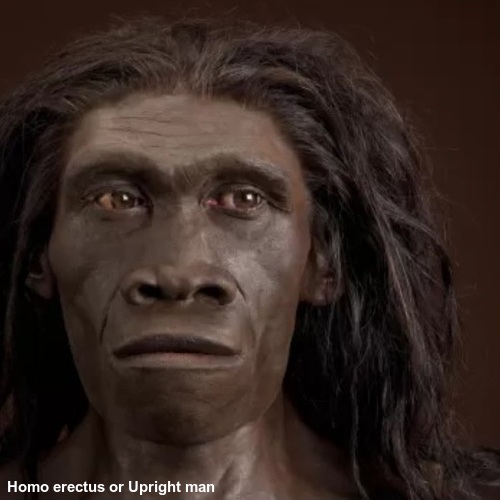
Lee has explained that Sediba is the ancestor of Homo Erectus, the generation immediately preceding the modern human beings, Homo sapiens sapiens. Homo Erectus is an extinct species of archaic human from the Pleistocene, with its earliest occurrence about two million years ago. Its specimens are among the first recognisable members of the genus Homo. The paleoanthropologist has said that Sediba could also be a branch of an earlier species of modern human beings. In other words, Sediba was a bridge between modern human beings and their ancestors. The body structure of Sediba proves that people used to hang from trees two million years ago! Perhaps, they used to hang from the trees in order to protect themselves from the terrible animals. They were the first generation of modern humans.
Meanwhile, a section of scientists is of the opinion that Sediba was not a bridge between primitive and modern men. This species was found earlier, and they were an offshoot of a primitive species of man. Irrespective of all these opinions, Sediba has opened new horizons in the History of Human Civilisation.
Boundless Ocean of Politics on Facebook
Boundless Ocean of Politics on Twitter
Boundless Ocean of Politics on Linkedin
Contact: kousdas@gmail.com

 ISMC
ISMC Boundless Ocean Of Politics