

The Dark Side Of Glory
Dubrovnik…. the beautiful Croatian city in southern part of the country, fronting the Adriatic Sea. The distinctive Old Town is encircled with massive stone walls built in the 16th century. It was also the shooting-location of popular television series ‘Game of Thrones’. The local authorities installed a giant screen in front of the wall ahead of the second semi-final (of the 2018 FIFA World Cup between Croatia and England held on July 11). Croatians also enjoyed the Croatia-France World Cup final on this screen on July 15.
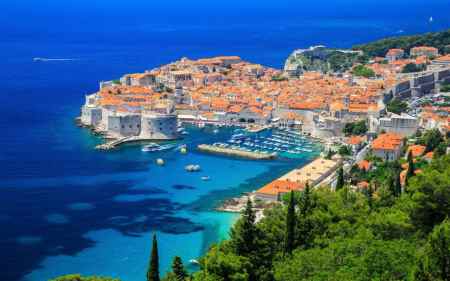
Dubrovnik
The final started at 7:30pm (local time). However, thousands of fans gathered in front of the screen at 6pm to cheer their heroes – Luka Modrić, Ivan Perišić, Ivan Rakitić…… It seems that they were getting ready to take part in a festival (and not to watch a football match). Although Croatia lost the final to France 2-4, fans were happy with their team’s brilliant performance in Russia this summer. In Dubrovnik (and also in other Croatian cities), they erupted in joy when Croatian players received the silver medals on Sunday.
At the end of the match, local boy Yosip said that it was a memorable day in his life, as Croatia reached the World Cup final for the first time. His neighbours, too, celebrated the night with music and liquor.

French President Emmanuel Macron with his Croatian counterpart Kolinda Grabar-Kitarovic in Moscow
However, 58-year-old Ivan was not so happy. He wanted Croatia to lose the final. “I don’t hate Croatia, but don’t love the country. They killed my father. After being tortured (both mentally and physically) for 15 years, my dad committed suicide by shooting himself with his revolver 15 years ago,” stressed Ivan.
There has been a bitter rivalry between the Catholics and Orthodox Christians in Croatia since the Balkan War (in the early 1990s). Ivan’s father was an Orthodox Christian and mother was a Bosnian Muslim. Even after Croatia’s emergence as an independent nation (on October 8, 1991), they didn’t get their due respect. Now, more than 95% of Croatians are Catholic and Orthodox people are still considered as ‘third class’ citizens in the Balkan nation.
Ivan recalled that his dad used to travel 20km on a motorcycle to meet his mom. Later, they tied the nuptial knot. The scenario changed after the Independence, as the concerned authorities in Croatia launched attacks on Orthodox Christians. According to Ivan, no one agreed to help his parents during those days because of their interfaith marriage. “I was born here. I have no religion. Who are they to drive me out? Croatia, Serbia, Bosnia…… they are bloodsuckers!” he said. Ivan believes that Croatia will certainly use its success in Russia to hide political crimes. “The world will never know what has happened to us. Everyone will talk about Croatia’s beauty and football,” he insisted.
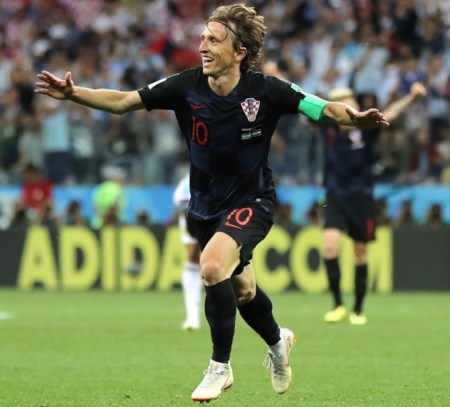
Luka Modrić
Ivan fails to understand how Luka Modrić inspires himself. A Serbian militant group had murdered Modrić’s grandfather. According to Ivan, one of Modrić’s relatives was reportedly involved in the murder. Their house was also burnt down and Modrić became a refugee at the age of seven. The boy, who took shelter in a hotel in Zadar, is captaining the Croatian team now. Goalkeeper Danijel Subašić, too, performed well in Russia. Subašić’s father is also an Orthodox and a victim of discrimination. His lover’s family didn’t want their daughter to get married to Subašić. “Today, people forget all these because Subašić represents the national team,” insisted Ivan.
There is a huge flag of Real Madrid at his residence. Don’t you support any Croatian club? Ivan replied: “I used to support Dinamo Zagreb. Zvonimir Boban was my close friend. We used to party together before he joined AC Milan. Today, Boban cannot recognise me. War changes everything…..”
The 2018 FIFA World Cup was actually the ‘World Cup of refugees’. In fact, the refugee camps in major European cities have become the supply lines of the world football. Senior officials of the renowned European clubs visit those camps on a regular basis to find young talents. Although the continent treated migrants from Asia and Africa in a different way, their children are the pillars of European football.
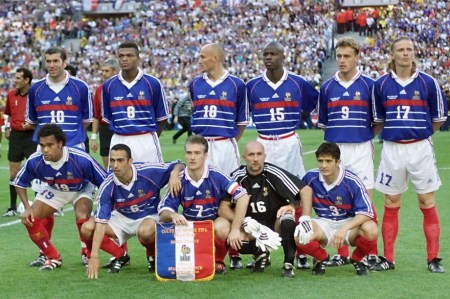
1998 WC Champions France
France had introduced the model after the WWII. The western European country used to bring people from their colonies to meet the growing demand for workers. A number of colonies had been set up outside the major French cities to accommodate those Asian and African migrants. Even in the 1960s and 1970s, the European cities witnessed uninterrupted arrival of refugees from Eastern Europe, Africa and West Asia. For French football, it was a worst period. France failed to qualify for FIFA World Cup and European Championship from 1960 to 1974. Then, they created the world’s first modern football academy and the refugee colonies in suburbs started producing the golden generation players of French football. Those players won the World Cup for France in 1998. The perfect co-operation between Whites and Arab- and African-origin players was the key to that success. Twelve members of the 1998 World Cup-winning French team were first or second generation immigrants. The same tradition goes on. In the current national team, there are only two genuine French players. But, the future of French football is in safe hands of Pogba, Matuidi, Mbappe, Umtiti and Kante.
The entire Europe has adopted this model which helps the continent rule the world football. All the four semi-finalists in Russia – France, Croatia, Belgium and England – have a number of players of African descent. Although the number of immigrants is insignificant as far as the proportion of their entire population is concerned, they have become a dominating force in European football.
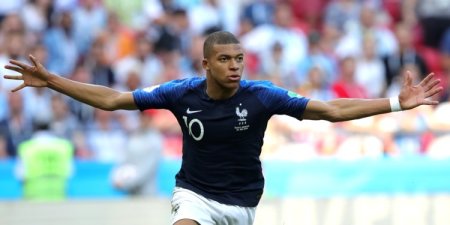
Kylian Mbappé
But, how are the immigrants?
Thousands of people are still arriving in Europe from war-ravaged Asian and African countries. In the last three years, Italy has received nearly five million migrants. Others have failed to reach the continent and died on the way. Major European countries – like England, Germany, the Netherlands, Poland, Hungary and Slovenia – have taken various steps to stop the flow of migrants into the continent.
Racism in football is not a new phenomenon. Zinedine Zidane – who played a key role in France’s World Cup victory in 1998 – was accused of mumbling ‘La Marseillaise’ (France’s national anthem) by far-right politician Marine Le Pen because he is the son of Algerian immigrants. Laurent Blanc – another member of the 1998 World Cup-winning French squad – had triggered a controversy by instructing training school managers to apply a 30% quota of blacks and Arabs to 12-year-olds being inducted into the academies. According to Blanc, “there were too many blacks, too many Arabs and not enough white players in French football”.
Romelu Lukaku – the striker who helped Belgium finish third in Russia – is another victim of racism. Once, Lukaku said: “You always get the odd occasion when they call you the ‘Belgian of Congolese descent’, when you do bad. So I think, ok cool, if that’s how it’s going to be, revenge is going to be sweet. I won’t say anything now. I will open my mouth later.”
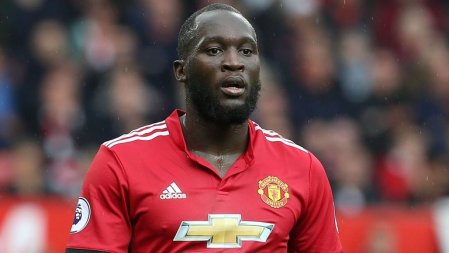
Romelu Lukaku
Millions of migrants are the victims of racist abuse in Europe. And some of them, like Lukaku, fight for their nations on a football pitch even after being abused. Sports lovers will always remember Mbappe, Modrić, Lukaku and Jesse Lingard for their superb show in Russia. Literally, the 2018 FIFA World Cup was the ‘Refugees’ World Cup’ and Mbappe, Modrić, Lukaku and Lingard are the real heroes!
Boundless Ocean of Politics on Facebook: https://www.facebook.com/boundlessoceanofpolitics/
Boundless Ocean of Politics on Google Plus:
https://plus.google.com/+KoushikDasboundless
Boundless Ocean of Politics on Twitter:
https://twitter.com/kousdas?s=09
Boundless Ocean of Politics on Linkedin:
https://www.linkedin.com/company/boundless-ocean-of-politics
Contact us: kousdas@gmail.com

 ISMC
ISMC Boundless Ocean Of Politics