

Even Anne Didn’t Get US Visa
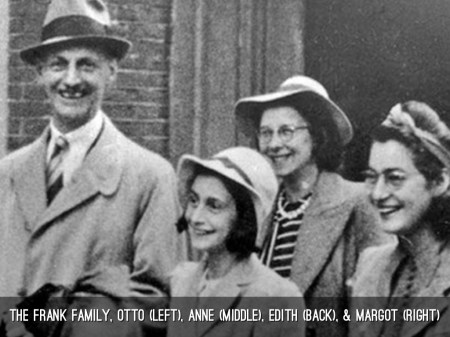
It wasn’t possible for Otto Frank to visit the US because of the complexity of the immigration law and the adverse political situation. He tried twice to reach the US before taking shelter in a secret room from 1942 to 1944 (during the German occupation of the Netherlands in WWII) with his daughter and other members of the family. From 1942 until the family’s arrest by the Gestapo in August 1944, Otto’s daughter Anne kept a diary she had received as a birthday present and wrote in it on a regular basis.
July 6, 1942….. Otto and his family hid in a friend’s residence in Amsterdam to escape from the Nazis. Before that, he planned to settle in the US. In 1941, Otto sent a letter to his friend Nathan Straus Jr in which he wrote: “I am forced to look out for emigration, and as far as I can see, USA is the only country we could go to.”
Nazi Germany brought Czechoslovakia and Austria under the control of Third Reich in 1938. And violence against Jews broke out across the Reich on the night of November 9, which is popularly known as the “Night of Broken Glass“. Although the Frank family managed to survive that night, Otto realised that Germany was no longer a safe place for them. A few days later, he filed an application for visa at the US Embassy in Rotterdam, the Netherlands.
The US didn’t approve the application in the first phase. However, the Franks found their names in the ‘Waiting List’. The Germans bombarded the US Embassy in Rotterdam on May 14, 1940, thus, destroying all the documents, including Otto’s visa application. He mentioned about the incident in a letter written to a friend.
Researchers are of the opinion that it would have been difficult for the Franks to get US visas even if the US embassy wasn’t attacked. According to researchers, millions of Europeans started applying for US visas immediately after the outbreak of WWII in 1939. However, the US used to approve not more than 30,000 visa applications (per year) those days. So, there were no guarantees Franks would receive visas.
Otto once again decided to apply for visas in 1941. However, he failed to complete the process of application, as Nazis shut the US Embassies in Germany-occupied European countries by that time. Franks also tried to settle in Cuba. On December 11, a National Refugee Service memo reported the cancellation of just issued Cuban visas for Franks.

Anne Frank
Otto, Anne and other members of the Frank family were in Amsterdam from 1942 to 1944. The Gestapo arrested them in August 1944 and sent Anne (and her sister Margot) to Bergen-Belsen concentration camp, where Anne died (probably of typhus) in February or March 1945 at the age of 15. Otto – the only survivor – returned to Amsterdam after the war and found that his daughter’s diary had been saved by one of the helpers, Miep Gies.
Had Anne managed to get a US visa, she would probably not be remembered today as one of ‘famous’ victims of Holocaust.
Boundless Ocean of Politics on Facebook: https://www.facebook.com/boundlessoceanofpolitics/
Boundless Ocean of Politics on Google Plus:
https://plus.google.com/+KoushikDasboundless
Boundless Ocean of Politics on Twitter:
https://twitter.com/kousdas?s=09
Boundless Ocean of Politics on Linkedin:
https://www.linkedin.com/company/boundless-ocean-of-politics
Contact us: kousdas@gmail.com

 ISMC
ISMC Boundless Ocean Of Politics