

Switzerland All Set To Accept Guillotine
Swiss national independence was dealt a severe blow on September 27, 2026 when the Neutrality Initiative was soundly defeated in a popular referendum, followed shortly thereafter by the approval in the Swiss Council of States (the Upper House of the Swiss Parliament) of the controversial Bilateral III Treaty with the European Union (EU).
The Neutrality Initiative called for introducing a provision in the Swiss Constitution that would strengthen the obligation of neutrality already provided for, making it perpetual and armed, and would ban the country’s participation in foreign sanctions. However, Swiss financial and corporate elites, working through the mainstream media, succeeded in brain-washing a majority of the population into believing that such a ban would jeopardise the Bilateral Treaty with the EU, which they present as being in the national interest. Therefore, the initiative failed, 70% to 30%, with a voter participation of 47%.
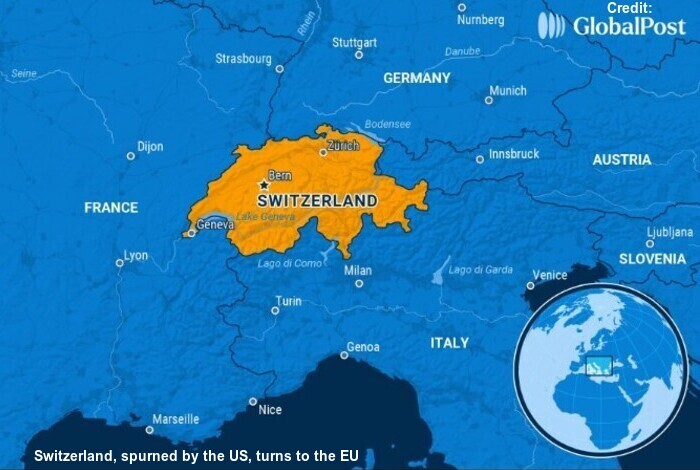
In reality, that treaty, dubbed the Submission Treaty by its opponents, makes the creeping campaign of integration with the bloc much more blatant, especially through the so-called dynamic adoption of EU laws. As Council of States member Beat Rieder, from the Valais Centre Party, explained during the September 28 session, the “dynamic legal alignment” clause of the Treaty de facto binds Switzerland to adopt whatever new law, guidelines or decisions are issued by Brussels in the future, with no real power to reject them. Formally, Bern is involved in co-shaping the law, and the Swiss Government or Parliament can reject it.
However, this would require opening a procedure that gives Brussels and the European Court the upper hand in activating the so-called Guillotine Clause, i.e., punishing Switzerland by cancelling the treaty altogether, not only those aspects relevant to the disputed matter. As an alternative, the EU can adopt compensatory measures, such as blocking access to EU markets in the area concerned. Recent cases with Norway and Switzerland show that both mechanisms, the guillotine and compensatory measures, work as a strong deterrent, defusing any attempt to escape EU law.
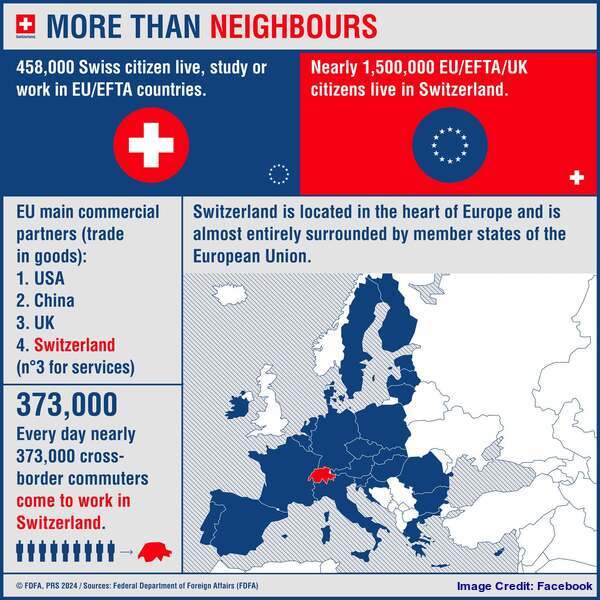
Rieder correctly argued that characterising this as a colonial treaty was not enough. Not even the British Empire demanded that its colonies automatically adopt every future British law. He concluded: “If you give up sovereignty to achieve a little temporary prosperity, you will first lose your sovereignty and then your prosperity as well.”
The treaty must now be approved by the Lower House, the National Council, where a majority is in favour. However, the National Council might reverse the decision by the Council of States to hold a Sui Generis Referendum on the treaty (which requires the approval of a majority of both the voting population and the cantons to pass), and only allow an optional referendum (which is only voted on by the citizens, but requires the prior signature of 50,000 citizens).
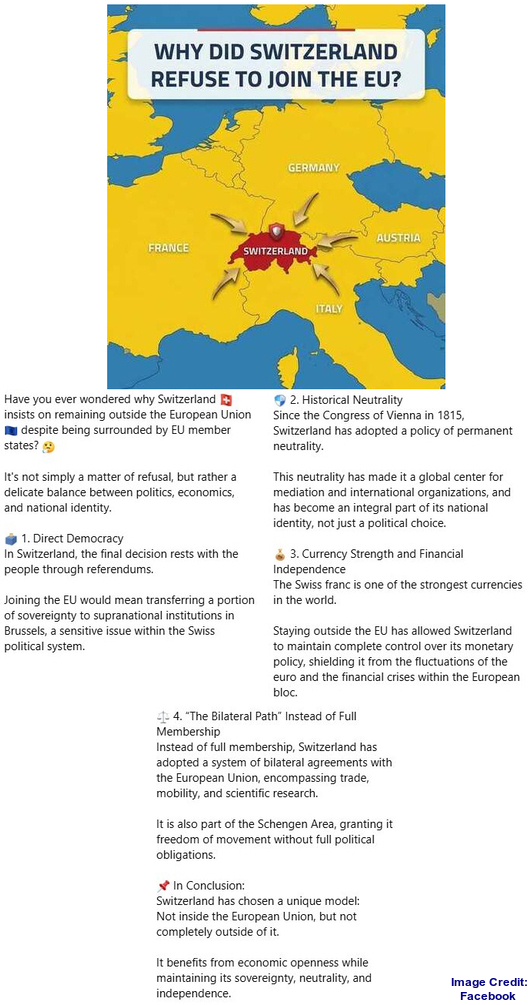
Marco Cassiano, the Editor of La4 Ticino Web TV, stressed: “The European Union and NATO, and the US, will see in the result of the Swiss referendum a sign of great weakness and increased closeness to the EU and NATO. Therefore, they have quickly understood that Switzerland is easy prey for them.”
This article was first published in Executive Intelligence Review (EIR) Strategic Alert weekly newsletter (Volume 40, No. 41) on October 8, 2026.
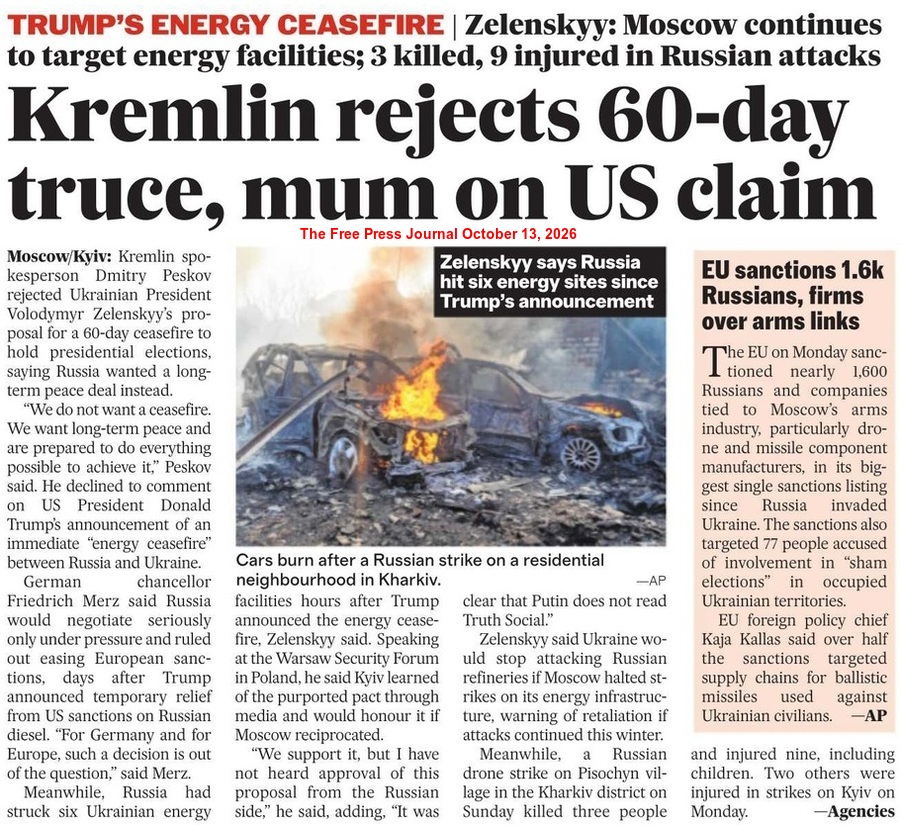
Meanwhile,








Boundless Ocean of Politics on Facebook
Boundless Ocean of Politics on Twitter
Boundless Ocean of Politics on Linkedin
Contact us: kousdas@gmail.com

 ISMC
ISMC
