

The Self-Healing
Scientists detected that the ozone layer of the Earth developed a hole in the mid-1980s. Even after all these years, the hole still remains. However, some recent data have raised new hopes among scientists and environmentalists as the World Meteorological Organisation (WMO) has mentioned in its latest report that the size of ozone hole shrank to its smallest in 2025.
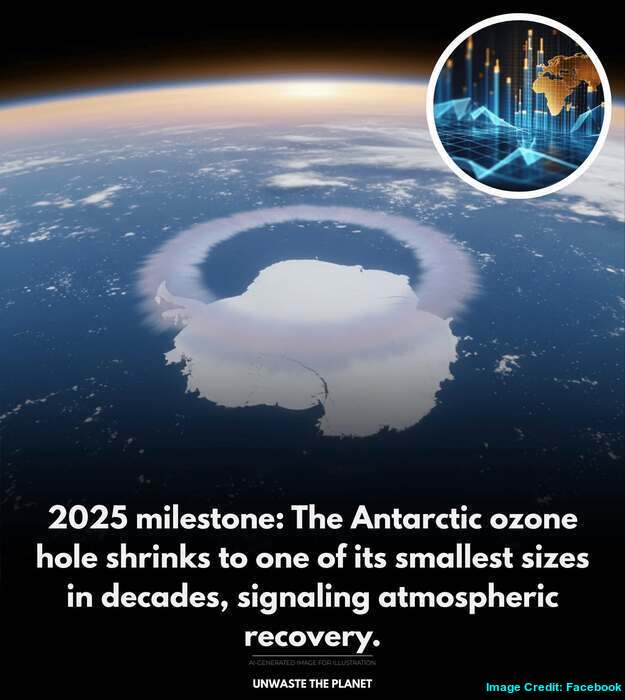
The primary ozone hole is located over Antarctica at the South Pole. Although ozone holes often form over the North Pole when an unusually strong polar vortex traps freezing air and creates high-altitude clouds that interact with pollutants; those are not large like the one at the South Pole. Environmentalists are primarily concerned about the ozone hole forming over Antarctica. The 2025 Antarctic ozone hole ranked as the 4th to 5th smallest and weakest since severe depletion patterns began in 1992, continuing a positive trend of long-term recovery.
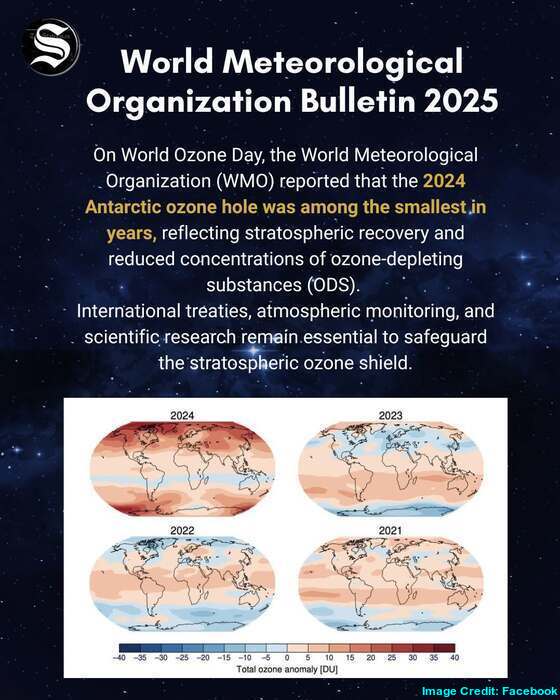
In its latest Ozone Bulletin, the WMO has mentioned that the 1990-2010 mean maximum Ozone Mass Deficit (OMD) for the Antarctic ozone hole was 50.1 million tonnes, more than 25% below the 1990-2010 average. The IMO report further states that the Antarctic ozone hole in 2025 ranked as the fifth-smallest recorded since 1992, with an average area of 18.71 million square kilometres.
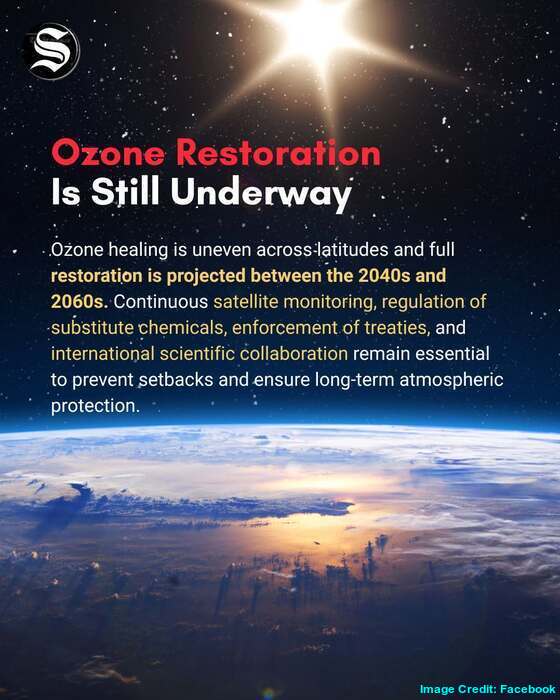
Interestingly, the Antarctic ozone hole remained significantly below the 1990-2010 average for the second consecutive year. Based on this, scientists surmise that the ozone layer is gradually recovering. Professor Celeste Saulo, the Secretary-General of the WMO, has described this phenomenon as a comprehensive picture of environmental success, saying: “Since 2000, the ozone layer has been recovering, and we can expect full recovery within several decades.”
The ozone layer is a protective shield in the stratosphere located roughly 15-35km above the surface of the Earth. This layer absorbs most of the Sun’s harmful ultraviolet (UV) radiation that can damage vision and also increase the risk of diseases, such as cancer. However, scientists discovered a hole (severe thinning) in the ozone layer in the late 1970s. According to scientists, global warming caused by excessive pollution was responsible for this.
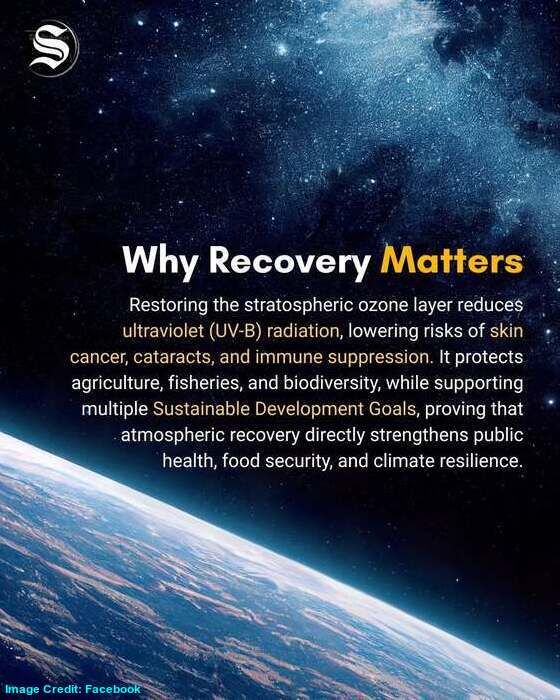
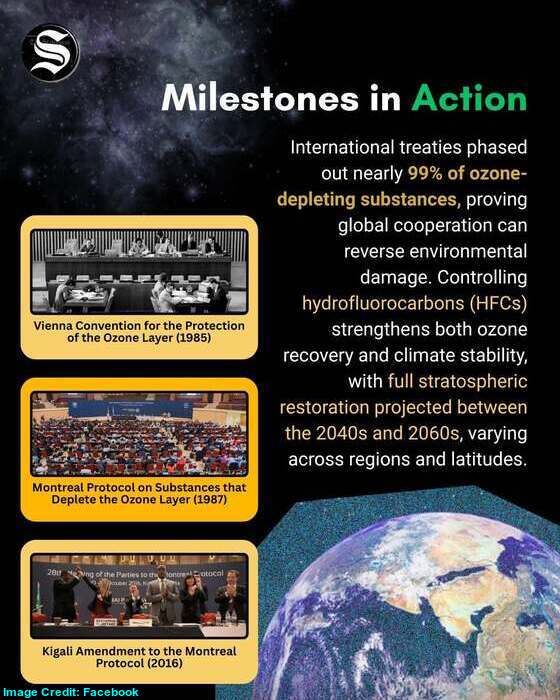
Research reveals that chlorofluorocarbons (CFCs), the primary human-made chemicals, are responsible for destroying the ozone layer. The global community signed The Montreal Protocol, a landmark global treaty to protect the ozone layer by setting mandatory timetables to phase out ozone-depleting substances, like CFCs and halons, on September 16, 1987. The WMO has highlighted that continuous long-term data, such as observations showing the stabilisation and shrinking trends of the Antarctic ozone hole over consecutive years, demonstrate the measurable healing of the ozone layer under The Montreal Protocol.
Meanwhile,











Boundless Ocean of Politics on Facebook
Boundless Ocean of Politics on Twitter
Boundless Ocean of Politics on Linkedin
Contact us: kousdas@gmail.com

 ISMC
ISMC
