

Literary Renaissance Connects Children To Roots
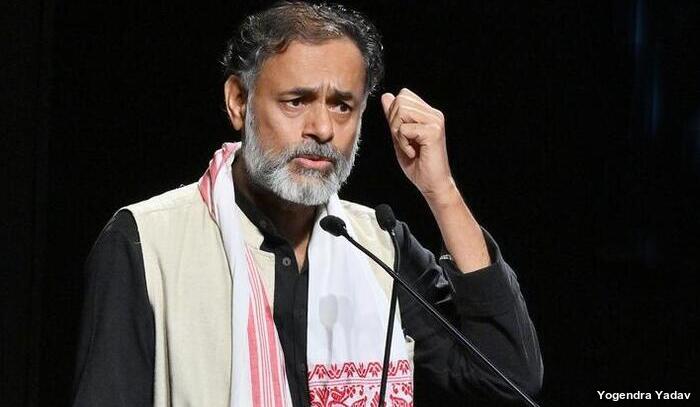
by Yogendra Yadav
In the age of reels, a literary renaissance that connects children to their roots
A wacky picture poem on personality development through the fine art of farting. A book with vibrant illustrations about the adventures of a young girl, Maithili, with cute yet conflicted monsters. A wordless story about the Sun, portrayed as a young woman in the Northeast. An engaging introduction to our rivers through myths, stories and drawings. And a stunning art book that introduces children to a modern Indian painter.
You will find all these and hundreds of other innovative books for children of all ages at the ongoing World Book Fair in the Indian capital of New Delhi. Come to Hall 6, thoughtfully set apart from the rest of the exhibition. Children’s books need their own space, just as children do. You will have to wade through a lot of glitter and many gimmicks, dodge decorated pavilions and big publishers. You don’t want to be distracted by glossy imported stuff, bog-standard English fiction with blond fairies, the same old Panchatantra books and Amar Chitra Katha that you grew up with, boring activity and drawing books, and lots and lots of “educational material” guaranteed to secure the best rank for your child.
These may not be useless, but you can order them online. You don’t go to a book fair for them. You go there to sample new and creative work. You go there in search of books that help develop a taste for reading, writing and learning for children surrounded by videos and reels. You go there to connect your children to their context – the history, myths, stories and real life of this vast subcontinent – where they are growing up. You go there to tickle the curiosity and creativity of a child who is to live with artificial intelligence. In other words, you go there for Indian books, written for Indian children, preferably in one of the Indian languages.
If that’s what you are looking for, here’s some good news. Indian children’s literature is going through a renaissance. It began with Indian books in English. And, going by what I can see in Hindi, it seems to be spreading through Indian languages. It is an exciting time to be an author, an illustrator, a publisher – and a reader – of literature for children and young adults.

You want to start with the modest stall of Parag, a much-needed initiative of the Tata Trust. For the last five years, this trust has announced an annual Parag Honour List: “A curated collection of outstanding books in English and in Hindi for children and young adults.” The good thing is that they don’t publish on their own and therefore do not compete with other publishers. You have a credible jury doing the initial selection for you. You want to pick up their latest Honour List – for 2025 – and, if possible, the lists for the last five years. You can access it online at http://www.paragreads.in. So far, this list includes 286 books, categorised by age group and type, featuring 24 publishers. Many of these books are also available in their stall, including some by publishers, like Muskaan and Tulika, that do not have a stall of their own. Or you can branch off directly to the publishers.
The most exciting stuff is happening in Indian English, as it caters to customers who can pay. We do not have famous author-illustrator duos, like Julia Donaldson and Axel Scheffler of Gruffalo fame, but C G Salamander and Rajiv Eipe are inching in that direction with the story of Asunam, the music-loving beast. Pratham Books and Tulika Books offer you the best selection for early and very young readers up to age seven, with some good titles from Duckbill and Puffin as well. For 10-plus and teenagers, you can also check out HarperCollins, Speaking Tiger, Tara Books and Kalpavriksh. Unlike most others, Pratham Books also offers translations in multiple Indian languages. Karadi Tales has started a new series, in association with People’s Archive of Rural India, of real-life stories from all corners of rural India. Art1st has come out with some exquisite books on Indian art, including books on Ganesh Pyne and S H Raza.
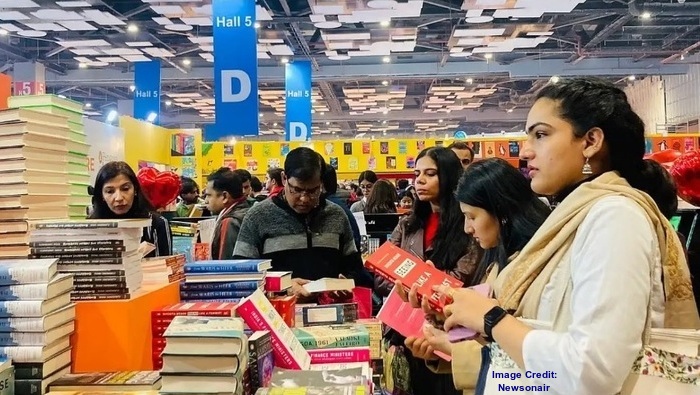
But let me take you to two stalls that you might miss. These offer exceptional children’s books in Hindi. These are besides the two official outlets, the National Book Trust and the Children’s Book Trust, whose older titles continue to be affordable and worth a look. And, of course, Pratham Books, which offers one of the largest selections of Hindi books, especially for early readers.
Welcome to Ektara Trust (imprint, Jugnoo) which is undoubtedly at the forefront of creativity in children’s literature in Hindi. Their list includes a series by Gulzar, books by Vinod Kumar Shukla and recently a novella by Krishna Kumar. Ektara has introduced a whole range of children’s books: From pocket books to giant books, from poem cards to artwork folders, from wordless picture books for infants to novels for young adults. Do look for their set of books by Gulzar, evocatively illustrated by Ellen Shaw. Or anything by the astonishing poet and wordsmith Sushil Shukla. I loved the latest picture book, Gungun Orchestra. Don’t forget to subscribe to their magazines, Pluto for early readers, and Cycle for young adults.
From Ektara, walk around the corner to the stall of Eklavya, also from Bhopal. This NGO, which builds on the pathbreaking Hoshangabad Science Teaching Programme, has expanded much beyond its original brief of science education. You still want to look at their books and toolkits for science, besides books on education that teachers and parents can benefit from. For many years, their imprint Pitara has ventured into poetry, fiction and non-fiction for children across age groups. Varun Grover’s Futt-ball is a poignant story of a Ludhiana boy with a Punjabi accent who goes to a Hindi school in Lucknow. You might wish to subscribe to their magazine Chakmak for children or Sandarbh for educators. Pitara has always stood out for expanding the cultural universe of the child to all corners and communities of India.
You would discover much more than I could, especially if you take children along with you to the exhibition. As they say, children’s books are where imagination learns to walk.

Boundless Ocean of Politics has received this article, published in The Indian Express on January 13, 2026, from Yogendra Yadav. The author is a member of Swaraj India and the National Convenor of Bharat Jodo Abhiyaan.
Boundless Ocean of Politics on Facebook
Boundless Ocean of Politics on Twitter
Boundless Ocean of Politics on Linkedin
Contact us: kousdas@gmail.com

 ISMC
ISMC Boundless Ocean Of Politics