

Humans Inherit Mental Issues From Primitive Ancestors
Modern humans have not only genetically inherited intelligence, but also mental problems from their primitive ancestors. A recent study has revealed that the human brain has evolved over millions of years, triggering a change in gene patterns. As per the study recently published in the Cerebral Cortex journal, genetic variants broadly associated with psychiatric disorders emerged approximately 475,000 years ago in hominin evolution. There is still no evidence of the existence of modern humans (Homo sapiens) at that period of time.
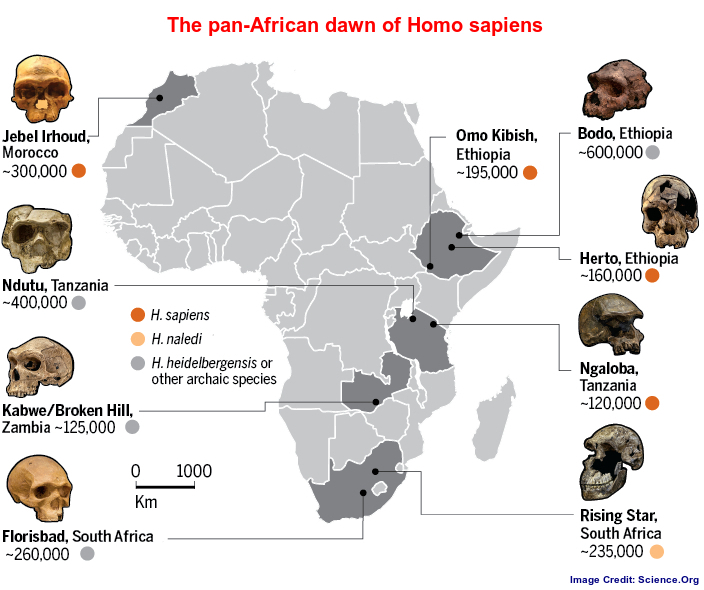
The oldest traces of modern humans are found at the archaeological site of Jebel Irhoud in Morocco. Fossils discovered there, including skull, jaw and long bones, have been dated to approximately 315,000 years ago. Homo heidelbergensis, considered a potential common ancestor to Neanderthals and modern humans, lived approximately 700,000 to 200,000 years ago in Africa, Europe and possibly Asia. This extinct human species was the first to adapt to colder climates, hunt large animals, build shelters and control fire. Researchers are of the opinion that genes related to mental problems existed among them.

Although all great apes are our cousins, scientific consensus based on genetic and fossil evidence identifies the chimpanzee and the bonobo (both species within the genus Pan) as the two most recent closest living relatives, as well as ancestors, of modern humans (Homo sapiens). In fact, humans share approximately 98.8% of their DNA with both chimpanzees and bonobos. It is widely believed that human evolution began approximately five million years ago, splitting from chimpanzees and bonobos, while some studies suggest a slightly older split. Since then, the size of the human brain has increased by almost three times.
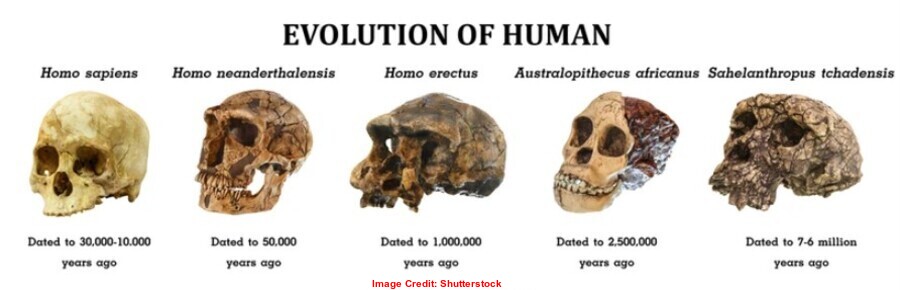
Fossils provide an idea of early human brain size by showing that the cranial capacity increased significantly over millions of years, from around 350cm³ in early hominins, like Sahelanthropus tchadensis, to an average of 1,400-1,500cm³ in Homo sapiens. Scientists estimate this by studying the endocranial volume – the internal space of the skull – which can be inferred from the shape and size of a skull. However, fossils provide limited direct information about brain capabilities at that time. Research into human genetics is essential for understanding brain capabilities because genes provide the fundamental blueprint for brain development, structure and function. Recent research has confirmed that human genes have changed over time, influencing traits, like brain size, intelligence, height and even various types of illnesses.
Dr Ilan Libedinsky, a researcher at the Centre for Neuro-genomics and Cognitive Research in Amsterdam, has conducted research on these two fields. Dr Libedinsky and his colleagues have found that genetic variants linked to fluid intelligence or the ability to solve new problems emerged around 500,000 years ago. Soon after, some genes emerged that were associated with issues related to current mental health. According to Dr Libedinsky, the study suggests that the genetic variants underlying human intelligence and vulnerability to mental illness co-evolved. In other words, cognitive abilities may have come at the cost of increased susceptibility to mental disorders.
Researchers have also made an attempt to find the ancestral source of around 33,000 different types of genes found in modern humans. They have found that those genes appeared between three million and 4,000 years ago, while relatively new genes have emerged in the past 60,000 years. As per the prevailing theory, Homo sapiens migrated out of Africa and spread to other continents between 70,000 and 50,000 years ago, a period marked by the development of more complex behaviours and languages, which aided in planning and survival.
Researchers have further created a timeline of gene emergence. For example, gene duplications for the Salivary Amylase Gene (AMY1) first occurred approximately 800,000 years ago. It was an adaptation for digesting starch. Similarly, a number of core genes associated with cancer, like proto-oncogenes and tumour suppressor genes (such as TP53), have ancient evolutionary origins, some dating back to the earliest single-celled organisms, or the common ancestor of animals and fungi, approximately 900-600 million years ago. Interestingly, cancer in dinosaur bones dates back 70 to 80 million years. However, no mutations in genes associated with mental health-related issues were found at this time.
Genetic variants associated with advanced human intelligence are estimated to have emerged relatively recently in hominin evolution, with a significant cluster appearing around 500,000 years ago. The intelligence genes are part of a polygenic trait, meaning that intelligence is influenced by a number of genes, each with a very small effect. Recent studies suggest that genetic variants for intelligence and mental health emerged in close succession during human evolution. Variants linked to higher intelligence appeared around 500,000 years ago, followed shortly by variants associated with psychiatric issues around 475,000 years ago.
Meanwhile, key language-related genes, like FOXP2, show human-specific changes appeared earlier in human evolution, potentially between 100,000 and 400,000 years ago, and were shared with Neanderthals. Gene variants, associated with alcohol addiction/dependence that are linked to psychiatric disorders, such as depression, appeared much later.
Boundless Ocean of Politics on Facebook
Boundless Ocean of Politics on Twitter
Boundless Ocean of Politics on Linkedin
Contact us: kousdas@gmail.com

 ISMC
ISMC Boundless Ocean Of Politics