

New Study Challenges Columbus’ Italian Heritage
In a deed of primogeniture prepared on February 22, 1498, Christopher Columbus (between August 25 and October 31, 1451 – May 20, 1506) mentioned that his estate in Genoa, Italy, would be maintained for his family, stating: “As I was born in Genoa… I came from it and was born there.” (“Siendo yo nacido en Genova…de ella salí y en ella naci…”) Most historians believe that there should be no debates about the birthplace of the Italian explorer and navigator from the Republic of Genoa as he clearly mentioned in the deed that he was born in Genoa. However, some have expressed doubt about the veracity of his statement, stressing that there is a mystery behind the birthplace of Columbus. A group of scientists have claimed that recent DNA tests have revealed that the Admiral of the Ocean Sea was not an Italian by birth!
History records Columbus as a skilled Italian mariner from Genoa who, driven by the desire for new discoveries and a westward sea route to Asia, led four voyages that initiated the era of widespread European exploration and colonisation of the Americas. When he set sail from Europe in the 15th century, his goal was to discover a shorter route to reach the Indian Subcontinent and China. However, he changed his fleet’s course to due west, instead of travelling toward the east, and eventually discovered a completely new continent, America.
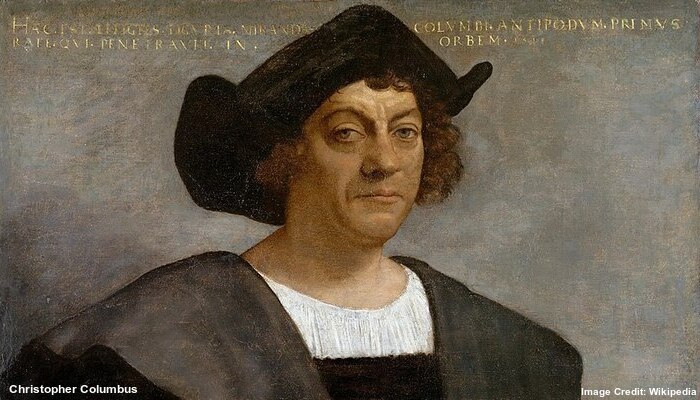
A team led by Dr José Antonio Lorente, a scientist and forensic medicine expert at the University of Granada in Spain, recently claimed that Columbus, who explored the Americas, was not of Italian descent at all. Instead, he was born to a Jewish family in Spain. According to Dr Lorente, they have reached this conclusion after decades of research.
A special programme on Spanish television, RTVE, recently aired a documentary, titled Columbus DNA: His True Origin, which presented findings from a DNA study of Columbus’ remains. The study, led by Dr Lorente, suggests that Columbus was likely a Sephardic Jew from Spain, possibly Valencia, who hid his heritage to avoid religious persecution in 1492, challenging the widely held theory that he was born in Genoa.

Analysing the Y chromosome and Mitochondrial DNA from the remains of Columbus, his son Hernando and his brother Diego, researchers have found that those are more compatible with Sephardic Jews. It may be noted that Jews from Spain and Portugal are known as Sephardic Jews, a term derived from Sepharad, the Hebrew word for Iberia. These communities developed unique traditions and customs before the expulsion of Jews from Spain in 1492 and Portugal in 1497, after which they spread worldwide, maintaining their Iberian cultural heritage. Dr Lorente and his team have further claimed that Columbus’ DNA is closely linked to the Spaniards.
Even if Dr Lorente is correct, Genoa cannot be ruled out as the birthplace of Columbus. At the same time, no other European city can be named as his birthplace with certainty. There was a significant “clamour to expel the Jews from Spain” culminating in the Alhambra Decree of March 31, 1492 that prompted the remaining Jews of the southwestern European country to either convert to Catholicism or leave Spain by July 31, 1492. A number of Jewish families took refuge in Italy at that period of time. However, it happened long after the birth of Columbus. The question arises here: How a Sephardic Jew could have been born in Genoa in the 1450s?
Those who are not satisfied with the latest study have claimed that Dr Lorente did not present any evidence to support his statements during the television show. He did not release the report of DNA tests, either. Hence, they have urged Dr Lorente and his team to clarify their unclear conclusion by presenting specific evidence and reasoning.
Historical consensus states that Christopher Columbus was born in Genoa in 1451, with the specific date estimated to be between August 25 and October 31 of that year. He was the son of Domenico Colombo and Susanna Fontanarossa. His name, in the regional pronunciation, is Cristoforo Colombo. Interestingly, Cristoforo Colombo is Columbus’ name in Italian, reflecting his likely origin in the Republic of Genoa. While he also used his Spanish name, Cristóbal Colón, and his original Genoese dialect name Cristoffa Corombo; Cristoforo Colombo is the name associated with him by the Italian language and culture.

Columbus moved to Lisbon, Portugal, in his youth around 1476 after his ship capsized and made his way to the city. Although he was born in Genoa, Portugal became the centre for his maritime and cultural education, where he established himself as a cartographer, participated in voyages and tied the nuptial knot with a Portuguese woman, Filipa Moniz Perestrelo. Most historians still rely on this piece of information.
In recent times, forensic analysis of historical documents has proven successful in many cases by using advanced physical and chemical analysis, instrumental techniques and digital analysis to verify authenticity, determine the relative age of materials, like ink and paper, and reveal hidden information. Such a possibility cannot be completely ruled out in this particular case, too.
Boundless Ocean of Politics on Facebook
Boundless Ocean of Politics on Twitter
Boundless Ocean of Politics on Linkedin
Contact us: kousdas@gmail.com

 ISMC
ISMC Boundless Ocean Of Politics