

A Breathtaking Sunrise!
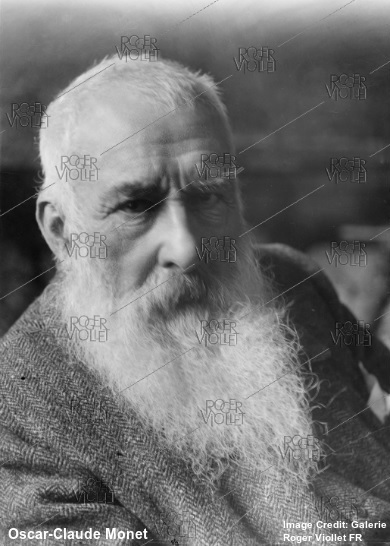
November 13, 1872… Le Havre woke up, with River Seine flowing past this northern port city of France. Port operations had not yet started as a young artist was standing at the window of a riverside hotel. As he looked at the sky, the man discovered golden, orange and red hues. Meanwhile, shadows of ships and small boats emerged in the river water. Thrilled, the artist quickly started filling his canvas with oil paints, as the time was too short and the scene was changing fast! He was running after time as he wanted to capture that moment. Oscar-Claude Monet (November 14, 1840 – December 5, 1926) did not even realise that a new style of art was being born on his canvas… Impressionism! Monet, the French painter, is considered as the founder of Impressionism and also a key precursor to Modernism, especially in his attempts to paint nature as he perceived it.
Monet named this painting ‘Impression, soleil levant‘ (‘Impression, Sunrise‘). He wanted to inform people that it was the reflection of the sunrise that he created through the impression of colours. Monet did not want to follow the Realistic style of painting and directly portray each and every form, accessory and colour of nature during the sunrise. Instead, he made an attempt to express the thrill of experiencing the reflection of the sunrise on the river bank on his canvas. His exciting feeling shook the entire world, apart from changing the history of art! Impression, Sunrise was first showcased at what would become known as the Exhibition of the Impressionists in Paris in April 1874. Later, this particular work of Monet inspired the Impressionist Movement.

Even before creating Impression, Sunrise, Monet and some other French artists had started following a new style of painting. The Impressionist Movement originated in Paris and its surrounding areas because of the nature of these regions and the unique character of light (which changes constantly throughout the day). Apart from Monet, other artists, including Pierre-Auguste Renoir (February 25, 1841 – December 3, 1919) and Alfred Sisley (October 30, 1839 – January 29, 1899), used to travel far from Paris to enjoy the beauty of nature that encouraged them to create masterpieces. Portable easels and colour tubes were invented around the same time when the railway services began in Paris. These developments helped the French artists to create such paintings to a great extent.
Impressionism has been ridiculed and denigrated in various ways since its inception! The first exhibition of this particular style of paintings was held at the studio of the famous French photographer, caricaturist, journalist, novelist and balloonist Gaspard-Félix Tournachon (April 5, 1820 – March 20, 1910), popularly known by the pseudonym Félix Nadar, on April 15, 1874. As his studio was surrounded by various grand cafes and coffee shops, the organisers wanted to grab the attention of wealthy art lovers (read possible buyers). The exhibition was named Premier Exposition 1874 that showcased more than 200 works of Monet, Berthe Marie Pauline Morisot (January 14, 1841 – March 2, 1895), Jacob Abraham Camille Pissarro (July 10, 1830 – November 13, 1903), Paul Cézanne (January 19, 1839 – October 22, 1906), Édouard Manet (January 23, 1832 – April 30, 1883), Alfred Sisley (October 30, 1839 – January 29, 1899), Pierre-Auguste Renoir (February 25, 1841 – December 3, 1919), Edgar Degas (July 19, 1834 – September 27, 1917) and others.
Unfortunately, the exhibition failed to attract art lovers or critics. Only close friends of the artists, a handful of buyers and critics visited the event. In fact, art critics strongly criticised those works. Louis Leroy (January 1, 1812 – January 1, 1885), a 19th Century French printmaker, painter, playwright and art critic, called these painters impressionists, instead of artists, especially after seeing Impression, Sunrise. He also made negative and adverse comments about this particular form of paintings. However, Leroy had no idea that the derisive term used by him would be immortalised by Monet and his contemporary artists!
The Paris Salon was the most popular art exhibition in France, as well as in Europe, in the 18th and 19th Centuries. Paris Salon, the official art exhibition of the Académie des Beaux-Arts in the French capital that had begun in 1667, was the first annual or biennial art event in the Western World. Acclamation by the jury at this exhibition would have been a great help to establish any artist at that period of time. However, emphasis was given mainly to biblical, mythological and historical works within the conservative art genre. The jury considered works of Monet, Cézanne, Manet, Renoir, Degas, etc., invalid (from the artistic point of view)!

Frustrated by the Jury Committee‘s conservative tastes and tiresome patronage, Degas, who preferred to call himself a Realist or Independent, wrote a scathing letter to the jury members, stating: “I assure you no art was ever less spontaneous than mine. What I do is the result of reflection and study of the great masters; of inspiration, spontaneity, temperament… I know nothing. Please change this mindset of old thinking and do your duty properly…” Even after being rejected repeatedly by critics, these artists formed an organisation, called Society Anonymous, and organised the Premier Exposition 1874.
The exhibition, which gave birth to the Impressionist Movement, took place 150 years ago! The Impressionist Movement that rocked the world after Classicism and Neoclassicism was followed by Post-Impressionism, an art movement that also emerged in France between 1886 and 1905. As per demands of the time, Cubism, Fauvism, Expressionism, Surrealism, Pop Art, Abstract Expressionism, etc. influenced the world of art from the beginning of the 20th Century. The role of these movements in the discourse of 21st Century art is undeniable as these movements and the creations emerging from them are indicative of that time, as well as the thought process of those artists.
Boundless Ocean of Politics on Facebook
Boundless Ocean of Politics on Twitter
Boundless Ocean of Politics on Linkedin
Contact: kousdas@gmail.com

 ISMC
ISMC Boundless Ocean Of Politics