

Preserving The Dignity Of David
One of the most splendid masterpieces of Italian Renaissance sculpture is Michelangelo di Lodovico Buonarroti Simoni’s David. However, controversy has never left this 17ft-tall marble statue. Currently, the statue is in Florence’s Galleria dell’Accademia. It is Cecilie Hollberg, the Director of Accademia, who has triggered some issues related to Freedom of Expression and Decency by making an attempt to protect the dignity of this statue.
Since becoming the Director of Accademia in 2015, Hollberg has been active in protecting the modesty of David created by Michelangelo (March 6, 1475 – February 18, 1564) in 1501-04. She has filed a series of lawsuits against some individuals and companies who are doing business, using David’s image. The Accademia has also won some of those cases. As per the International Copyright Law, no one has the ownership right over an artist’s work 70 years after her/his demise. As Michelangelo passed away in 1564, there should be no ownership of his creations.
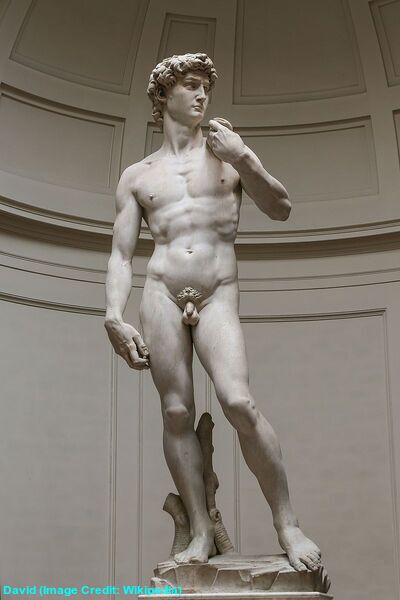
However, Italy, like some other countries, has its own landmark Cultural Heritage Code that protects artistic treasures from disparaging and unauthorised commercial use. As per this code, the gallery or museum that houses the artwork is the ethical owner of it. Greece and Vatican City, too, have their own codes. Using the Italian code and at the request of Hollberg, a Public Prosecutor has filed a series of cases against some organisations in recent times. A company that sells tickets to enter the Accademia, a company that prints T-shirts with David’s image, and other companies that manufacture key rings or refrigerator magnets have been sued. In each case, the complaint is that the way they use parts of David’s images has undermined the dignity of the artwork. The Public Prosecutor has argued that these organisations use only the images of David’s genitals from which their evil intentions become clear.
Hollberg is of the opinion that such abuse defames works of art like David. She has explained that the entire statue overwhelms art lovers with its artistry, but a fragmentary image of it shocks one’s sense of art. The director has stressed that not only David, but a number of nude sculptures of the Renaissance Era are abused in this way. The Birth of Venus, a painting by the Italian artist Sandro Botticelli (born Alessandro di Mariano di Vanni Filipepi; 1445 – May 17, 1510), and the Vitruvian Man, a drawing by Leonardo di ser Piero da Vinci (April 15, 1452 – May 2, 1519), are two of them.

The Birth of Venus is at the Uffizi Gallery in Florence, while the Vitruvian Man has secured its place in Galleria dell’Accademia. A German organisation created puzzles using the drawing of Leonardo. Italy filed a case against that organisation and won the legal battle. The Accademia has received thousands of Euros in compensation in several such cases. “There was great joy throughout the world for this truly unique victory that we managed to achieve, and questions and queries from all over about how we did it, to ask advice on how to move,” Hollberg told The Associated Press.
Of course, the Accademia has won those cases because of Italy’s Cultural Heritage Code. It is not possible for a museum to take this sort of step in countries where there is no such code or law. There are nearly 38,000 works of art from around the world, including Leonardo’s Mona Lisa, in The Louvre or the Louvre Museum, a National Art Museum in Paris. As France has no Cultural Heritage Code of its own, anyone can easily copy the works of art kept in The Louvre, if s/he wants.
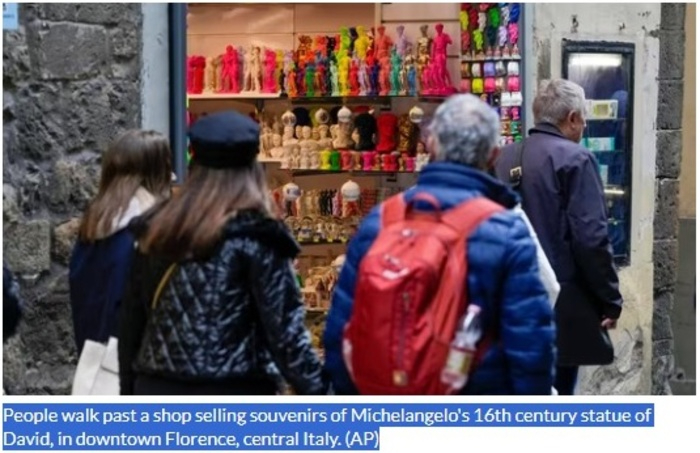
Meanwhile, some critics and art collectors are worried about this legal victory of the Accademia. Thomas C Danziger, an Art Market Lawyer based in New York, has stated: “It raises not just legal issues, but also philosophical issues. What does cultural patrimony mean? How much of a stranglehold do you want to give institutions over ideas and images that are in the public domain?“. Pointing to Andy Warhol’s famous series inspired by Leonardo’s Last Supper, he asked: “Are you going to prevent artists, like Warhol, from creating what is a derivative work?” Danziger further said: “Many people would view this as a land grab by the Italian courts to control and monetise artworks in the public domain that were never intended to be charged for.”
Boundless Ocean of Politics on Facebook
Boundless Ocean of Politics on Twitter
Boundless Ocean of Politics on Linkedin
Contact: kousdas@gmail.com

 ISMC
ISMC Boundless Ocean Of Politics