

Women, Life, Freedom And…
The Anti-Hijab Movement rocked Iran in 2022 after Mahsa Amini, a 22-year-old Iranian lady, perished in a hospital in Tehran on September 16, 2022 under suspicious circumstances. The Guidance Patrol, the Religious Morality Police of the Iranian Government, detained Amini for allegedly not wearing a hijab in accordance with government standards. This incident triggered the movement in the West Asian nation.
Now, the Government of President Ebrahim Raisi is planning to introduce even harsher punitive measures into the law. Reports suggest that the government will pass the Hijab and Chastity Bill at any time. As per the proposed Bill, failure to cover the head could land women in prison for five to 10 years. They would also have to pay a fine of up to 360 million Iranian Rials.
The existing Hijab Law, mentioned in Article 368 of the Islamic Penal Code, states that those who defy the dress code shall face between 10 days to two months in prison and a fine of anywhere between 50,000 to 500,000 Iranian Rials. Ahead of Amini protests anniversary, Tehran has decided to bring this draconian law on wearing hijab.
The infamous Morality Police have increased patrols across the country in recent times. Meanwhile, the concerned authorities in Tehran have announced that wearing hijab is compulsory for girls and women, and actions will be taken against those who do not cover their heads properly in public. Failure to comply with the law will result in detention, and the authorities will arrange re-education for the rule-breakers.

Apart from wearing hijab, girls and women have been asked to maintain chastity. In other words, women would have to maintain integrity, as far as their character is concerned. It has also been mentioned in the Bill that if a celebrity breaks the law, the punishment will be more severe. S/he would have to pay one-tenth of her/his wealth to the government as a fine. Also, they cannot work, cannot travel to foreign countries and cannot use social media for a certain period of time. The division of men and women shall be made clearer in universities, administrative offices, parks, tourist centres, hospitals, etc. Similarly, if a business owner exempts the female employees of her/his office from wearing hijab, s/he will be fined three months’ profit.
Interestingly, the government has not provided a comprehensive definition of hijab, leaving room for confusion and uncertainty. The meanings of terms, such as nudity, semi-naked, tight and revealing clothes, too, are not clearly defined in the Bill. These issues have raised questions about how these definitions will be interpreted and applied in practice.
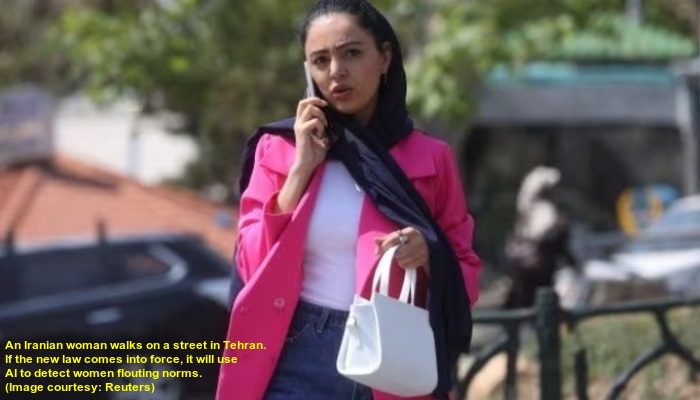
Meanwhile, Hossein Raeesi, an Iranian Human Rights lawyer and Adjunct Professor at Carleton University in Ottawa, Canada, told CNN that the new fine would be far beyond what the average Iranian could pay, as millions live below the poverty line. Shima Ghousheh, a legal expert, wrote in an article published in the reformist Etemad daily: “The country’s whole budget should be used to build prisons for women because many Iranians will not be able to pay these (heavy) fines and should be sent to prison.”
Boundless Ocean of Politics on Facebook
Boundless Ocean of Politics on Twitter
Boundless Ocean of Politics on Linkedin
Contact: kousdas@gmail.com

 ISMC
ISMC Boundless Ocean Of Politics