

The Deaf Man Who Taught Us To Listen!
German composer Ludwig van Beethoven (baptised December 17, 1770 – March 26, 1827) is famous for his sense of music, as his Seventh, Eighth or Ninth symphonies have rendered him immortal. This virtuoso of Western classical music was trained initially by his father Johann van Beethoven (1739/1740 – December 18, 1792). It is heard that his musical talent amazed his father. Later, he received training from German opera composer and conductor Christian Gottlob Neefe (February 5, 1748 – January 28, 1798). Musicologists divide Beethoven’s musical life into three periods: Early period, Middle period and Late period. During the Middle period (1802-12), he suffered from hearing loss probably because of otosclerosis, accompanied by degeneration of the auditory nerve. Later, he became completely hearing impaired. Even after the hearing loss, he continued to compose music till his death in 1827. Music lovers still wonder how a deaf person composed such wonderful music.
Beethoven’s father used to come home inebriated and beat him up regularly. Johann van Beethoven, too, was a musician, teacher and a singer who used to perform in the chapel of the Archbishop of Cologne, whose court was at Bonn. He is best known as the father of Ludwig van Beethoven. Johann became an alcoholic later in his life and was, at times, an abusive father to Ludwig. At the age of 18, Ludwig had to obtain an order to force his father to support his family. Johann died soon after his son moved to Vienna in order to study with Franz Joseph Haydn (March 31, 1732 – May 31, 1809), an Austrian composer of the Classical Period.
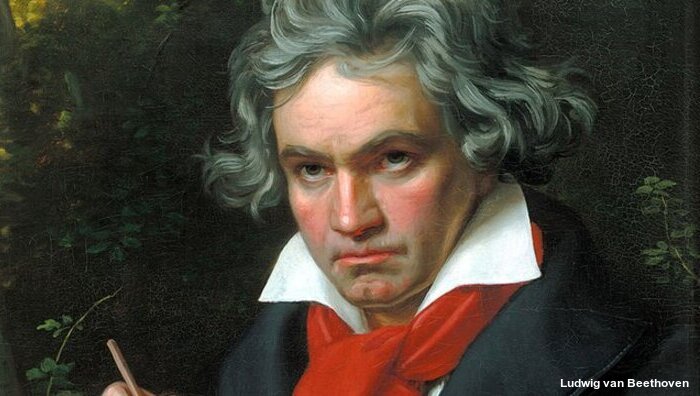
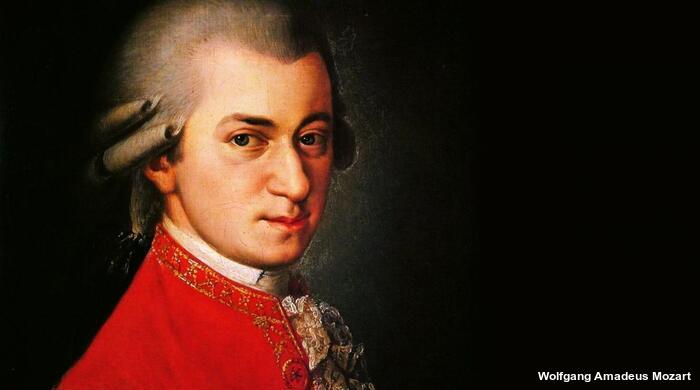
The influence of Wolfgang Amadeus Mozart (January 27, 1756 – December 5, 1791), a prolific and influential composer of the Classical Period, on Beethoven was immense. This Austrian musician was 14 years older than Beethoven. Although Mozart passed away at the age of 35, Beethoven spent 57 autumns in this world. The two spent several years in Vienna, as both Mozart and Beethoven used to compose music for famous Opera Houses in the Austrian capital. Beethoven moved to Vienna in 1792, a year after the death of Mozart.
Common people are still eager to know about the death of Mozart and Beethoven. The lifespan of human beings was comparatively shorter at that period of time. Still, Mozart’s death was premature. The known causes of his death include acute arthritis, influenza and liver-related issues. Mozart was in love with several women. Finally, he tied the nuptial knot with trained Austrian singer Maria Constanze Cäcilia Josepha Johanna Aloysia Mozart (née Weber; January 5, 1762 – March 6, 1842). The couple had six children, of whom only two survived infancy.
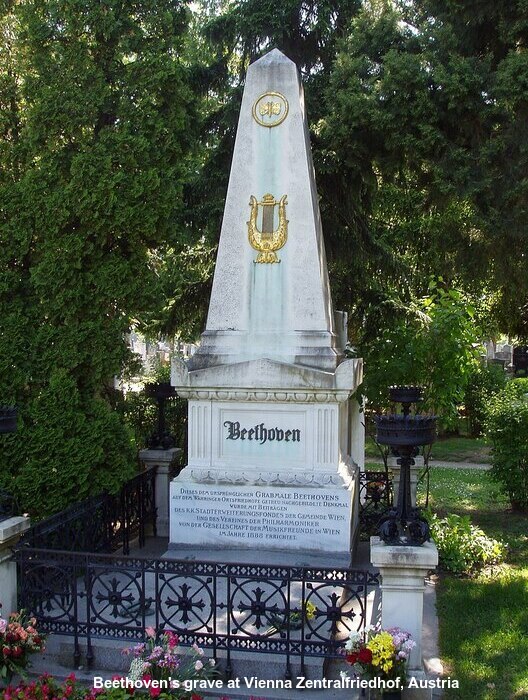
Beethoven remained a bachelor; however, he used to frequently visit sex workers. For a long time, it was thought that he had syphilis. This perception changed in 2005, when some scientists in Illinois proved through DNA testing that the composer had passed away due to poisoning. According to other sources, an autopsy revealed that Beethoven had significant liver damage that might have been due to his heavy alcohol consumption, and also considerable dilation of the auditory and other nerve-related issues.
Researchers tested DNA samples of Beethoven’s hair in 2005, and again in 2023. It was possible as his countless admirers cut off the thick curly hair from his head after his demise, and kept them as memorabilia. Surprisingly, the results of two DNA tests of the same sample were different. The problem is that there is no one in Beethoven’s family. Hence, there is no way to identify his DNA except by testing his hair pattern. The hairstyle seems to belong to Beethoven’s time. However, nothing can be said for sure until it is proven that those are Beethoven’s hair samples.
Meanwhile, many have expressed doubt over the DNA testing process itself in the current context. They have argued that as the DNA test is a widely used method, there should not be two different results. Presumably those hair samples belonged to a woman, and not Beethoven. Also, there is another mystery: Why did Beethoven become hearing-impaired? A recently published report in the Current Biology journal has mentioned nothing about it. Beethoven’s life still remains shrouded in mystery, in spite of all the efforts made by scientists.
Boundless Ocean of Politics on Facebook
Boundless Ocean of Politics on Twitter
Boundless Ocean of Politics on Linkedin
Contact: kousdas@gmail.com

 ISMC
ISMC Boundless Ocean Of Politics