

From Antigone To Aneeka
Traitor Polyneices’ body was lying on the ground. However, he would not be buried, as the state did not allow people to honour a slain rebel. It was the rule. His younger sister Ismene was scared, while elder sister Antigone became restless as she wanted to bury her brother. Unlike King Creon, who’s only concern was the state, Antigone was concerned about her family and some sweet relationships. There have been lot of discussions about the differences between the two. Both sides have some arguments and also lack logics. British Pakistani novelist Kamila Shamsie has re-created ancient Greek tragedian Sophocles’ Antigone in a contemporary setting in her seventh novel Home Fire (2017).

Kamila Shamsie
The novel – which entwines a tale of family, politics, fundamentalism, duty, heritage, identity and nationhood – is set in five locations: London (UK), Amherst (US), Istanbul (Turkey), Raqqa (Syria) and Karachi (Pakistan). Home Fire is basically a story of three British-Muslim orphan siblings that begins with Isma, who spent years raising her twin siblings – brother Parvaiz and sister Aneeka – in the wake of their mother’s death. One day, Parvaiz left London for Syria to join the ISIS. His dream was to live up to the dark legacy of his jihadist father he never knew. Although Isma was ready to compromise with the situation, Aneeka decided to bring her brother back to London at any cost. Like Antigone, Aneeka (too) declared a war against the state, the system….. It was not possible for her to change the system, but she taught the ‘cruel’ ruler a lesson of humanity. For this novel, Kamila won the 2018 Women’s Prize for Fiction, one of the UK’s most prestigious literary prizes. Women’s Prize for Fiction is awarded annually to a female author of any nationality for the best original full-length novel written in English and published in Britain.

Kamila is one of the five famous female (Pakistani) authors. Others are Moni Mohsin, Fatima Bhutto, Shaila Abdullah and Bapsi Sidhwa. They have helped the Pakistani literature reach a new height. Kamila was born in Karachi on August 13, 1973 and attended Karachi Grammar School. Later, she earned a Bachelor’s Degree in Creative Writing from Hamilton College, New York and then settled in London. Kamila, now a dual national of the UK and Pakistan, was highly influenced by her mother Muneeza Shamsie, who was a writer, critic, literary journalist, bibliographer and editor. In Home Fire, Kamila portrays the political and social changes in the West after the 9/11 terror attack and also narrates the contradiction between self-identity and obligation, and the new languages of love and politics in a different way. She penned her first novel ‘In the City by the Sea’ at the age of 24. Her popular works are: ‘Salt and Saffron’, ‘Burnt Shadows’ and ‘A God in Every Stone’.
As far as the subject is concerned, Home Fire is an exceptional novel. Noted Kashmiri poet Agha Shahid Ali has encouraged Kamila to write the novel in which she raises an important issue: whether to choose individual or community when a person’s identity is in crisis.
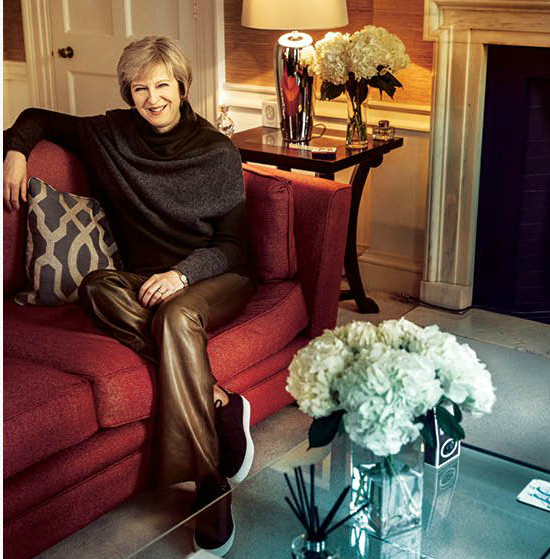
Theresa May
In Home Fire, Kamila portrays the British home secretary (incidentally a Muslim) as the ‘modern Creon’. The character, Karamat Lone, easily reminds us of Theresa May, who had served as the home secretary before becoming the prime minister. In 2015, May said that the government should strip people, who were dual nationals, of their British citizenship. The former home secretary’s statement hurt Kamila, a dual national. “I am a dual national of Pakistan and Britain, and I was aware that there were increasing powers to strip citizenship of dual nationals. Under what circumstances, does a state say that my citizen is responsibility?” asked the novelist. (The Indian Express, August 6, 2017)
Kamila – brought up under the military dictatorship – knows how extremism could penetrate into our thought process. She believes that we live in a very dangerous period and we should try to find a way out. Home Fire is her attempt to show the path.
Antigone told King Creon: “The slain man was no villain, but a brother.” Those, who kill innocent people in Kashmir, Syria, Palestine, Afghanistan and in American schools, are either someone’s sons or brothers. But, Creon was a ruler and his duty was to protect the state. So, he had no other option, but to punish those who violated the rules. Antigone raised an important question: “Who knows if this world’s crimes are virtues there (?)” in the divine world, where ‘patriotism’ and ‘values’ are the most valuable….
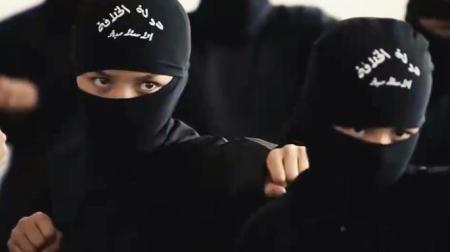
The argument will continue in this world that allows brothers to take up arms. And the state should have some rules to control the society. Home Fire tries to see the brother (or the terrorist) through the lens of a sister and a ruler.
Sarah Sands, the Editor of BBC Radio 4’s Today programme, said: “…….. We chose the book which we felt spoke for our times. It sustains mastery of its themes and its form. It is a remarkable book which we passionately recommend.” Congrats Kamila Shamsie, as her Aneeka has successfully presented Antigone’s question in modern language!
Boundless Ocean of Politics on Facebook: https://www.facebook.com/boundlessoceanofpolitics/
Boundless Ocean of Politics on Google Plus:
https://plus.google.com/+KoushikDasboundless
Boundless Ocean of Politics on Twitter:
https://twitter.com/kousdas?s=09
Boundless Ocean of Politics on Linkedin:
https://www.linkedin.com/company/boundless-ocean-of-politics
Contact us: kousdas@gmail.com

 ISMC
ISMC Boundless Ocean Of Politics