

South Asia & The Saudi Concept Of Islam
Dr Naila Kabeer – the Professor of Gender and Development at the Department of Gender Studies and Department of International Development of the London School of Economics and Political Science – recently said that Bangladesh has adopted the Saudi concept of Islam.
She expressed the view while speaking at a workshop, titled ‘Women, men and labour markets in Bangladesh: Constraints, choices and policy challenges’. The event took place at the BRAC Centre in Mohakhali, Dhaka on December 2.
Dr Kabeer said that we could easily find women, wearing burka, hijab, socks with sunglasses on their eyes, in Saudi Arabia. According to her, such an outfit has become a part of the Saudi culture. Surprisingly, Muslim ladies in Bangladesh and neighbouring India have adopted this culture in recent times, added Dr Kabeer.

Dr Naila Kabeer
In presence of Dr Ashwini Deshpande – the Professor of Economics at Delhi School of Economics, Dr Kabeer stressed that Bangladesh (and other South Asian countries) had accepted the concept of Islam on the basis of its own culture. However, the concept has changed. Now, people in Bangladesh practise the ‘Saudi version’ of the religion. Dr Kabeer claimed that the Saudi version of Islam encourages women to use burka, hijab, socks and sunglasses. As far as this particular version is concerned, it’s important for women to visit public places only after covering their whole bodies. She explained that it’s a Saudi strategy to put women in “chains” in the name of religious discipline.
Dr Kabeer strongly criticised the male members of Bangladeshi households for encouraging such practices, saying that they actually want to keep women captive in the house in the pretext of sexual harassment. Unfortunately, she added, some of these people harass women in public places.
Dr Kabeer told the audience that women in Bangladesh confine themselves to their houses as per the direction of their husbands. At the same time, the men are smuggling illegal goods from (and to) India, hiding them inside the burka, she insisted. The LSE professor urged women to break the chains and to take part in economic activities, saying that the proposed move would ultimately help the nation grow.
Meanwhile, Dr Kabeer admitted that women, too, are responsible for this situation. She said that many women’s contradictory behaviour worsens the situation. Giving an example, she said that (sometimes) women refuse to visit market places near their residence to avoid ‘known’ people. However, they visit the markets far away from their house. She once again requested the women to remove the veil from their minds.

Simeen Mahmud
For her part, head of the Gender Studies Cluster and Co-ordinator of the Centre for Gender and Social Transformation (CGST) at BRAC Institute of Governance and Development (BIGD) Dr Simeen Mahmud said that only 36% of women in Bangladesh are working ladies. Citing the latest report published by the Bangladesh Bureau of Statistics (BBS), she said that the percentage was much higher in the past, as 67% of Bangladeshi women were in the workforce in 2008-15.
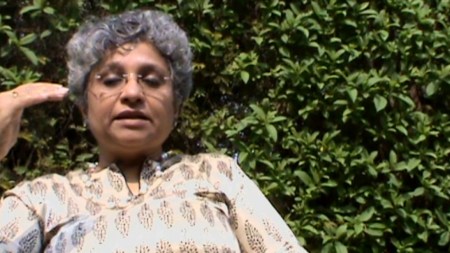
Dr Ashwini Deshpande
Dr Deshpande congratulated Bangladesh for engaging so many women in the labour force, saying that the percentage was low even in India. She further said that India should take the issue to policy-making level. It is also important to think about problems the working women are facing in India, stressed Dr Deshpande.
Boundless Ocean of Politics on Facebook: https://www.facebook.com/boundlessoceanofpolitics/
Boundless Ocean of Politics on Google Plus:
https://plus.google.com/+KoushikDasboundless
Boundless Ocean of Politics on Twitter:
https://twitter.com/kousdas?s=09
Contact us: kousdas@gmail.com

 ISMC
ISMC Boundless Ocean Of Politics