

‘India, Pakistan Are Both Important’
Finally, America has revealed the truth.
Ahead of his arrival in South Asia, Secretary of State Rex Tillerson has said that both India and Pakistan are important to the US foreign policy. Tillerson, who will visit the two South Asian countries next week, said on Friday that it would be important for Washington to maintain “friendly” ties with New Delhi and Islamabad for the sake of regional peace.
In the past, America didn’t explain its policy towards South Asia so openly. In a rare first, the Donald Trump administration has hinted that it will maintain cordial ties with the two regional rivals. Speaking on ‘US-India Partnership of the next 100 years’ at the Centre for Strategic and International Studies (CSIS), Tillerson stressed that only India and Pakistan could stabilise the political situation in South Asia.

Tillerson
As far as Indo-US relation is concerned, the senior official of the Trump administration said that New Delhi and Washington are “two bookends of stability – on either side of the globe”. According to Tillerson, the “emerging bilateral strategic partnership” has the potential to create a rules-based world order for the next hundred years.
The secretary of state expressed hope that India and Pakistan will help US counter China in Asia. He described the Asian giant as a ‘destabilising force’, saying: “China’s provocative actions in the South China Sea directly challenge the international law and norms that the US and India both stand for.” A day after senior spokesperson of the Chinese Foreign Ministry Lu Kang said that “the US should abandon its biased views and work with it towards the same goal to uphold the momentum for a steady and sound China relations”, the state secretary hit back, saying that the US seeks constructive relations with the Asian powerhouse, but “we will not shrink from China’s challenges to the rules-based order”.
Tillerson further expressed concern over the current political scenario in Afghanistan, stressing that Washington’s new ‘regional approach’ on Afghanistan requires the involvement of neighbouring Pakistan and India. He explained that normalisation of ties between India and Pakistan is a prerequisite for restoring peace in Afghanistan. “We intent to work closely with India and Pakistan and we hope to ease tensions along their borders as well… Pakistan has two very troubled borders. We would like to help take the tensions down on both of those,” he told the audience.
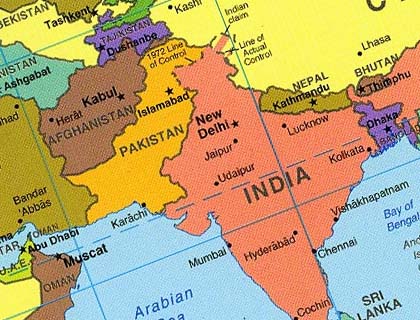
According to the state secretary, the Afghan issue is a regional issue and it can’t be resolved without neighbours’ co-operation. “We see it as a regional issue. We solve Afghanistan by addressing the regional challenges. Pakistan is important element in that, India is important element in that,” insisted Tillerson.
Meanwhile, the senior American official has showered praises on New Delhi for strengthening the democratic character of the Indian society. He said: “India’s diverse population includes more than 170 million Muslims – the third-largest Muslim population in the world. Yet we do not encounter significant numbers of Indian Muslims among foreign fighters in the ranks of IS or other terror groups, which speaks to the strengths of Indian society.”
At the same time, he said that if India and Pakistan joined hands, then they could solve major global problems. Although Indian and Pakistani political experts have welcomed Tillerson’s optimism, they believe that it will be difficult for the US to break the ice. According to experts, the nature of India-Pakistan relations is complex and New Delhi will never allow Washington to play the mediator’s role. As a result, the Trump administration will have to re-shape its ‘South Asia policy’. They are also not sure whether Pakistan will help the US counter China in Asia.
Boundless Ocean of Politics on Facebook: https://www.facebook.com/boundlessoceanofpolitics/
Boundless Ocean of Politics on Google Plus:
https://plus.google.com/+KoushikDasboundless
Boundless Ocean of Politics on Twitter:
https://twitter.com/kousdas?s=09
Contact us: kousdas@gmail.com

 ISMC
ISMC Boundless Ocean Of Politics