

Suu Kyi: Not A Human Rights Champion
The Rohingya Muslims in Myanmar are all terrorists. At least, the Myanmarese government and the governments of neighbouring countries believe so. But, how can 110,000 people suddenly become terrorists? No one has the answer.
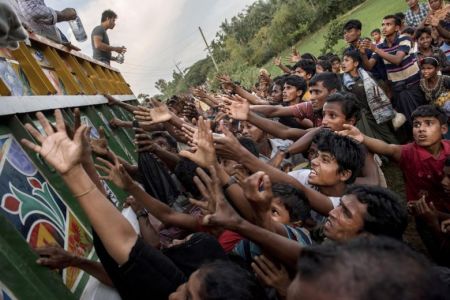
Since August 25, the situation has been tense in Myanmar’s Rakhine province as the government troops have forced Rohingyas to leave the region and take shelter in neighbouring Bangladesh and India. The armed forces have not only tortured aged people, women and children, but also burnt their homes in Rakhine. Despite receiving medicines, foods and donations from the UN and other international organisations, the Myanmarese government didn’t distribute those among the Rohingya people.
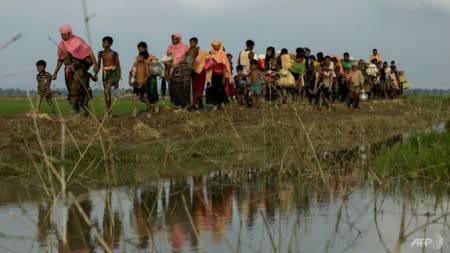
Naypyidaw accused Arakan Rohingya Salvation Army, a militant group, of triggering a fresh tension in Rakhine by killing some police officers on August 25. The government claimed that the killing of policemen prompted the concerned authorities to deploy the armed forces in Rakhine. But the question is: why should the entire community be called terrorists for a violent attack carried out by some militants?
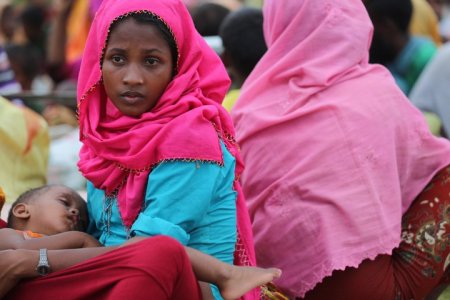
The Myanmarsese authorities have further claimed that Rohingyas are not the citizens of the South-east Asian country as per the 1982 citizenship law of the country. In fact, the government in Naypyidaw has refused to accept the term ‘Rohingya’. For Myanmar, these people are Bengalis or ‘illegal intruders’ from Bangladesh. However, Bangladesh has rejected the claim, saying that Rohingyas are not “our citizens” and they have taken shelter in the country because of Myanmar’s brutal attacks on them. So, the existence of Rohingya people in South and South-east Asia can be described as ‘presence in absence’. And those, who are not ‘present’ (in government records), don’t have human rights.
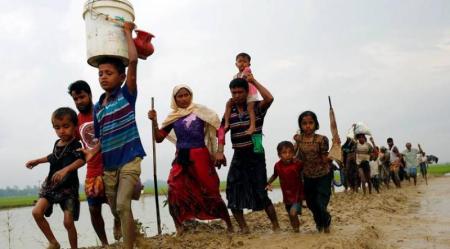
Incidentally, all these are happening in Myanmar at a time when Nobel Peace laureate Aung San Suu Kyi is serving as a state counsellor. When she received the Nobel Peace Prize, no one even thought that her struggle was not for everyone. After winning the prize, Suu Kyi decided to ignore the Rohingya crisis, saying that it was a controversial issue. She didn’t even try to resolve the humanitarian crisis by adopting a universal policy that could allow Rohingyas to live in Myanmar peacefully.
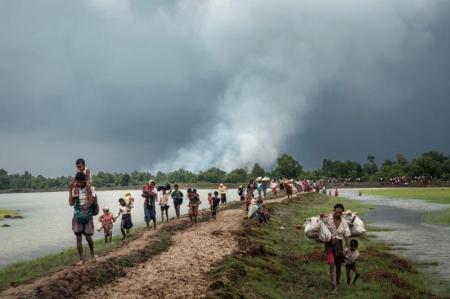
It’s a fact that a foundation, set up by former UN Secretary General Kofi Annan, had asked Suu Kyi in 2016 to study the situation of Rohingyas and prepare a report on the basis of the study. Recently, the report has been published and it is clearly mentioned in the report what the Rohingyas need, their current condition and what the state should do in order to protect their human rights. The report also says that the Myanmarese government should take necessary steps in order to bring the situation under control. The Kofi Annan Committee has expressed serious concern over the current political situation in Myanmar, saying that the government’s aggression prompted some Rohingyas to seek help from foreign terror outfits (for their survival). As per the report, the state will have to play a bigger role in an attempt to resolve the crisis. However, the Myanmarese government is not ready to accept the Annan Committee’s suggestions.
Perhaps, Suu Kyi is in a dilemma…. whether to become a global symbol of humanity or a successful head of the state. She might have thought that she could become a successful statesman by compromising on the question of humanity. However, her failure in protecting the Rohingyas cost Suu Kyi direly. With the Rohingya crisis hitting an emergency phase, (now) people will think twice before considering her as a human rights champion. Even critics have called for Suu Kyi to be stripped of her Nobel Peace Prize for failing to do more to halt the strife. Military rule can be carried out with guns, but a true democratic system cannot be established without humanity. Will it be possible for the Nobel Peace laureate to realise this fact?
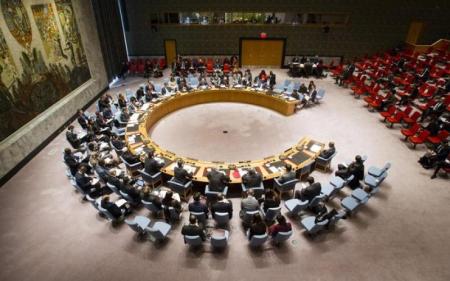
As the world has no answer to this question, the UN Security Council broke its long silence on the ongoing crisis in Myanmar on September 13 and called for an end to the violence. After attending a closed-door meeting in New York, UN Chief Antonio Guterres said that the military campaign amounted to ethnic cleansing of Rohingya Muslims. During the meeting, the 15-member council, which includes China – a supporter of Myanmar’s former ruling junta, condemned the use of excessive force by the Myanmarese government during recent security operations in Rakhine and urged the South-east Asian nation to take “immediate steps” to end the violence. It was the first time the UNSC agreed on a united response to the crisis sparked by a military crackdown that followed attacks on policemen by a section of Rohingya people. Now, it is up to Suu Kyi to take a clear stand and address the issue, as homeless and hungry Rohingyas pray for aid.
Boundless Ocean of Politics on Facebook: https://www.facebook.com/boundlessoceanofpolitics/
Boundless Ocean of Politics on Google Plus:
https://plus.google.com/+KoushikDasboundless
Boundless Ocean of Politics on Twitter:
https://twitter.com/kousdas?s=09
Contact us: kousdas@gmail.com

 ISMC
ISMC Boundless Ocean Of Politics
I think this is one of the most important information for
me. And i’m glad reading your article. But want to remark on few general things, The website style is ideal, the articles is really great : D.
Good job, cheers http://www.milolivos.com/index.php/component/k2/itemlist/user/410913
LikeLike