

Machu Picchu – The Lost City!
Machu Picchu, often incorrectly referred to as the ‘Lost City of the Incas’, is an Incan citadel set high in the Andes Mountains in Peru, above the Urubamba River valley. Built in the 15th century and later abandoned, Machu Picchu is famous for its sophisticated dry-stone walls that fuse huge blocks without the use of mortar, intriguing buildings that play on astronomical alignments and panoramic views. However, its exact former use still remains a mystery.
Inca, the famous and mysterious civilisation, was developed in the 15th century. The Inca culture of western South America had a complex religion and one of their most important deities was Inti, the Sun. It is said that Incas used golden water pots even in bathrooms. Everything was gold-coloured in Inca civilisation, as Incas used to believe that gold was the ray of Sun.
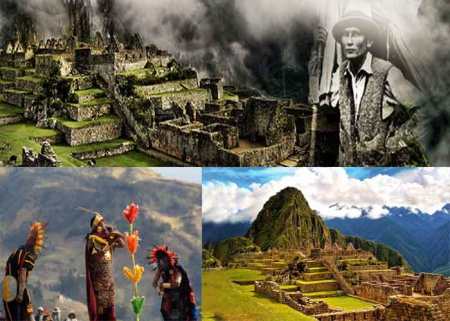
Spanish conquistadors, led by Francisco Pizarro, destroyed the Inca civilisation in the 16th century. But, Incas remained alive in folklores even after the destruction of the great civilisation. The civilisation was rediscovered in the year 1911. American archaeologist and Senator Hiram Bingham and his team were moving forward through the Urubamba valley in the month of July. When they reached Cusco, a local farmer informed them that there was some debris on a nearby hill. In local language, he said that the hill was popularly known as Machu Picchu or ‘Old Mountain’.
The next morning (on July 24, 1911), Bingham and his team-members left Cusco for Machu Picchu. During their journey through the hilly regions, they met some local boys. Some of them were shepherds, while others were farmers. They showed the way to reach the top of the hill. An eleven-year-old boy, named Arteaga, guided the American team to reach the top, where they found a row of terraces almost 1,000ft high. After crossing the terraces, they “came upon a vast complex of granite houses constructed with extremely careful stonework”. They reached Machu Picchu, the most famous of all the Inca ruins!
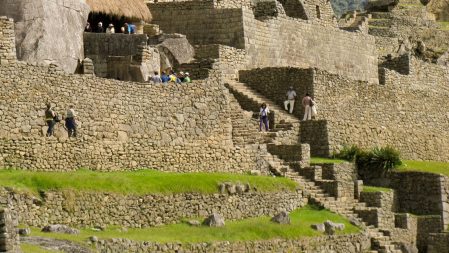
The Spaniards captured the city of Inca in the 16th century and destroyed Vitcos, the summer capital of Incas. According to legends, Manco II – the last Inca ruler – had established his capital, Vitcos, in the Vilcabamba range. However, the Spaniards failed to find Machu Picchu, which is situated about 8,000ft above the sea level. The holy city was not only the summer capital of Incas, but also the place of worship of the Sun god.
According to some sources, a German businessman discovered the city in 1867. But, Machu Picchu got international recognition only because of Bingham. He led expeditions back to the Vilcabamba region in 1912 and 1915 to clear the ruins he had discovered in 1911 and to make further explorations and scientific studies in the area. Only after discovering many small Inca ruins in the hills near Machu Picchu and traces of Inca roads and buildings at various places along the mountain range, Bingham came to the conclusion that Machu Picchu was the lost city of Vilcabamba.
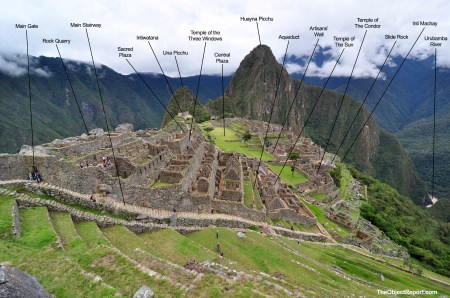
Machu Picchu was declared a Peruvian Historical Sanctuary in 1981 and a UNESCO World Heritage Site in 1983. Later in 2007, it was voted one of the ‘New Seven Wonders’ of the World in a worldwide Internet poll. Every year, around 300,000 tourists visit the ‘lost city’.
Boundless Ocean of Politics on Facebook: https://www.facebook.com/boundlessoceanofpolitics/
Boundless Ocean of Politics on Google Plus:
https://plus.google.com/+KoushikDasboundless
Boundless Ocean of Politics on Twitter:
https://twitter.com/kousdas?s=09
Contact us: kousdas@gmail.com

 ISMC
ISMC Boundless Ocean Of Politics