

Nawaz Sharif: The ‘Tragic’ PM
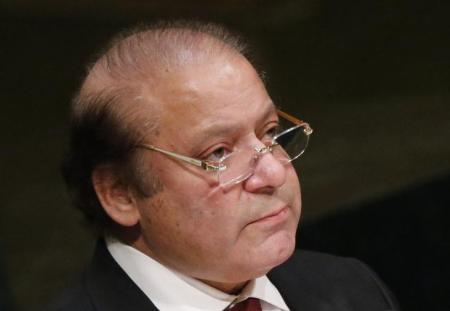
With the Supreme Court (SC) disqualifying him in the Panama Papers scandal on July 28, Nawaz Sharif has become the first Pakistani Prime Minister who failed to complete his tenure three times. In fact, no Pakistani PM has served a full term of five years in office since 1947 and Nawaz is no exception.
Popularly known as the ‘Lion of Punjab’, 67-year-old Nawaz served as the PM for a record three times – from 1990 to 1993, from 1997 to 1999 and from 2013 to 2017. However, he was forced to resign in the middle of his term every time – by the presidency in 1993, by the Army in 1999 and by the judiciary in 2017.
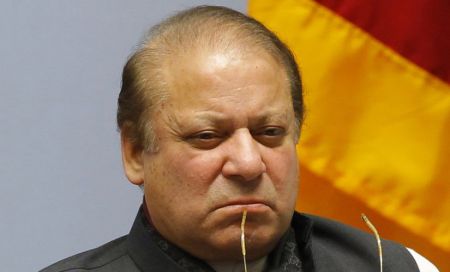
During his first tenure (1990-93), the steel tycoon-cum-politician had serious differences with then President Ghulam Ishaq Khan, who used his ‘reserve’ powers in April 1993 to dissolve the National Assembly. Nawaz’s second term ended in 1999 when then Pak Army Chief General Pervez Musharraf staged a bloodless coup and captured power. Nawaz was not only convicted of hijacking charges for trying to stop a plane carrying General Musharraf from landing, but also ended up in jail. Later, he went into exile in Saudi Arabia and returned to Pakistan in 2007.
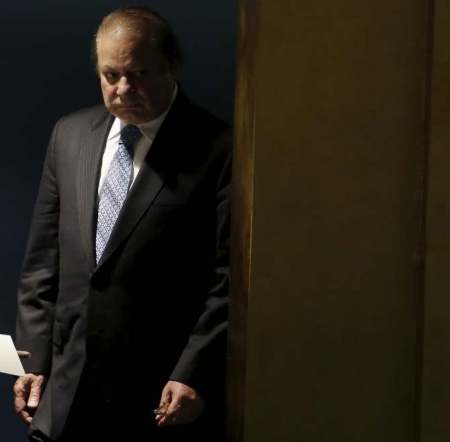
Although both of his first two stints had ended in the third year of his tenure, Nawaz assumed power for the third time in June 2013 after his Pakistan Muslim League-Nawaz (PML-N) performed well in General Elections. In the last four years, he successfully managed to stay in power despite facing difficulties mainly because of Pakistan’s lower economic growth and a surge in militancy. But, the SC ruling against him in the Panamagate case struck a huge blow to his political career.
The SC disqualified Nawaz at a time when he was trying hard to fix the South Asian country’s major problems. During his third tenure, Nawaz launched various development projects, including the multi-billion dollar China-Pakistan Economic Corridor (CPEC). In 2014, he launched the ‘Zarb-e-Azb’ military operation to flush out the militants from North Waziristan and South Waziristan, and also supported a ban on Tablighi Jamaat from preaching in educational institutions. His government sent a strong message to extremists by hanging Mumtaz Qadri, who assassinated former Punjab Governor Salman Taseer in 2011 over the latter’s opposition to blasphemy laws.
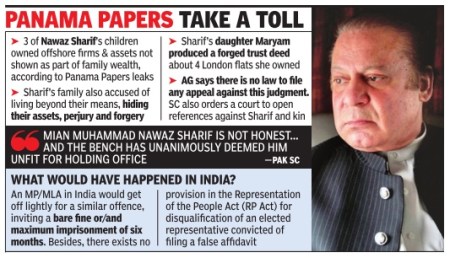
After Panama papers showed illegal money laundering by him in 1990s to purchase assets in London, Nawaz addressed the nation twice and disclosed a detailed account of his family’s businesses in the National Assembly. In the Parliament, he explained how his late father had built the business empire and how the business helped him purchase properties in the British capital. However, Nawaz’s attempts to deny the charges against him and his family members failed, as the SC ordered his removal from the office.
Meanwhile, the PML-N announced that Nawaz’s younger brother Shehbaz Sharif would be the next PM and steer Pakistan until the next General Elections to be held in 2018. Pak President Mamnoon Hussain called a special parliamentary session on Saturday after Sharif put forward Shahid Khaqan Abbasi as the interim leader and his brother Shahbaz as the long-term successor.
Soon after PML-N made the announcement after a high-level party meeting on Friday, neighbouring India said that it was closely monitoring the ongoing political turmoil in Pakistan. The top political leadership in New Delhi believes that the “dangerous political vacuum” and volatility in Pakistan’s politics are bad news for bilateral ties.
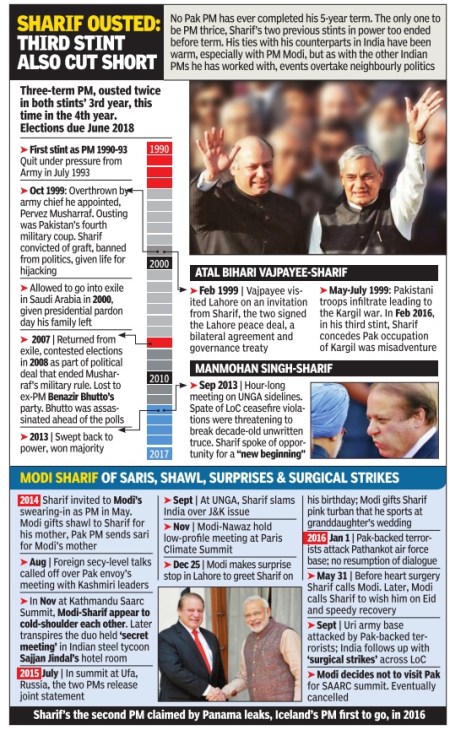
Talking to the media over the weekend, Indian Foreign Secretary Subrahmanyam Jaishankar said that political turmoil in a neighbouring country is not good for any country in the world. “In the era of globalisation, diplomatic osmosis is very important,” he added.
In the Parliament, Nawaz is representing Punjab and the province has the maximum number of members in the National Assembly. As a businessman, he always wanted to strengthen commercial ties with India. India has welcomed the PML-N’s decision to appoint Shahbaz as the PM, with a senior External Affairs Ministry official saying that the government will be under Nawaz’s control, even if his brother becomes the PM.
Pakistan and India are quite different in terms of political system. The Army plays a big role in Pakistan, unlike India. The Army or the Inter-Services Intelligence (ISI) – the premier intelligence agency of Pakistan – will definitely try to influence the new PM. Although India is keeping a close watch on who will succeed Nawaz and the possibility of heightened adventurism by the Pakistani military, New Delhi is not at all worried about the selection of the new PM by the PML-N. New Delhi only wants the new Pak PM to share ‘strong’ ties with the top Army leadership.
Nawaz’s departure from the political scene is almost certain to herald a period of volatility within Pakistan and, therefore, greater risk in relations between India and Pakistan. A conflict between the Army and the Pak government under a new PM will make it difficult for New Delhi to negotiate with Islamabad. It will also be difficult for India to accept a military ruler in Pakistan at this juncture. Any democratic government in the neighbouring country is far better than a military regime.
Boundless Ocean of Politics on Facebook: https://www.facebook.com/boundlessoceanofpolitics/
Boundless Ocean of Politics on Google Plus:
https://plus.google.com/+KoushikDasboundless
Boundless Ocean of Politics on Twitter:
https://twitter.com/kousdas?s=09
Contact us: kousdas@gmail.com

 ISMC
ISMC Boundless Ocean Of Politics