

All Those Curious Epitaphs…
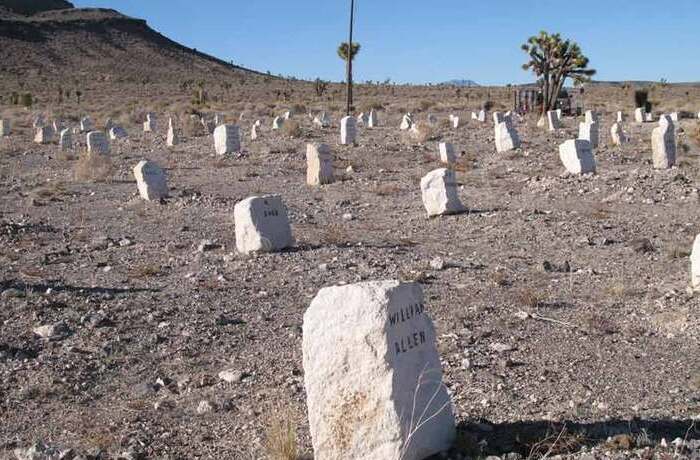
There is not even a trace of greenery in the simple cemetery situated in a desert. Also, there are no security arrangements as the cemetery was built in an open space. One can find some rugged stones lying between the graves scattered around. Interestingly, various strange epitaphs are written on those stones. One of them reads: “Unknown man died eating library paste.” The Pioneer Cemetery in Nevada’s unincorporated small desert city of Goldfield sparks curiosity over this particular epitaph. No one knows who this grave actually belongs to. It is also mentioned in the epitaph that the person perished on July 14, 1908, meaning the man died 115 years ago!
This lonely place in the western region of the US changed overnight in the early 20th Century. Every day, thousands of people used to arrive in Goldfield in search of gold! Many of those people pitched tents and started digging the soil. In 1902, people had also called Goldfield the City of Tent. Tom Fisherman, a local resident, had reportedly taken some gold samples from the Rabbit Spring area to the town of Tonopah. Two explorers, named Harry Stimler and William Marsh, were shaken after learning that. These two men had combed the desert surrounding Tonopah Springs to discover gold. Although they had come up empty-handed, their effort prompted many gold-seeking people to explore the city of Goldfield!
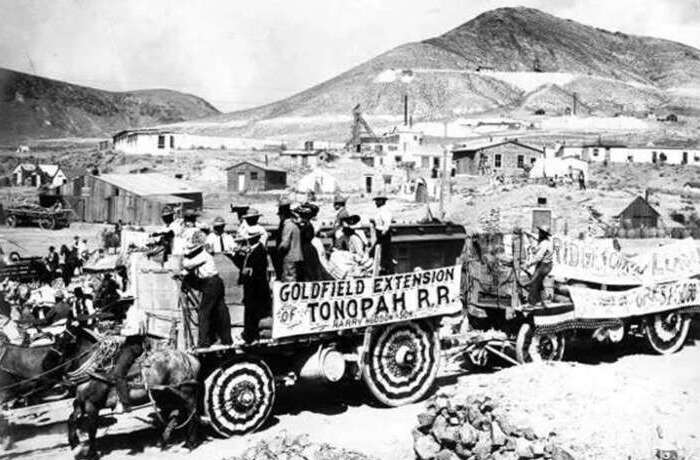
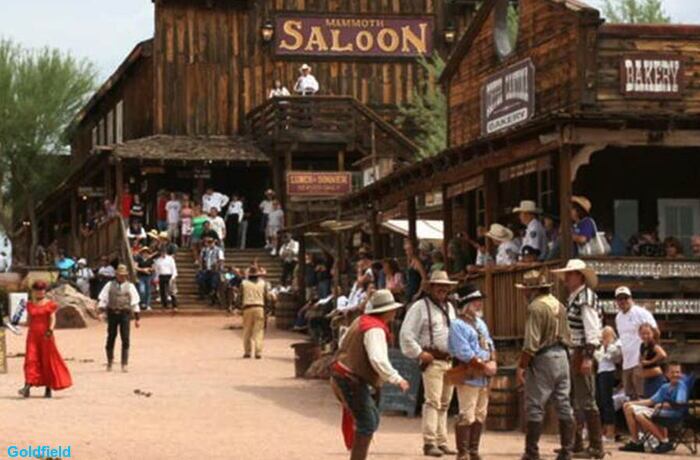
Investors, too, had shown interest in exploring that particular area of Nevada after the discovery of gold. At one time, 36 investors joined hands to build the new city. As per records, they established the city of Goldfield on October 20, 1903. The California-based San Francisco Examiner daily reported that no other huge expedition for finding gold had been conducted in this city. Within a year, Goldfield had become the largest city of Nevada. The new city gradually got neat houses, schools, courts, hotels and fire stations.
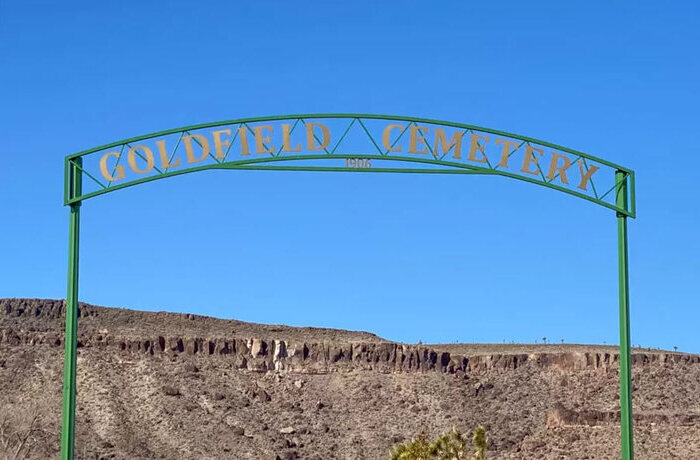
Goldfield had another essential addition… the Goldfield Union Cemetery. The cemetery was built near the Goldfield Hotel. As a result, it was visible to tourists as soon as they stepped off the train and set foot in the city. Because of this, the local authorities moved the cemetery to the northern part of Goldfield. The new cemetery became popular as Pioneer Cemetery. Hand-chiselled local stones were used in the new cemetery. Later, around 70 bodies were moved there from the old cemetery, and each grave had something written about its owner on it. A total of 154 bodies were buried in Pioneer cemetery. All the graves are marked by headstones of roughly-shaped rocks with brief, hand-chiselled strange epitaphs, which are kept legible by local volunteers who used to paint the rocks white and the lettering black and red. While one reads ‘O.K. Corral‘, another reads ‘Edward Hughes, November 27, 1909, died of self-strangulation at Esmeralda County Jail, Goldfield, Nevada‘.
Meanwhile, Goldfield’s most famous grave seems to be that of the unidentified man who died after eating library paste. He was reported in a 1908 edition of the Reno-Gazette as a hungry vagrant who found the jar of paste in the trash, succumbed near an automobile garage, and then was autopsied by the county physician, who in the process discovered the man’s last meal. Meanwhile, the Daily Independent claimed that a physician, named Turner, autopsied the body and found that the paste had contained an excess of a toxic ingredient.
Although the identity of the deceased has remained unknown, a letter was found in his pocket. The envelope read: “Mr Ross, Goldfield, Nevada.” Perhaps, Mr Ross was a local resident and the letter was intended to be delivered to him by an unidentified person! All these are mere speculations, as the real facts are still not known. The identity of that person may never be recovered…
Boundless Ocean of Politics on Facebook
Boundless Ocean of Politics on Twitter
Boundless Ocean of Politics on Linkedin
Contact: kousdas@gmail.com

 ISMC
ISMC Boundless Ocean Of Politics